

Trump ally Jeffrey Clark disciplinary hearing begins over role trying to overturn 2020 election
Advertisement
Read this article for free:
or
Already have an account? Log in here »
To continue reading, please subscribe:

Digital Subscription
One year of digital access for only $205*
- Enjoy unlimited reading on winnipegfreepress.com
- Read the E-Edition, our digital replica newspaper
- Access News Break, our award-winning app
- Play interactive puzzles
*First annual payment billed as $205.00 + GST for one year. This annual subscription will automatically renew at $233.00 + GST every 52 weeks (10% off the regular annual price of $259.35). Offer available to new and qualified returning subscribers only. Cancel any time.
To continue reading, please subscribe:
Add Free Press access to your Brandon Sun subscription for only an additional
$1 for the first 4 weeks*
- Enjoy unlimited reading on winnipegfreepress.com
- Read the E-Edition, our digital replica newspaper
- Access News Break, our award-winning app
- Play interactive puzzles
*Your next Brandon Sun subscription payment will increase by $1.00 and you will be charged $17.95 plus GST for four weeks. After four weeks, your payment will increase to $24.95 plus GST every four weeks.
Read unlimited articles for free today:
or
Already have an account? Log in here »
Hey there, time traveller!
This article was published 26/03/2024 (918 days ago), so information in it may no longer be current.
WASHINGTON (AP) — Former Justice Department official Jeffrey Clark’s efforts to help then-President Donald Trump overturn the 2020 election were characterized Tuesday as a coup attempt by Washington, D.C., Office of Disciplinary Counsel at a hearing to determine if Clark should be sanctioned.
Clark is accused of attempting to engage in dishonest conduct during his role in aftermath of the last presidential election.
Much of the hearing before the three-member Board of Responsibility focused on a letter which Clark sent to his superiors at the time, Jeffrey Rosen and Richard Donoghue. Clark suggested the letter be sent to Georgia indicating that the Justice Department was investigating irregularities in the state’s election and state lawmakers should void Biden’s electoral win.
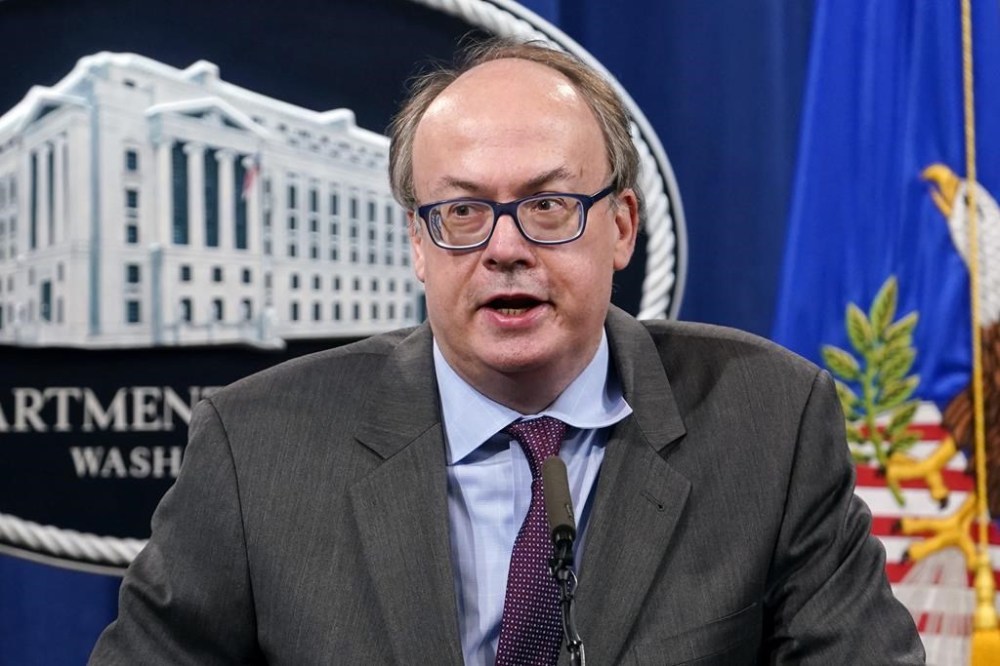
Hamilton Fox III, the disciplinary counsel at the hearing, said the letter and Clark’s continued attempts to intercede on Trump’s behalf, including multiple meetings with Trump in violation Justice Department procedure, were “essentially a coup attempt at the Department of Justice.”
Clark’s attorney, Harry MacDougald, said the action being taken against his client was unprecedented. He said the letter was not supposed to have been public and should have fallen under various privilege protections. He added that the letter was part of the debate that normally occurs between lawyers. He said punishing Clark in those circumstances would have a “chilling effect,” a point that Donoghue agreed with during the cross examination portion of his testimony when he said it could discourage people from “being as candid as they otherwise might be.”
Much of the hearing played like a rerun of the fraud claims from the 2020 election and the House Jan. 6 committee testimony, including a rehash of the dramatic Jan. 3, 2021 meeting when several attorneys within the White House and Justice Department threatened to quit if Trump fired Rosen as the acting attorney general and named Clark.
The testimony also highlighted how much pressure was put on the Justice Department directly by Trump. He spoke multiple times to Donoghue and Rosen about allegations of fraud and misconduct.
As events continued the pair met with Clark at one point to talk about the letter in what Donoghue described as a contentious meeting. He said he and Rosen tried to convince Clark that the department had examined various claims, while other things fell outside the department’s purview. “We fundamentally disagreed on what the evidence showed,” Donoghue said during testimony. “It was just we were almost living in two different worlds.”
Former deputy White House counsel Patrick Philbin, who knew Clark, testified that he spoke with the then-acting head of the Civil Division and told him the theories he was espousing and had been debunked. But, Philbin said, he felt Clark pursued what he thought was his duty because Clark believed there were serious issues in the election.
During his testimony Donoghue acknowledged that there were instances of fraud and misconduct that year but nothing of a level to overturn the election. MacDougald’s questioning focused on absentee balloting in Fulton County, Georgia and how there were legitimate concerns that had not been fully examined by the department.
The hearing is expected to resume Wednesday with Rosen testifying.
Clark could be sanctioned or disbarred. Any sanctions could be appealed to the D.C. Court of Appeals.