

New Portuguese Parliament elects house speaker after deal between 2 main parties
Advertisement
Read this article for free:
or
Already have an account? Log in here »
To continue reading, please subscribe:

Digital Subscription
One year of digital access for only $205*
- Enjoy unlimited reading on winnipegfreepress.com
- Read the E-Edition, our digital replica newspaper
- Access News Break, our award-winning app
- Play interactive puzzles
*First annual payment billed as $205.00 + GST for one year. This annual subscription will automatically renew at $233.00 + GST every 52 weeks (10% off the regular annual price of $259.35). Offer available to new and qualified returning subscribers only. Cancel any time.
To continue reading, please subscribe:
Add Free Press access to your Brandon Sun subscription for only an additional
$1 for the first 4 weeks*
- Enjoy unlimited reading on winnipegfreepress.com
- Read the E-Edition, our digital replica newspaper
- Access News Break, our award-winning app
- Play interactive puzzles
*Your next Brandon Sun subscription payment will increase by $1.00 and you will be charged $17.95 plus GST for four weeks. After four weeks, your payment will increase to $24.95 plus GST every four weeks.
Read unlimited articles for free today:
or
Already have an account? Log in here »
Hey there, time traveller!
This article was published 27/03/2024 (905 days ago), so information in it may no longer be current.
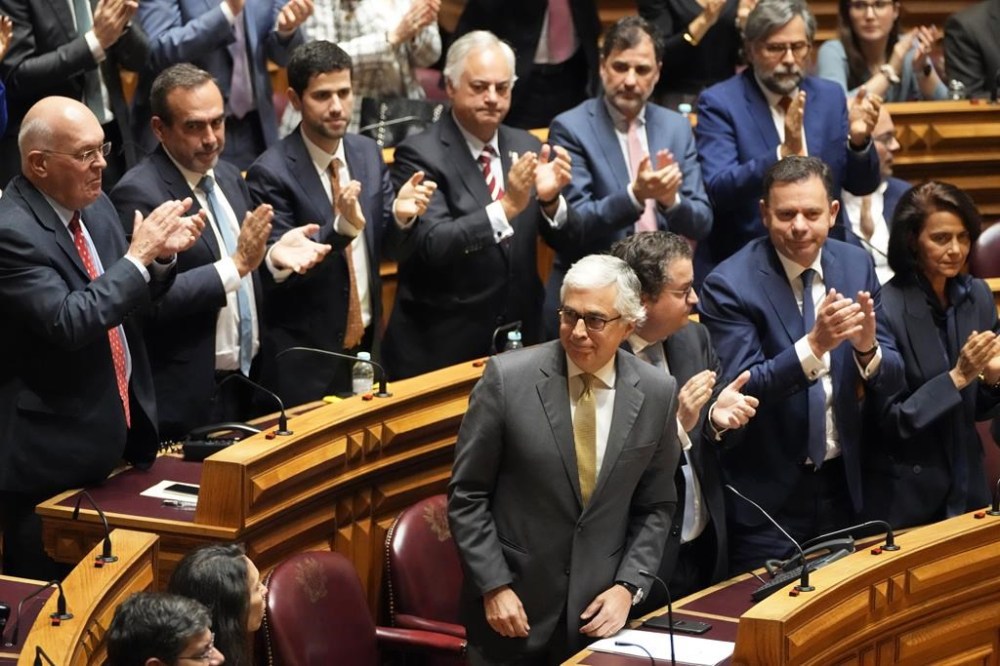
LISBON, Portugal (AP) — Portugal’s newly-elected Parliament on Wednesday voted in a new house speaker, following a potentially important deal between the country’s two main centrist parties.
The chamber elected José Aguiar Branco of the Social Democrats by 160 votes in favor, well above the 116 needed.
The vote came after the Social Democrats reached a deal whereby Aguiar Branco will hold the post for two years after which a Socialist Party candidate will take over.
The agreement indicates the Social Democrats and Socialists could work together to guarantee government without the far-right Chega (Enough) party intervening.
The center-right Social Democrats won the country’s Mar. 10 general election narrowly, taking 78 seats and two more from an allied party to make 80 seats in the 230-seat National Assembly.
President Marcelo Rebelo de Sousa, as head of state, called on the leader of Social Democrats, Luis Montenegro, to form a government. It is to take office April 2 and then present policy proposals to Parliament. If other parties object and bring about a successful vote of no confidence, another party leader will be invited to try to form a government, or another election will be held.
The center-left Socialist Party placed second, also with 78 seats but has said it will not stand in the way of the Social Democrats forming a minority government.
The vote came a day after the Parliament voted three times for house speaker with no winner, raising the specter of fresh elections.
The house speaker oversees a presiding council that monitors Parliament sessions and sets the legislative calendar.
The radical-right populist party Chega came third in the election with 50 seats, an increase from 12 seats in a 2022 election. That surge upended a trend in Portugal where the Social Democrats and Socialists have alternated in power for decades.
Montenegro has so far ruled out any deal with the populists, many of whose policies are unpalatable for many Portuguese. But his hand could be forced by political circumstances because his minority government may not be able to push through legislation on its own.
André Ventura, Chega’s populist leader, has threatened to make life difficult for the new government in key votes, such as the state budget, unless Montenegro yields to his demands. He reacted to the deal between the two main parties Wednesday, saying Chega would now be the main opposition party.
Chega has made common cause with other radical-right parties across Europe. It ran under an anti-graft banner after a slew of recent corruption scandals tarnished the Socialists and Social Democrats.
The election was called after a Socialist government collapsed in November during a corruption investigation. The scandal included a police search of then Prime Minister António Costa’s official residence and the arrest of his chief of staff. Costa has not been accused of any crime.
___
Follow the AP’s coverage of global elections at: https://apnews.com/hub/global-elections/