

Nebraska lawmakers pass a bill to restore voting rights to newly released felons
Advertisement
Read this article for free:
or
Already have an account? Log in here »
To continue reading, please subscribe:

Digital Subscription
One year of digital access for only $205*
- Enjoy unlimited reading on winnipegfreepress.com
- Read the E-Edition, our digital replica newspaper
- Access News Break, our award-winning app
- Play interactive puzzles
*First annual payment billed as $205.00 + GST for one year. This annual subscription will automatically renew at $233.00 + GST every 52 weeks (10% off the regular annual price of $259.35). Offer available to new and qualified returning subscribers only. Cancel any time.
To continue reading, please subscribe:
Add Free Press access to your Brandon Sun subscription for only an additional
$1 for the first 4 weeks*
- Enjoy unlimited reading on winnipegfreepress.com
- Read the E-Edition, our digital replica newspaper
- Access News Break, our award-winning app
- Play interactive puzzles
*Your next Brandon Sun subscription payment will increase by $1.00 and you will be charged $17.95 plus GST for four weeks. After four weeks, your payment will increase to $24.95 plus GST every four weeks.
Read unlimited articles for free today:
or
Already have an account? Log in here »
Hey there, time traveller!
This article was published 11/04/2024 (892 days ago), so information in it may no longer be current.
OMAHA, Neb. (AP) — Nebraska lawmakers passed a bill Thursday to restore the voting rights of those convicted of felonies upon the completion of their sentences, including prison and parole time.
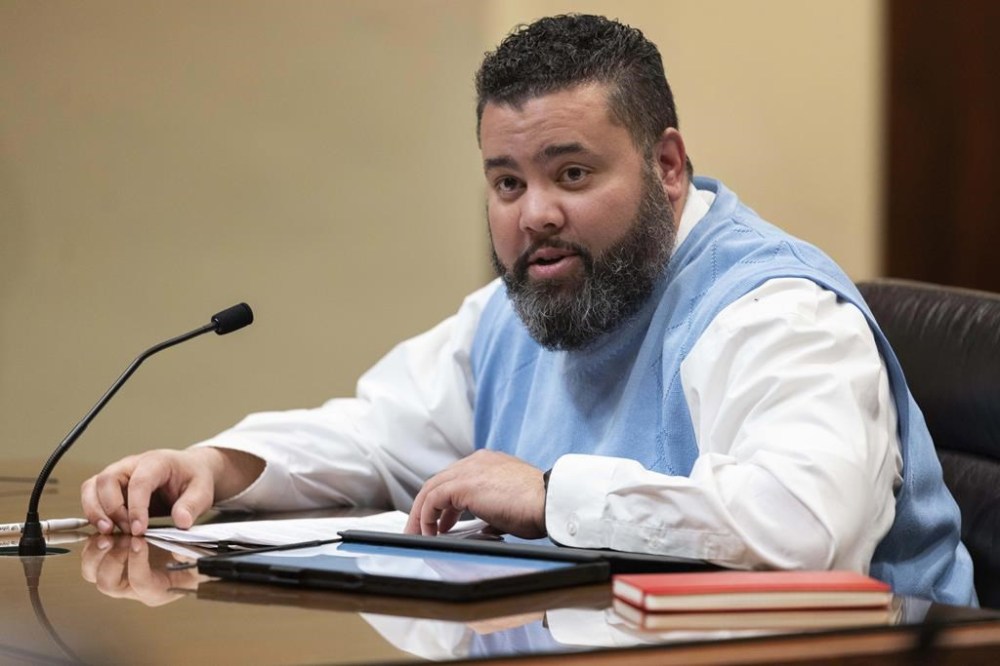
The bill, introduced for years by Omaha state Sen. Justin Wayne, passed by a wide margin in the last year of Wayne’s second term. He is barred by term limits from running this year for a third term.
Currently, a person who has been convicted of a felony must wait two years after completing all the terms of their conviction before regaining voting rights. Wayne’s measure eliminates that waiting period, established in 2005 by the Legislature. Prior to the waiting period, a person convicted of a felony lost their right to vote indefinitely.
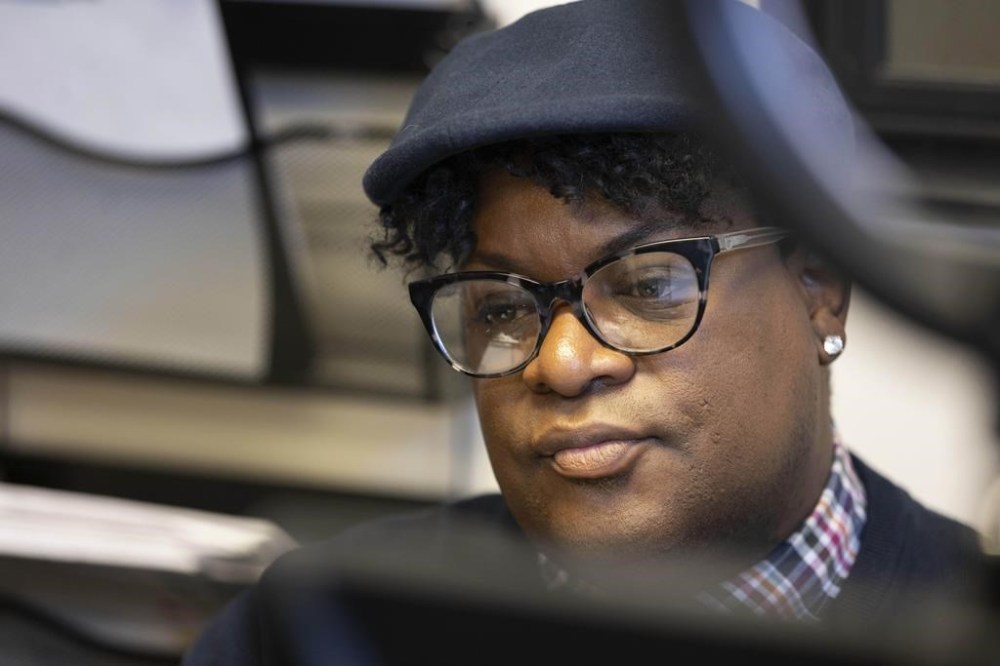
The passage of the bill “means everything for the thousands of people who have not been full participants in society,” said TJ King, a Nebraska-based outreach specialist with the advocacy group Black and Pink who was unable to vote in the 2022 general election after coming off probation for drug and theft convictions three months earlier.
King said the bill’s passage is the final layer in his ability to be civically engaged and “have a full voice and complete connection to the community.”
For years, Wayne’s effort to restore voting rights for felons faced opposition from several Republicans in the officially nonpartisan Nebraska Legislature. Opponents maintained that a two-year waiting period is reasonable and served as a deterrent to committing crime in the first place.
Until this year, Wayne’s closest brush with success came in 2017, when his bill was passed by the Legislature but vetoed by then-Republican Gov. Pete Ricketts.
He prevailed by appealing to the practical sensibilities of law-and-order lawmakers.
“Studies have shown that if you allow people to engage in their community upon being released, the recidivism rate drops,” Wayne said during a public hearing for the bill last year. “We spend on average $42,000 a year on prisoners, of which we have around a 30 percent recidivism rate.
“One year, I brought in a little chart that says if we just cut it by 10 percent, we’re saving around $5 million a year.”
Republican Gov. Jim Pillen’s office did not immediately respond to messages Thursday by The Associated Press asking whether he would sign the bill into law.
Restoring the voting rights of former felons has drawn national attention in recent years. In Florida, lawmakers weakened a 2018 voter-approved constitutional amendment to restore the voting rights of most convicted felons. Following that, an election police unit championed by Republican Gov. Ron DeSantis arrested 20 former felons. Several of them said they were confused by the arrests because they had been allowed to register to vote.
In Tennessee, lawmakers on Wednesday killed a bipartisan bill for the year that would have let residents convicted of felonies apply to vote again without also restoring their gun rights.
As of October 2023, 26 states and the District of Columbia had expanded voting rights to people living with felony convictions, according to The Sentencing Project, a nonprofit sentencing advocacy group that studies criminal justice policy. As a result, voting rights have been restored to over 2 million people, said Nicole Porter, senior director of advocacy at The Sentencing Project.
——
Associated Press writer Gary Fields contributed to this report from Washington, D.C.