

Azerbaijan urges top UN court to toss out Armenian case alleging racial discrimination
Advertisement
Read this article for free:
or
Already have an account? Log in here »
To continue reading, please subscribe:
Digital Subscription
One year of digital access for only $1.44 a week*
- Enjoy unlimited reading on winnipegfreepress.com
- Read the E-Edition, our digital replica newspaper
- Access News Break, our award-winning app
- Play interactive puzzles
*Billed as $5.77 plus GST every four weeks. After 52 weeks, price increases to the regular rate of $19.95 plus GST every four weeks. Offer available to new and qualified returning subscribers only. Cancel any time.
To continue reading, please subscribe:
Add Free Press access to your Brandon Sun subscription for only an additional
$1 for the first 4 weeks*
- Enjoy unlimited reading on winnipegfreepress.com
- Read the E-Edition, our digital replica newspaper
- Access News Break, our award-winning app
- Play interactive puzzles
*Your next Brandon Sun subscription payment will increase by $1.00 and you will be charged $17.95 plus GST for four weeks. After four weeks, your payment will increase to $24.95 plus GST every four weeks.
Read unlimited articles for free today:
or
Already have an account? Log in here »
Hey there, time traveller!
This article was published 15/04/2024 (920 days ago), so information in it may no longer be current.
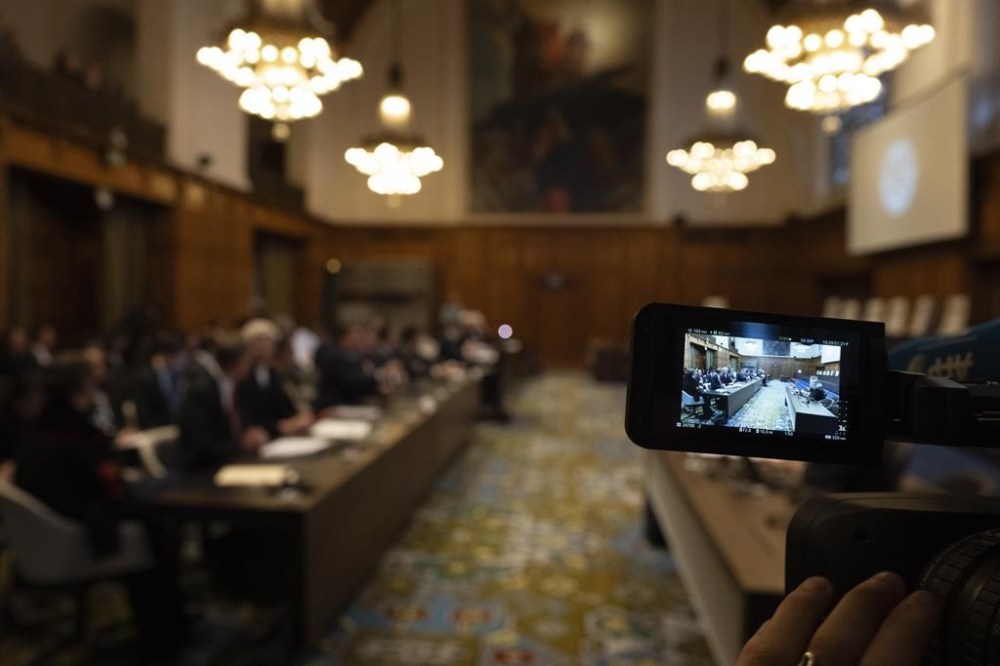
THE HAGUE, Netherlands (AP) — Lawyers for Azerbaijan on Monday urged the top United Nations court to throw out a case filed by Armenia linked to the long-running dispute over the Nagorno-Karabakh region, arguing that judges do not have jurisdiction.
Armenia filed the case at the International Court of Justice in 2021, accusing Azerbaijan of a “state-sponsored policy of Armenian hatred” that has led to “systemic discrimination, mass killings, torture and other abuse.”
The legal dispute stems from long-standing tensions that erupted into a 2020 war over Nagorno-Karabakh that left more than 6,600 people dead. The region is within Azerbaijan, but had been under the control of ethnic Armenian forces backed by Armenia since the end of a separatist war in 1994.
Armenia’s case is based on an international convention on stamping out racial discrimination, which has a clause allowing disputes to be resolved by the world court if bilateral negotiations fail to broker a settlement.
However, Azerbaijani deputy Foreign Minister Elnur Mammadov told judges Monday that Armenia could not bring the dispute to the court in The Hague, arguing that the two countries had not first engaged in serious negotiations.
“Armenia had its sights firmly set on commencing these proceedings before the court and using the effect of these proceedings to wage a public media campaign against Azerbaijan,” Mammadov said.
International law professor Stefan Talmon, representing Azerbaijan, added that Armenia “never gave negotiations a chance.”
He said that “with no negotiations and no genuine attempt at negotiations, that basically is the end of Armenia’s application” to the court.
Azerbaijan also argued that most allegations in Armenia’s case fall outside the scope of the discrimination convention, meaning the court did not have jurisdiction.
Armenia is scheduled to respond Tuesday to Azerbaijan’s arguments.
Azerbaijan has also brought a case against Armenia at the world court alleging breaches of the same convention. Objections filed by Armenia to the Azerbaijani case will be heard later this month.
The 2020 conflict ended with a Russia-brokered ceasefire agreement that granted Azerbaijan control over parts of Nagorno-Karabakh as well as some adjacent territories.
Azerbaijan waged a lightning military campaign in Nagorno-Karabakh last year that resulted in the vast majority of the region’s 120,000 residents fleeing.
In December, the two sides agreed to begin negotiations on a peace treaty. However, many residents of Armenia’s border regions have resisted the demarcation effort, seeing it as Azerbaijan encroaching on areas they consider their own.
Armenia’s prime minister said last month that the Caucasus nation needs to define its border with Azerbaijan quickly to avoid a new round of hostilities.