

Croatia’s top court rules President Milanović cannot be prime minister because of campaign
Advertisement
Read this article for free:
or
Already have an account? Log in here »
To continue reading, please subscribe:

Digital Subscription
One year of digital access for only $205*
- Enjoy unlimited reading on winnipegfreepress.com
- Read the E-Edition, our digital replica newspaper
- Access News Break, our award-winning app
- Play interactive puzzles
*First annual payment billed as $205.00 + GST for one year. This annual subscription will automatically renew at $233.00 + GST every 52 weeks (10% off the regular annual price of $259.35). Offer available to new and qualified returning subscribers only. Cancel any time.
To continue reading, please subscribe:
Add Free Press access to your Brandon Sun subscription for only an additional
$1 for the first 4 weeks*
- Enjoy unlimited reading on winnipegfreepress.com
- Read the E-Edition, our digital replica newspaper
- Access News Break, our award-winning app
- Play interactive puzzles
*Your next Brandon Sun subscription payment will increase by $1.00 and you will be charged $17.95 plus GST for four weeks. After four weeks, your payment will increase to $24.95 plus GST every four weeks.
Read unlimited articles for free today:
or
Already have an account? Log in here »
Hey there, time traveller!
This article was published 19/04/2024 (904 days ago), so information in it may no longer be current.
ZAGREB, Croatia (AP) — Croatia’s Constitutional Court on Friday banned President Zoran Milanović from becoming prime minister in case his center-left party manages to garner a majority after this week’s highly contested parliamentary election.
The ballot on Wednesday ended inconclusively. The governing center-right Croatian Democratic Union, or HDZ, won the most votes but not enough to rule alone. Although it finished second, Milanović’s Social Democratic Party is also trying to muster a coalition in the 151-member parliament.
Milanović made a surprise announcement that he would run for prime minister just hours after calling the election for April 17. The Constitutional Court warned him last month that he had to resign first, a warning that he ignored.
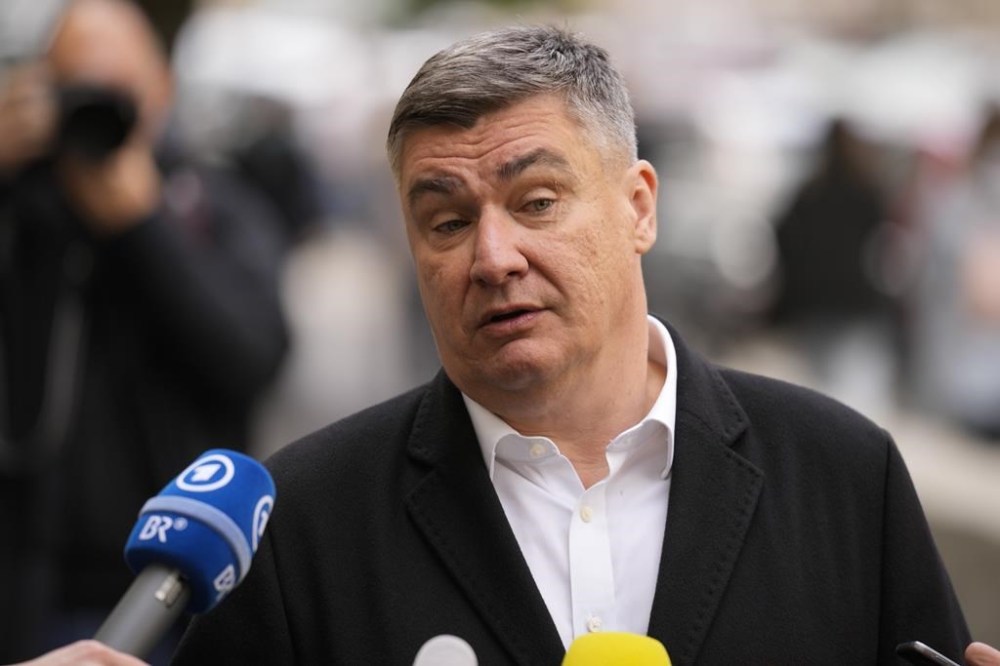
“The Constitutional Court established that with his statements and behavior the president … brought himself in the position that he can neither be the prime minister-designate of the future government nor the future prime minister,” the ruling said.
Milanovic and his SDP party said the Constitutional Court has no right to counter the will of the people. They claimed that the future parliament can choose whomever they want as the next prime minister.
“The elections are over and the people’s will will determine, and not the judges,” Milanovic said at a press conference.
SDP President Pedja Grbin described the ruling as “shameful.” He urged other opposition groups to help form a new government without HDZ.
Milanović has insisted that he had not violated Croatia’s top law by openly supporting the opposition during the campaign and saying he would become the new prime minister. He has accused the current Prime Minister Andrej Plenković of widespread corruption.
The showdown between Croatia’s two top politicians has dominated the vote, which is also seen as a test ahead of elections for the European parliament in June.
Milanović is critical of EU policies over the war in Ukraine. If he were to form a government, that could potentially open space for stronger pro-Russia influence in the country, akin to Hungary and Slovakia.
Officials results of Wednesday’s vote has shown that Plenković’s HDZ won 61 parliamentary seats while the SDP got 42. The far-right Homeland Movement has emerged as a potential kingmaker with 14 seats.
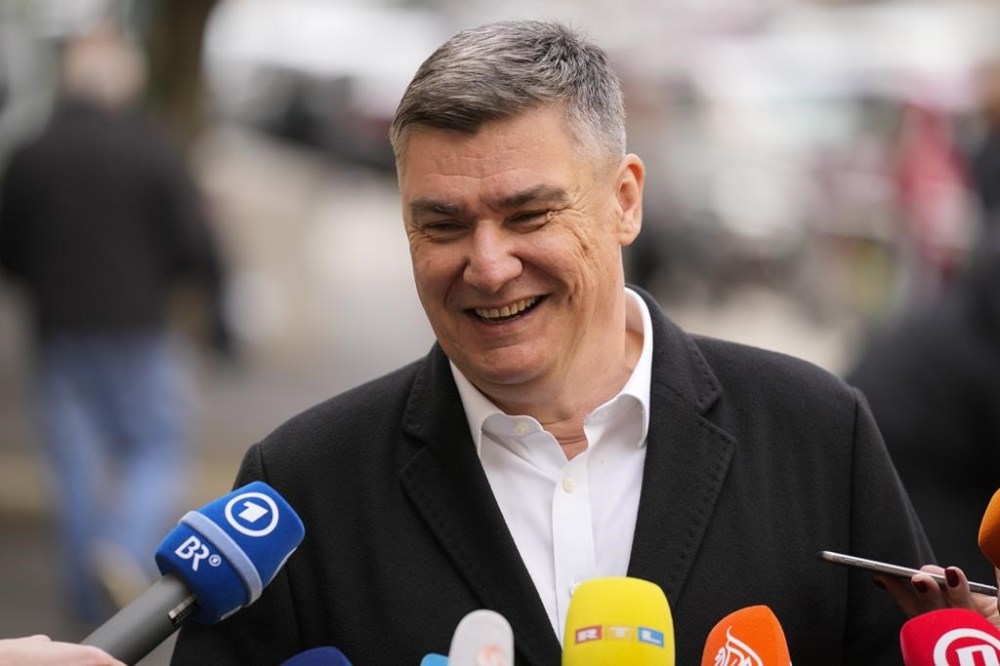
The Constitutional Court said that Milanović could not now become prime minister even if he resigned as president to take up the new post. Some opposition politicians alleged the court is controlled by the ruling conservatives.
Former Prime Minister Jadranka Kosor said the court’s decisions and announcements ran against the constitution itself. Leftist politician Dalija Orešković described Croatia’s top court as “one of a number of captured institutions.”
The HDZ has largely held office since Croatia gained independence. The Balkan nation became an EU member in 2013, and joined Europe’s passport-free travel area and the eurozone last year.
A presidential election is due to be held in Croatia by the end of the year.