

2 Japanese navy helicopters crash in the Pacific Ocean during training, leaving 1 dead and 7 missing
Advertisement
Read this article for free:
or
Already have an account? Log in here »
To continue reading, please subscribe:

Digital Subscription
One year of digital access for only $205*
- Enjoy unlimited reading on winnipegfreepress.com
- Read the E-Edition, our digital replica newspaper
- Access News Break, our award-winning app
- Play interactive puzzles
*First annual payment billed as $205.00 + GST for one year. This annual subscription will automatically renew at $233.00 + GST every 52 weeks (10% off the regular annual price of $259.35). Offer available to new and qualified returning subscribers only. Cancel any time.
To continue reading, please subscribe:
Add Free Press access to your Brandon Sun subscription for only an additional
$1 for the first 4 weeks*
- Enjoy unlimited reading on winnipegfreepress.com
- Read the E-Edition, our digital replica newspaper
- Access News Break, our award-winning app
- Play interactive puzzles
*Your next Brandon Sun subscription payment will increase by $1.00 and you will be charged $17.95 plus GST for four weeks. After four weeks, your payment will increase to $24.95 plus GST every four weeks.
Read unlimited articles for free today:
or
Already have an account? Log in here »
Hey there, time traveller!
This article was published 20/04/2024 (878 days ago), so information in it may no longer be current.
TOKYO (AP) — Two Japanese navy helicopters carrying eight crew members crashed in the Pacific Ocean south of Tokyo during nighttime training in a possible collision, leaving one dead while rescuers on Sunday searched for seven others missing, the defense minister said.
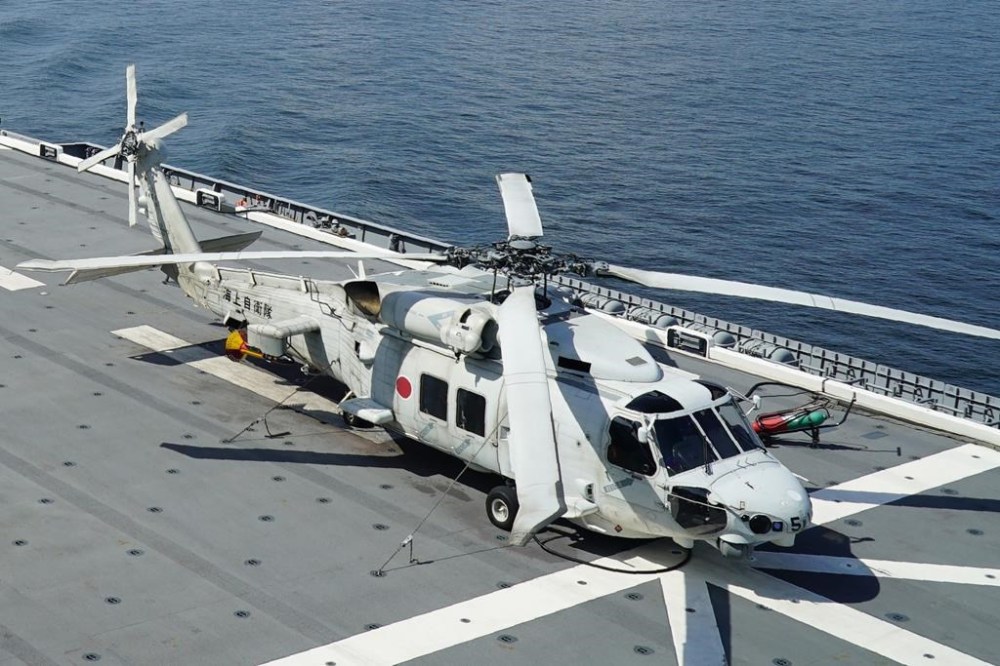
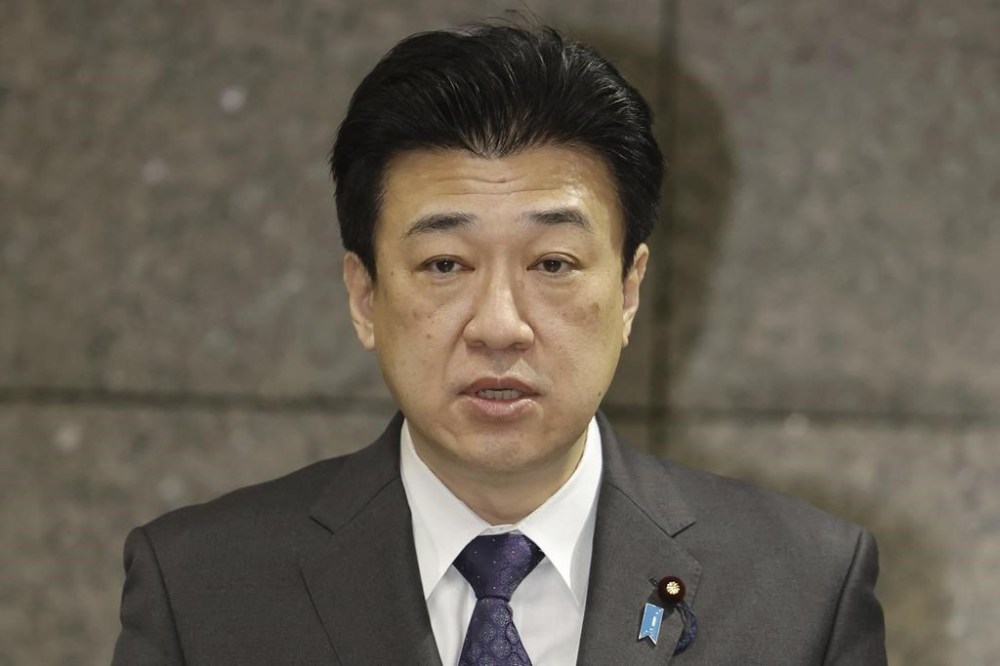
The two SH-60K choppers from the Maritime Self-Defense Force were carrying four crew each and lost contact late Saturday near Torishima island, about 600 kilometers (370 miles) south of Tokyo, Defense Minister Minoru Kihara told reporters.
The cause of the crash was not immediately known, but officials believe the two helicopters “highly likely” collided before crashing into the water, Kihara said.
The navy chief of staff, Adm. Ryo Sakai, said training involving the SH-60s will be suspended until the cause of the crash is determined and preventive measures are adopted.
Rescuers recovered a flight data recorder, a blade from each helicopter, and fragments believed to be from both choppers in the same area, signs that the two SH-60Ks were flying close to each other, Kihara said.
Search and rescue efforts for the missing crew were expanded Sunday with the deployment of 12 warships and seven aircraft. Japan coast guard patrol boats and planes also joined the operation.
U.S. Ambassador to Japan Rahm Emanuel offered his country’s to help with the search and rescue.
“We will stand together, side by side, with our friend and ally, Japan. My thoughts are with the crew members, and their families and friends during this challenging time,” he wrote on the social platform X.
The twin-engine, multi-mission helicopters developed by Sikorsky and known as Seahawks were modified and produced in Japan by Mitsubishi Heavy Industries. They were on nighttime anti-submarine training, Kihara said. One lost contact at 10:38 p.m. and sent an automatic emergency signal a minute later.
Only one distress signal, called an emergency locator transmitter, was heard — another sign the helicopters were near the same place, because their signals use the same frequency and could not be differentiated, Kihara said.
One helicopter belonged to an air base in Nagasaki, and the other to a base in Tokushima prefecture. Officials were interviewing the pilot of a third aircraft that also participated in Saturday’s training, Kihara said.
The SH-60K aircraft is usually deployed on destroyers for anti-submarine warfare, but is also used for search and rescue and other missions. Japan has about 70 of the modified helicopters.
Saturday’s training only involved the Japanese navy and was not part of a multinational exercise, defense officials said.
Japan, under its 2022 security strategy, has been accelerating its military buildup and fortifying deterrence in the southwestern Japanese islands in the Pacific and East China Sea to counter threats from China’s increasingly assertive military activities. Japan in recent years has conducted its own extensive naval exercises as well as joint drills with its ally the United States and other partners.
Saturday’s training was part of routine drills involving warships, submarines and Seahawk helicopters, the Japanese navy chief of staff said. During training, a number of helicopters hover together as they lower sonars into the water to detect submarines.
In 2017, a Japanese navy SH-60J, an earlier generation Seahawk, crashed during nighttime training due to human error, killing three crew. In July 2021, two SH-60s had a minor collision off the southern island of Amamioshima, both suffering blade damage, but causing no injuries.
Following the 2021 collision, the navy introduced a set of preventive measures to ensure enough distance between aircraft. Sakai said Saturday’s crash could have been prevented if all safety measures were adequately followed.

In the U.S., the fatal crash of a MH-60S Seahawk during training off California in 2021 was attributed to mechanical failure from unsuspected damage during maintenance, according to the Navy.
The crash in Japan also comes a year after a Ground Self-Defense Force UH-60 Blackhawk crashed off the southwestern island of Miyako due to an engine output problem known as “rollback,” leaving all 10 crew members dead.
Japan’s NHK public television said no weather advisories were issued in the area at the time of Saturday’s crash.