

Residents of four Serb-majority municipalities boycott vote on removing ethnic Albanian mayors
Advertisement
Read this article for free:
or
Already have an account? Log in here »
To continue reading, please subscribe:

Digital Subscription
One year of digital access for only $205*
- Enjoy unlimited reading on winnipegfreepress.com
- Read the E-Edition, our digital replica newspaper
- Access News Break, our award-winning app
- Play interactive puzzles
*First annual payment billed as $205.00 + GST for one year. This annual subscription will automatically renew at $233.00 + GST every 52 weeks (10% off the regular annual price of $259.35). Offer available to new and qualified returning subscribers only. Cancel any time.
To continue reading, please subscribe:
Add Free Press access to your Brandon Sun subscription for only an additional
$1 for the first 4 weeks*
- Enjoy unlimited reading on winnipegfreepress.com
- Read the E-Edition, our digital replica newspaper
- Access News Break, our award-winning app
- Play interactive puzzles
*Your next Brandon Sun subscription payment will increase by $1.00 and you will be charged $17.95 plus GST for four weeks. After four weeks, your payment will increase to $24.95 plus GST every four weeks.
Read unlimited articles for free today:
or
Already have an account? Log in here »
Hey there, time traveller!
This article was published 21/04/2024 (880 days ago), so information in it may no longer be current.
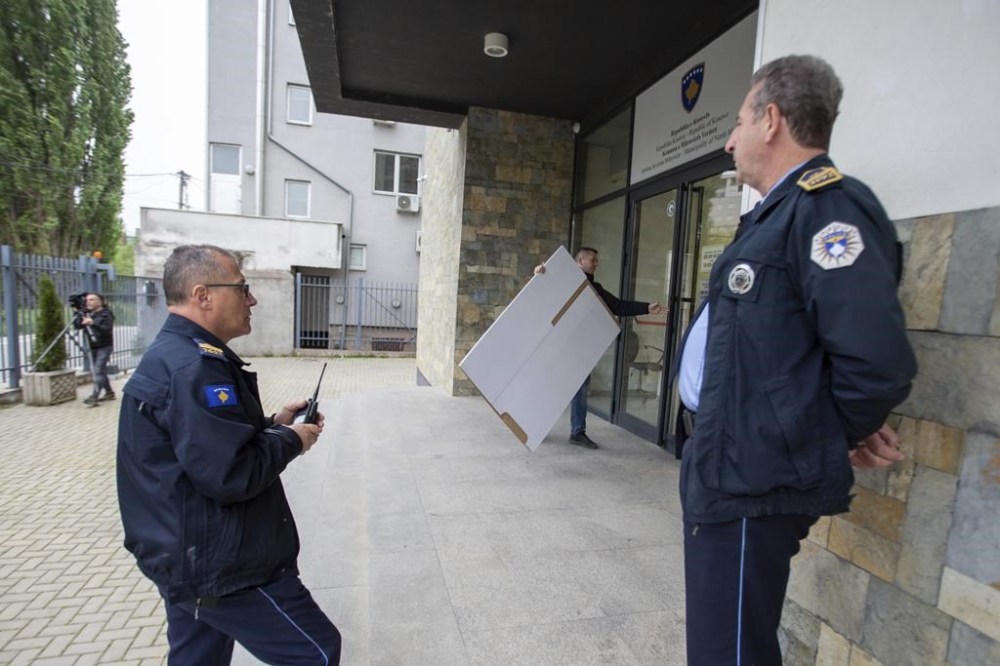
PRISTINA, Kosovo (AP) — Residents of four Serb-majority municipalities on Sunday overwhelmingly boycotted a vote on removing their ethnic Albanian mayors from office following last year’s mayoral elections.
The referendum — supported by the West — was an attempt to diffuse tensions between Kosovo and neighboring Serbia as both countries vie to join the European Union. However, Kosovo’s main ethnic Serb party, Srpska Lista, or Serbian List, which has close ties with Belgrade, had called for a boycott of Sunday’s poll.
Only 253 out of 46,556 registered voters cast their ballots in all four municipalities. For the mayors to be ousted, a majority vote is needed. No ballots at all were cast in one of the municipalities, Zvecan, according to results after voting ended at 1700 GMT (1 p.m. EDT).
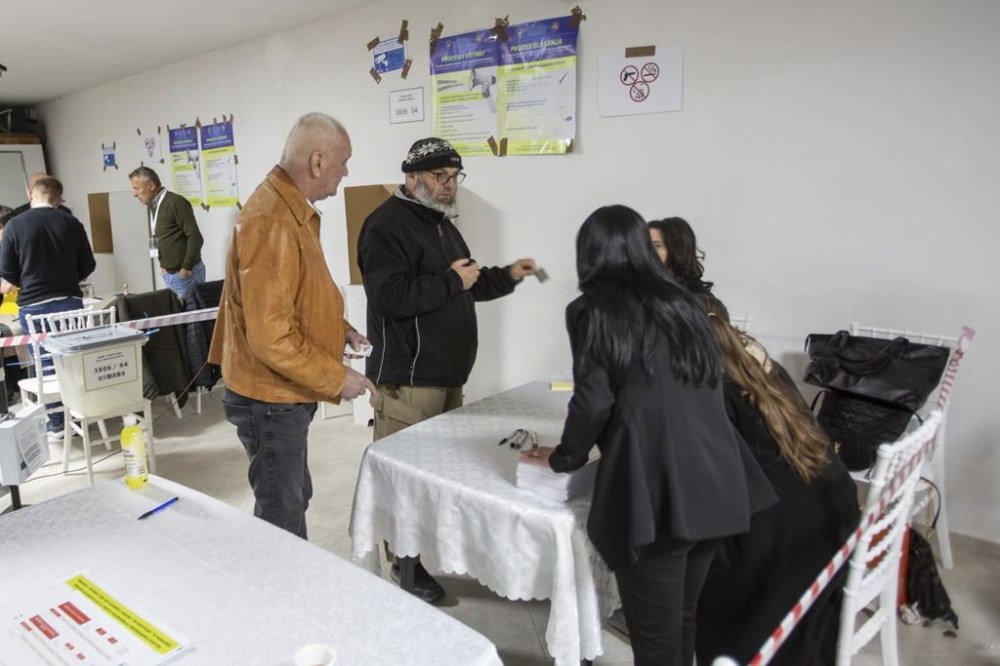
“That is why we note that the citizens’ initiative to oust the mayors of the municipalities of Leposavic, Zubin Potok, Zvecan and North Mitrovica has failed,” said Kreshnik Radoniqi, head of the Central Election Commission, which is in charge of the process.
In June, Kosovo Prime Minister Albin Kurti offered to hold new elections in North Mitrovica, Zvecan, Leposavic and Zubin Potok if 20% of the electorate in the municipalities supported a petition for the polls. Residents voted in favor of the petition in January.
When ethnic Albanian mayors took up the offices last May, Kosovo Serbs clashed with security forces, including NATO-led KFOR peacekeepers, injuring 93 troops, while protesting the results.
Serbia has backed calls for the mayors to step down.
Local and EU observers monitored the process.
The result leaves the same tense status quo in northern Kosovo and its EU-facilitated negotiations to normalize ties with neighboring Serbia. No developments are expected in the months ahead.
Kosovo President Vjosa Osmani accused Belgrade of exerting pressure on Serbs in Kosovo to boycott the referendum.
“Once again Serbia interfered illegally in the election process of another country. Once again (Serbian President Aleksandar) Vucic has not kept his word given to international partners (not to interfere),” Osmani said.
Srpska Lista acknowledged that it wanted “to replace these fake mayors in our municipalities, but we didn’t want to play games directed by the regime in Pristina.” The party accused Kurti’s government of exerting pressure on ethnic Serbs in the north with its police presence.
Kosovo was a former Serbian province until a 78-day NATO bombing campaign in 1999 ended a war between Serbian government forces and ethnic Albanian separatists in Kosovo, which left about 13,000 dead, mainly ethnic Albanians, and pushed Serbian forces out. Serbia doesn’t recognize Kosovo’s 2008 independence.
Tensions between the two countries remain high.
On Monday, Kosovo took another major step toward joining the Council of Europe — the continent’s foremost human rights body — amid Serbian opposition. The following day, Belgrade authorities stopped Kosovars trying to go home for nearly 20 hours at border checkpoints, saying it was for security reasons. Pristina accused Belgrade of “holding (Kosovars) hostage” for failing to block Kosovo’s Council of Europe membership. The U.S. and EU denounced stalling free movement between the two countries.
Earlier this month, Kosovo announced its first nationwide census since 2011, which will include surveying the ethnic Serb minority in the north. The Srpska List party has denounced the census and called for a boycott, saying it was an attempt by Kurti’s government “to confirm his shameful success in expelling (some 250,000) Serbs,” in reference to the 1999 war.
Another point of contention was Pristina’s recent decision to ban ethnic Serbs from using the Serbian currency, the dinar, widely used in Kosovo’s Serbian-run institutions, including schools and hospitals.
The United States and the EU are struggling to get the Pristina-Belgrade dialogue “back on track.” Talks between the two have stalled after a Kosovo police officer and three Serb gunmen were killed in a shootout after about 30 masked men opened fire on a police patrol near the Kosovo village of Banjska in September.
Brussels has warned both that refusal to compromise jeopardizes Serbia and Kosovo’s chances of joining the bloc. The 27-nation bloc is keen on maintaining the alignment of the Western Balkan countries — Serbia, Kosovo, Bosnia, Montenegro, North Macedonia and Albania — with the West as Russia’s war against Ukraine continues. The six are at different stages of the accession process.
___
Llazar Semini reported from Tirana, Albania.
___
Follow Llazar Semini at https://x.com/lsemini