

Supreme Court denies request by Arizona candidates seeking to ban electronic vote tabulators
Advertisement
Read this article for free:
or
Already have an account? Log in here »
To continue reading, please subscribe:

Digital Subscription
One year of digital access for only $205*
- Enjoy unlimited reading on winnipegfreepress.com
- Read the E-Edition, our digital replica newspaper
- Access News Break, our award-winning app
- Play interactive puzzles
*First annual payment billed as $205.00 + GST for one year. This annual subscription will automatically renew at $233.00 + GST every 52 weeks (10% off the regular annual price of $259.35). Offer available to new and qualified returning subscribers only. Cancel any time.
To continue reading, please subscribe:
Add Free Press access to your Brandon Sun subscription for only an additional
$1 for the first 4 weeks*
- Enjoy unlimited reading on winnipegfreepress.com
- Read the E-Edition, our digital replica newspaper
- Access News Break, our award-winning app
- Play interactive puzzles
*Your next Brandon Sun subscription payment will increase by $1.00 and you will be charged $17.95 plus GST for four weeks. After four weeks, your payment will increase to $24.95 plus GST every four weeks.
Read unlimited articles for free today:
or
Already have an account? Log in here »
Hey there, time traveller!
This article was published 22/04/2024 (886 days ago), so information in it may no longer be current.
PHOENIX (AP) — The U.S. Supreme Court on Monday declined to consider a request by Republican U.S. Senate candidate Kari Lake to ban the use of electronic vote-counting machines in Arizona.
Lake and former Republican secretary of state candidate Mark Finchem filed suit two years ago, repeating unfounded allegations about the security of machines that count votes. They relied in part on testimony from Donald Trump supporters who led a discredited review of the election in Maricopa County, including Doug Logan, the CEO of Cyber Ninjas, who oversaw the effort described by supporters as a “forensic audit.”
U.S. District Judge John Tuchi in Phoenix ruled that Lake and Finchem lacked standing to sue because they failed to show any realistic likelihood of harm. He later sanctioned their attorneys for bringing a claim based on frivolous information.
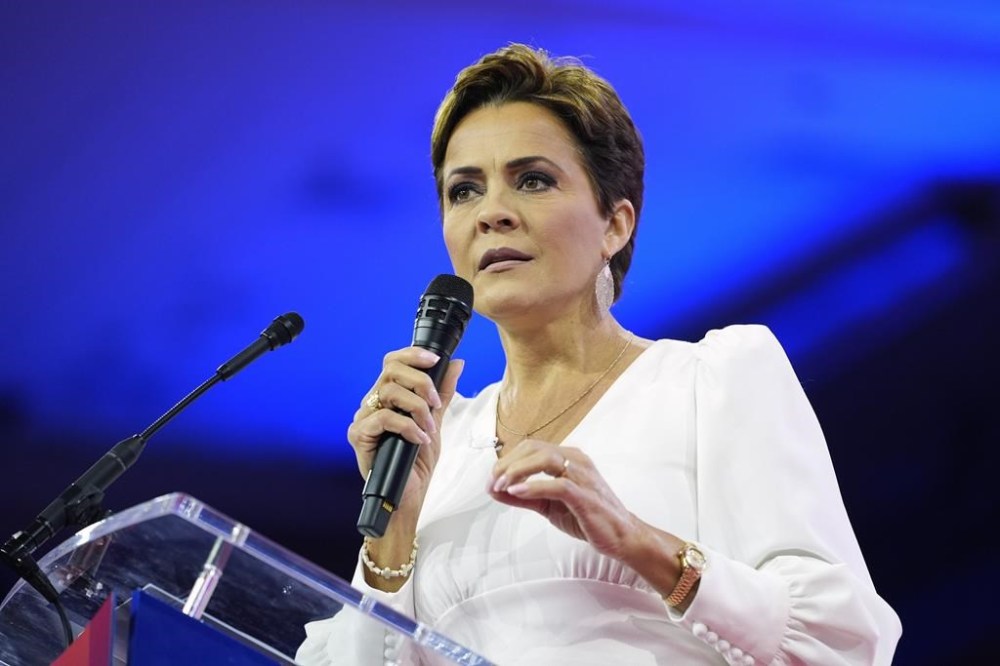
When the lawsuit was initially filed in 2022, Lake was a candidate for governor and Finchem was running for secretary of state. They made baseless election fraud claims a centerpiece of their campaigns. Both went on to lose to Democrats and challenged the outcomes in court.
Lake is now the GOP front-runner for the U.S. Senate in Arizona, where she has at times tried to reach out to establishment Republicans turned off by her focus on making fraud claims about past elections. Finchem is running for state Senate.
Lawyers for Lake and Finchem had argued that hand counts are the most efficient method for totaling election results. Election administrators testified that hand counting dozens of races on millions of ballots would require an extraordinary amount of time, space and manpower, and would be less accurate.
The Supreme Court’s decision not to take the vote-counting case marks the end of the road for the effort to require a hand count of ballots. No justices dissented when the court denied their request.
Meanwhile, Lake declined to defend herself in a defamation lawsuit against her by a top Maricopa County election official. She had accused county Recorder Stephen Richer, a fellow Republican, of rigging the 2022 gubernatorial election against her.