

Aboriginal spears taken by Captain Cook in 1770 are returned to Australia’s Indigenous people
Advertisement
Read this article for free:
or
Already have an account? Log in here »
To continue reading, please subscribe:

Digital Subscription
One year of digital access for only $205*
- Enjoy unlimited reading on winnipegfreepress.com
- Read the E-Edition, our digital replica newspaper
- Access News Break, our award-winning app
- Play interactive puzzles
*First annual payment billed as $205.00 + GST for one year. This annual subscription will automatically renew at $233.00 + GST every 52 weeks (10% off the regular annual price of $259.35). Offer available to new and qualified returning subscribers only. Cancel any time.
To continue reading, please subscribe:
Add Free Press access to your Brandon Sun subscription for only an additional
$1 for the first 4 weeks*
- Enjoy unlimited reading on winnipegfreepress.com
- Read the E-Edition, our digital replica newspaper
- Access News Break, our award-winning app
- Play interactive puzzles
*Your next Brandon Sun subscription payment will increase by $1.00 and you will be charged $17.95 plus GST for four weeks. After four weeks, your payment will increase to $24.95 plus GST every four weeks.
Read unlimited articles for free today:
or
Already have an account? Log in here »
Hey there, time traveller!
This article was published 23/04/2024 (893 days ago), so information in it may no longer be current.
LONDON (AP) — Four Aboriginal spears that were taken to England by Captain James Cook more than 250 years ago were returned Tuesday to Australia’s Indigenous community at a ceremony in Cambridge University.
The artifacts were all that remain of some 40 spears that Cook and botanist Joseph Banks took in April 1770, at the time of the first contact between Cook’s crew and the Indigenous people of Kamay, or Botany Bay.
The spears were presented to Trinity College, Cambridge by John Montagu, the 4th Earl of Sandwich the following year, along with other items from Cook’s voyage across the Pacific. The spears have been held at the university’s Museum of Archaeology and Anthropology since the early 20th century.
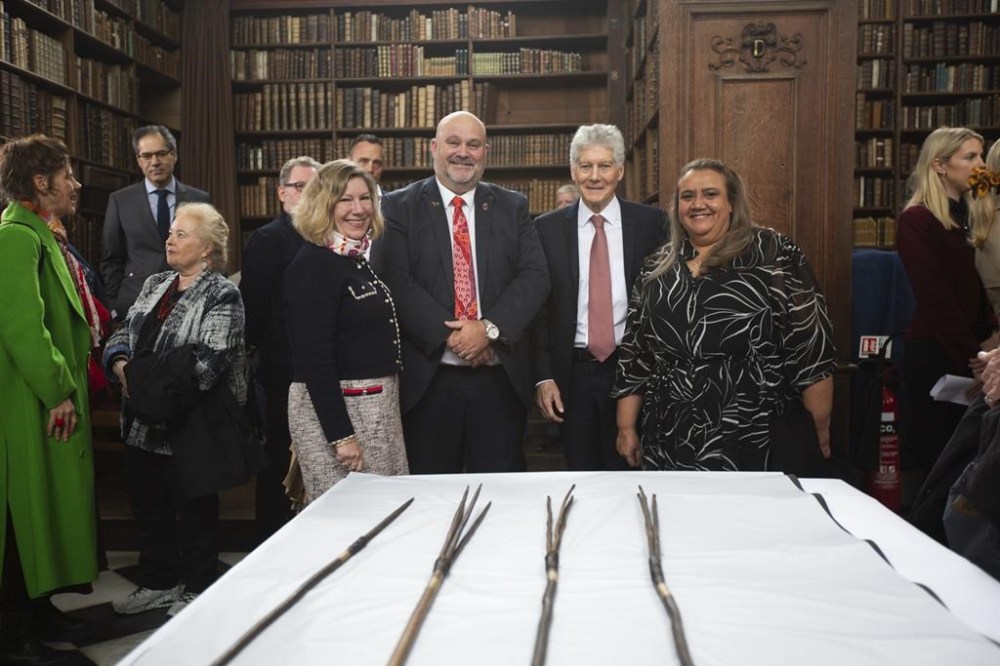
Their return, agreed last year following a campaign and a formal repatriation request, was hailed as a step toward reconciliation and a greater understanding of Britain and Australia’s shared history.
Sally Davies, head of Trinity College, said it was the “right decision” to return the spears and that the institution was “committed to reviewing the complex legacies of the British empire, not least in our collections.”
The spears were “exceptionally significant” because they were the first artifacts collected by the British from any part of Australia that remain, said Nicholas Thomas, director of Cambridge’s archaeology museum.
“They reflect the beginnings of a history of misunderstanding and conflict,” he said.
The Gujaga Foundation, which leads cultural and research programs within the La Perouse Aboriginal community, said the artifacts’ return marked a “momentous occasion.”
“The spears were pretty much the first point of European contact, particularly British contact with Aboriginal Australia,” said Ray Ingrey, the foundation’s director.
“Ultimately, they’ll be put on permanent display for everyone to go see, at the very spot they were taken from 250 years ago,” he added.
The spears were taken by members of Cook’s expedition from an unoccupied Aboriginal campsite, according to the National Museum of Australia’s website.
A diary entry by Banks that the website cited read: ”(We) threw into the house to them some beads, ribbands, cloths &c. as presents and went away. We however thought it no improper measure to take away with us all the lances (spears) which we could find about the houses, amounting in number to forty or fifty.”
Ingrey said the spears were “undoubtedly taken without permission.”
The spears will be displayed at a new visitor center to be built at Kurnell, Kamay.