

Georgia prison officials in ‘flagrant’ violation of solitary confinement reforms, judge says
Advertisement
Read this article for free:
or
Already have an account? Log in here »
To continue reading, please subscribe:

Digital Subscription
One year of digital access for only $205*
- Enjoy unlimited reading on winnipegfreepress.com
- Read the E-Edition, our digital replica newspaper
- Access News Break, our award-winning app
- Play interactive puzzles
*First annual payment billed as $205.00 + GST for one year. This annual subscription will automatically renew at $233.00 + GST every 52 weeks (10% off the regular annual price of $259.35). Offer available to new and qualified returning subscribers only. Cancel any time.
To continue reading, please subscribe:
Add Free Press access to your Brandon Sun subscription for only an additional
$1 for the first 4 weeks*
- Enjoy unlimited reading on winnipegfreepress.com
- Read the E-Edition, our digital replica newspaper
- Access News Break, our award-winning app
- Play interactive puzzles
*Your next Brandon Sun subscription payment will increase by $1.00 and you will be charged $17.95 plus GST for four weeks. After four weeks, your payment will increase to $24.95 plus GST every four weeks.
Read unlimited articles for free today:
or
Already have an account? Log in here »
Hey there, time traveller!
This article was published 23/04/2024 (878 days ago), so information in it may no longer be current.
ATLANTA (AP) — Georgia prison officials have flagrantly violated a court order to reform conditions for prisoners in the state’s most restrictive holding facility, showing “no desire or intention” to make the required changes to solitary confinement practices, a federal judge said.
In a damning ruling, U.S. District Judge Marc Treadwell on Friday held officials at the Georgia Department of Corrections in contempt, threatening them with fines and ordering an independent monitor to ensure compliance with a settlement agreement for the Special Management Unit of the Georgia Diagnostic and Classification Prison in Jackson, about 50 miles (80km) south of Atlanta.
The SMU houses some of the state’s most violent offenders in solitary confinement under conditions that one expert found risked causing psychological harm.
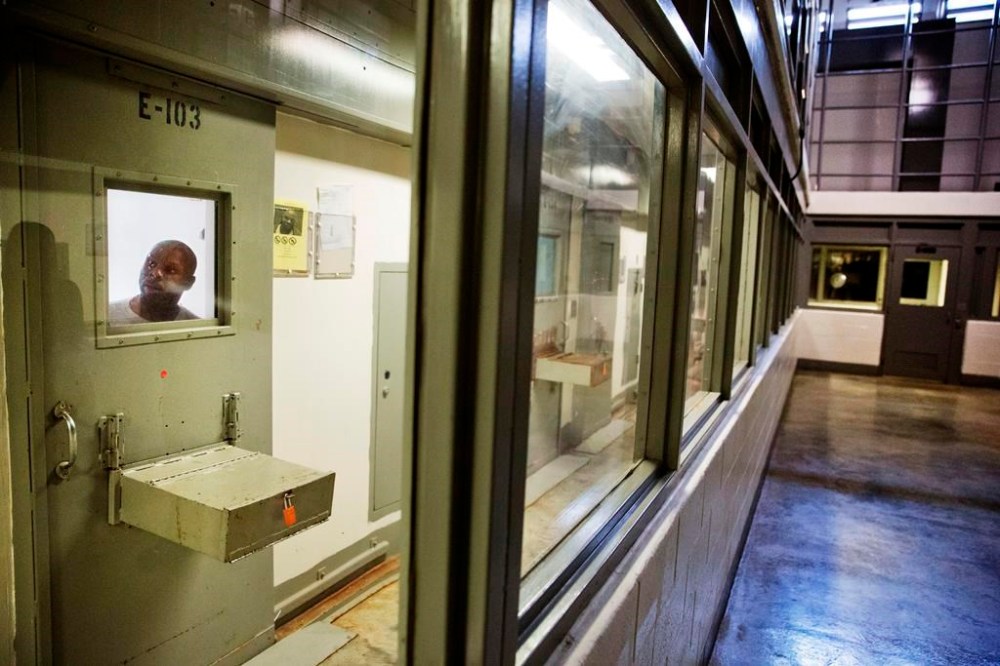
“Despite clear and unambiguous directives aimed at improving conditions and procedural safeguards at the SMU, the defendants have failed to implement reforms that were agreed upon by the parties and ordered by the Court, thereby negating the required relief,” Treadwell wrote.
He accused prison officials of falsifying documents and said they routinely placed new arrivals at the facility in “strip cells,” where one inmate said he was not given clothes or a mattress and could not use the toilet because it was broken and filled with human waste.
A spokesperson for the state department of corrections, Joan Heath, said in an email it will not be commenting on legal matters.
The settlement agreement stemmed from a 2015 lawsuit by Timothy Gumm, an inmate at the SMU serving a life sentence for rape. In the most restrictive wings, prisoners remained locked in their cells alone 24 hours a day, five to seven days a week, and weren’t allowed to have books or other distractions, lawyers for Gumm and other inmates said.
A psychology professor and prison expert told the court he had toured maximum security prisons in roughly two dozen states, and Georgia’s SMU unit was “one of the harshest and most draconian” he had seen.
Craig Haney’s report — submitted to the court in 2018 by lawyers for prisoners — included images of prisoners with self-inflicted cuts, blood on the floor of one cell and the window of another, and descriptions of “extraordinarily harsh” living conditions. His conclusion: “The prisoners at this facility face a substantial risk of serious harm, harm that may be long-lasting and even fatal.”
The settlement agreement the court approved in 2019 required prison officials to allow prisoners out of their cells at least four hours each weekday, give them access to educational programming and materials, and keep their cells clean, among other changes.
In his order on Friday, Treadwell said the plaintiffs presented “overwhelming evidence” that inmates remained in their cells between 22 and 24 hours a day and did not receive the required minimum of at least two hours a week of classroom time. They were also not given weekly access to a book cart, library or computer tablet as required, among numerous other violations, the judge said.
He called the violations “longstanding and flagrant.”
Georgia’s prisons also face scrutiny from the U.S. Justice Department, which announced in 2021 it was launching a civil rights probe of the system.