

Taiwan’s president-elect appoints new foreign, defense ministers as island faces continued threats
Advertisement
Read this article for free:
or
Already have an account? Log in here »
To continue reading, please subscribe:

Digital Subscription
One year of digital access for only $205*
- Enjoy unlimited reading on winnipegfreepress.com
- Read the E-Edition, our digital replica newspaper
- Access News Break, our award-winning app
- Play interactive puzzles
*First annual payment billed as $205.00 + GST for one year. This annual subscription will automatically renew at $233.00 + GST every 52 weeks (10% off the regular annual price of $259.35). Offer available to new and qualified returning subscribers only. Cancel any time.
To continue reading, please subscribe:
Add Free Press access to your Brandon Sun subscription for only an additional
$1 for the first 4 weeks*
- Enjoy unlimited reading on winnipegfreepress.com
- Read the E-Edition, our digital replica newspaper
- Access News Break, our award-winning app
- Play interactive puzzles
*Your next Brandon Sun subscription payment will increase by $1.00 and you will be charged $17.95 plus GST for four weeks. After four weeks, your payment will increase to $24.95 plus GST every four weeks.
Read unlimited articles for free today:
or
Already have an account? Log in here »
Hey there, time traveller!
This article was published 25/04/2024 (874 days ago), so information in it may no longer be current.
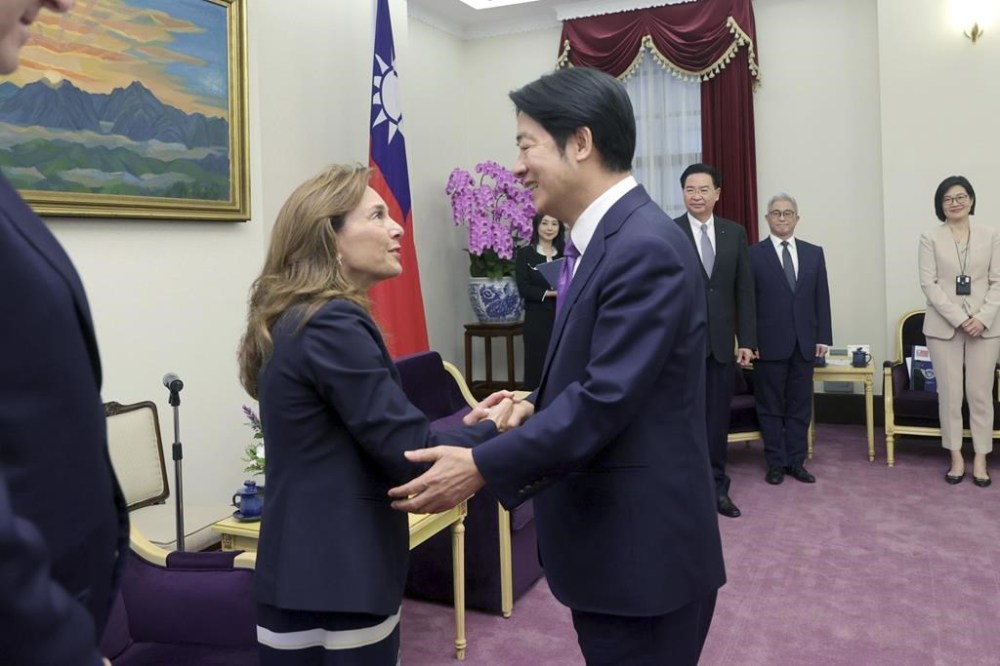
TAIPEI, Taiwan (AP) — Taiwan’s president-elect has appointed new foreign and defense ministers to join his incoming administration as the island faces continuing military threats and diplomatic isolation from China.
Lai Ching-te, who assumes the presidency on May 20, announced Thursday that current Presidential Secretary General Lin Chia-lung will take over as foreign minister.
He said Wellington Koo will head the Defense Ministry at a time when Taiwan is upgrading its defenses against China with new ships, submarines, warplanes, missile systems and other land-based defenses.
Along with stepping up its threat to annex Taiwan by force, China has whittled down the number of Taiwan’s formal diplomatic allies to just 12, while excluding it from the United Nations and most other international organizations.
Koo, a lawyer, has headed the National Security Council under current President Tsai Ing-wen, who is leaving office as mandated after two four-year terms. He will be replaced in the high-profile role by current Foreign Minister Joseph Wu.
Taiwan has a long-embedded tradition of civilians serving as defense minister, in contrast to China’s practice of appointing top generals who have taken an increasingly bellicose attitude toward Taiwan, the U.S. and in asserting China’s territorial claims in the South China and East China seas.
Lin previously served as mayor of Taiwan’s largest city, Taichung, and was put in charge of Taiwan’s economic outreach to Southeast Asia, Australia and New Zealand. Both Lin and Koo are members of the Democratic Progressive Party, with which China has cut contacts over its refusal to acknowledge Beijing’s claim of sovereignty over the island.
Lai handily won the presidential election in January, although the main opposition Nationalist Party that backs eventual unification with China took a one-vote majority in the legislature.
Taiwan has a mixture of presidential and parliamentary systems with much power also invested in local city and county governments. The formula emerged after Chiang Kai-shek’s Nationalists relocated their government to the former Japanese colony of Taiwan in 1949 as Mao Zedong’s Communists seized power on the mainland after a decades-long civil war.