

Homeless families face limits on shelter stays as Massachusetts grapples with migrant influx
Advertisement
Read this article for free:
or
Already have an account? Log in here »
To continue reading, please subscribe:

Digital Subscription
One year of digital access for only $205*
- Enjoy unlimited reading on winnipegfreepress.com
- Read the E-Edition, our digital replica newspaper
- Access News Break, our award-winning app
- Play interactive puzzles
*First annual payment billed as $205.00 + GST for one year. This annual subscription will automatically renew at $233.00 + GST every 52 weeks (10% off the regular annual price of $259.35). Offer available to new and qualified returning subscribers only. Cancel any time.
To continue reading, please subscribe:
Add Free Press access to your Brandon Sun subscription for only an additional
$1 for the first 4 weeks*
- Enjoy unlimited reading on winnipegfreepress.com
- Read the E-Edition, our digital replica newspaper
- Access News Break, our award-winning app
- Play interactive puzzles
*Your next Brandon Sun subscription payment will increase by $1.00 and you will be charged $17.95 plus GST for four weeks. After four weeks, your payment will increase to $24.95 plus GST every four weeks.
Read unlimited articles for free today:
or
Already have an account? Log in here »
Hey there, time traveller!
This article was published 30/04/2024 (879 days ago), so information in it may no longer be current.
BOSTON (AP) — Massachusetts will begin limiting how long homeless families can stay in shelters as the state continues to grapple with an influx of homeless migrants.
Beginning June 1, the total length of stay will be limited to nine months, at the end of which families will be eligible for up to two 90-day extensions, under a supplemental budget approved by state lawmakers and signed by Democratic Gov. Maura Healey on Tuesday.
The law also requires the state Executive Office of Housing and Livable Communities to create a rehousing plan and provide case management for all individuals in shelters after they leave the program and requires the plan to be recertified every 60 days so that families can remain eligible.
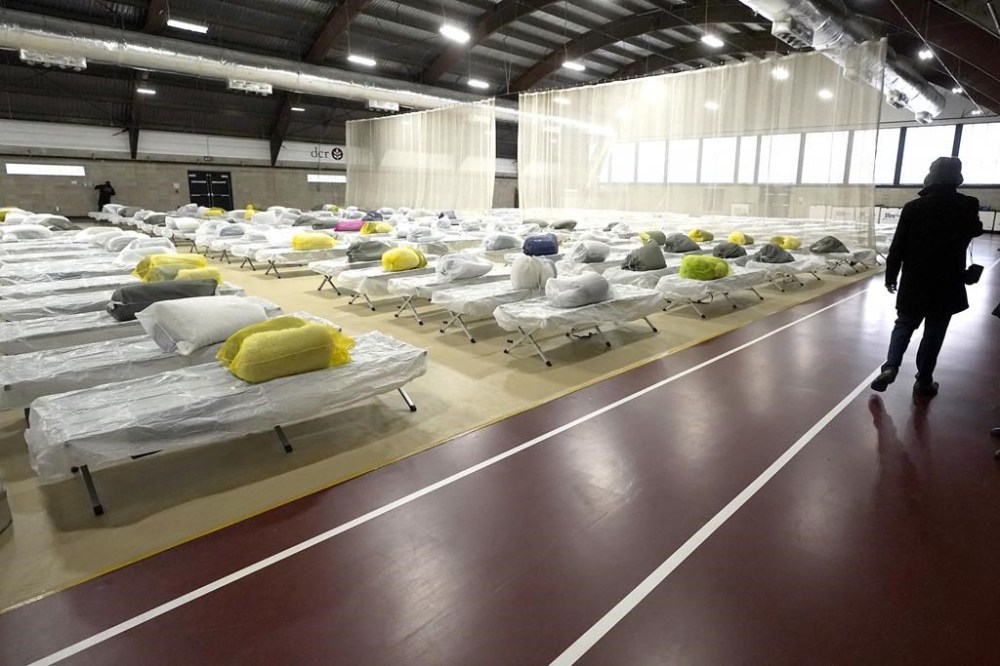
Extensions would be based on circumstances that include employment or participation in a workforce training program, veteran status, imminent placement in housing, avoiding educational interruptions for children in public school and pregnancy or having recently given birth.
Extensions could also be offered to those with a diagnosed disability or medical condition, a single parent caring for a disabled child or family member, a single parent without adequate child care, and those at risk of harm due to domestic violence.
Families nearing the end of their shelter time may be granted a hardship waiver, and all families would need to be provided with 90 days’ notice before the state ends benefits.
Healey called the limits on emergency assistance shelter “a responsible step to address our capacity and fiscal constraints as Congress has continued to fail to act on immigration reform.”
The bill signed by Healey also includes $251 million for shelter costs for the fiscal year that ends June 30, including $10 million for approved workforce training programs and $10 million for a tax credit for companies that provide job training to homeless families.
Other states have also faced strains on their homeless shelter programs.
New York lawmakers recently approved a $237 billion state budget that includes plans to spur housing construction and address the migrant crisis. Chicago has spent more than $300 million of city, state and federal funds to provide housing, health care, education and more to over 38,000 mostly South American migrants who have arrived in the city since 2022.
The new law in Massachusetts would also permanently allow outdoor dining and craft-made mixed drinks to go, policies initially begun during the COVID-19 pandemic.