

More Republican states challenge new Title IX rules protecting LGBTQ+ students
Advertisement
Read this article for free:
or
Already have an account? Log in here »
To continue reading, please subscribe:

Digital Subscription
One year of digital access for only $205*
- Enjoy unlimited reading on winnipegfreepress.com
- Read the E-Edition, our digital replica newspaper
- Access News Break, our award-winning app
- Play interactive puzzles
*First annual payment billed as $205.00 + GST for one year. This annual subscription will automatically renew at $233.00 + GST every 52 weeks (10% off the regular annual price of $259.35). Offer available to new and qualified returning subscribers only. Cancel any time.
To continue reading, please subscribe:
Add Free Press access to your Brandon Sun subscription for only an additional
$1 for the first 4 weeks*
- Enjoy unlimited reading on winnipegfreepress.com
- Read the E-Edition, our digital replica newspaper
- Access News Break, our award-winning app
- Play interactive puzzles
*Your next Brandon Sun subscription payment will increase by $1.00 and you will be charged $17.95 plus GST for four weeks. After four weeks, your payment will increase to $24.95 plus GST every four weeks.
Read unlimited articles for free today:
or
Already have an account? Log in here »
Hey there, time traveller!
This article was published 30/04/2024 (879 days ago), so information in it may no longer be current.
WASHINGTON (AP) — Another six Republican states are piling on to challenge the Biden administration’s newly expanded campus sexual assault rules, saying they overstep the president’s authority and undermine the Title IX anti-discrimination law.
A federal lawsuit, led by Tennessee and West Virginia, on Tuesday asks a judge to halt and overturn the new policy. The suit is joined by Kentucky, Ohio, Indiana and Virginia. It follows other legal challenges filed by Monday by nine other states including Alabama, Louisiana and Texas.
The lawsuits are the first to challenge the administration’s new Title IX rules, which expand protections to LGBTQ+ students and add new safeguards for victims of sexual assault. The policy was finalized in April and takes effect in August.
Central to the dispute is a new provision expanding Title IX to LGBTQ+ students. The 1972 law forbids discrimination based on sex in education. Under the new rules, Title IX will also protect against discrimination based on sexual orientation or gender identity.
The states involved say it amounts to an illegal rewriting of the landmark legislation.
They argue it will clash with their own laws, including those restricting which bathrooms and locker rooms transgender students can use, banning them from using facilities that align with their new gender identity.
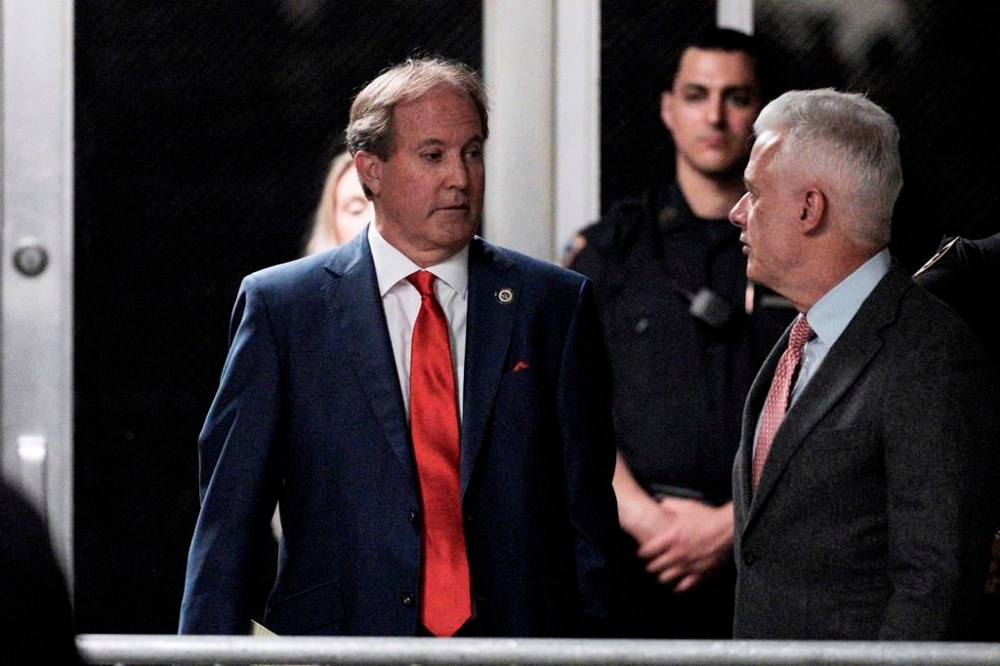
“The U.S. Department of Education has no authority to let boys into girls’ locker rooms,” Tennessee Attorney General Skrmetti said in a statement. “In the decades since its adoption, Title IX has been universally understood to protect the privacy and safety of women in private spaces like locker rooms and bathrooms.”
The administration’s new rules broadly protect against discrimination based on sex, but they don’t offer guidance around transgender athletes. The Education Department has promised a separate rule on that issue later.
Yet in their suits, Republican states argue that the latest update could be interpreted to apply to athletics.
“Men who identify as women will, among other things, have the right to compete within programs and activities that Congress made available to women so they can fairly and fully pursue academic and athletic excellence — turning Title IX’s protections on their head,” says the suit led by Tennessee and West Virginia.
As a legal basis for the new rules, the Education Department cited a 2020 Supreme Court case protecting gay, lesbian and transgender people from discrimination in employment.
The new suit challenges that justification, saying the Supreme Court declined to address scenarios implicated by Title IX, “such as a school that does not allow a transgender student to use the restroom or participate in sports associated with the student’s gender identity.”
Among other things, the suits also take exception to the policy changes dictating how schools and colleges must handle complaints of sexual assault.
The administration’s new rules were proposed nearly two years ago, with a public comment period that drew 240,000 responses, a record for the Education Department.
The policy rolls back many of the changes implemented during the Trump administration, which added more protections for students accused of sexual misconduct.
___
A previous version of this story misidentified which states led the new lawsuit. It was led by West Virginia and Tennessee and filed in Kentucky.
__
The Associated Press’ education coverage receives financial support from multiple private foundations. AP is solely responsible for all content. Find AP’s standards for working with philanthropies, a list of supporters and funded coverage areas are at AP.org.