

President Joe Biden calls Japan and India ‘xenophobic’ nations that do not welcome immigrants
Advertisement
Read this article for free:
or
Already have an account? Log in here »
To continue reading, please subscribe:

Digital Subscription
One year of digital access for only $205*
- Enjoy unlimited reading on winnipegfreepress.com
- Read the E-Edition, our digital replica newspaper
- Access News Break, our award-winning app
- Play interactive puzzles
*First annual payment billed as $205.00 + GST for one year. This annual subscription will automatically renew at $233.00 + GST every 52 weeks (10% off the regular annual price of $259.35). Offer available to new and qualified returning subscribers only. Cancel any time.
To continue reading, please subscribe:
Add Free Press access to your Brandon Sun subscription for only an additional
$1 for the first 4 weeks*
- Enjoy unlimited reading on winnipegfreepress.com
- Read the E-Edition, our digital replica newspaper
- Access News Break, our award-winning app
- Play interactive puzzles
*Your next Brandon Sun subscription payment will increase by $1.00 and you will be charged $17.95 plus GST for four weeks. After four weeks, your payment will increase to $24.95 plus GST every four weeks.
Read unlimited articles for free today:
or
Already have an account? Log in here »
Hey there, time traveller!
This article was published 02/05/2024 (887 days ago), so information in it may no longer be current.
WASHINGTON (AP) — President Joe Biden has called Japan and India “xenophobic” countries that do not welcome immigrants, lumping the two with adversaries China and Russia as he tried to explain their economic circumstances and contrasted the four with the U.S. on immigration.
The remarks, at a campaign fundraising event Wednesday evening, came just three weeks after the White House hosted Japanese Prime Minister Fumio Kishida for a lavish official visit, during which the two leaders celebrated what Biden called an “unbreakable alliance,” particularly on global security matters.
The White House welcomed Indian Prime Minister Narenda Modi for a state visit last summer.

Japan is a critical U.S. ally. And India, one of the world’s fastest-growing economies, is a vital partner in the Indo-Pacific despite differences on human rights.
At a hotel fundraiser where the donor audience was largely Asian American, Biden said the upcoming U.S. election was about “freedom, America and democracy” and that the nation’s economy was thriving “because of you and many others.”
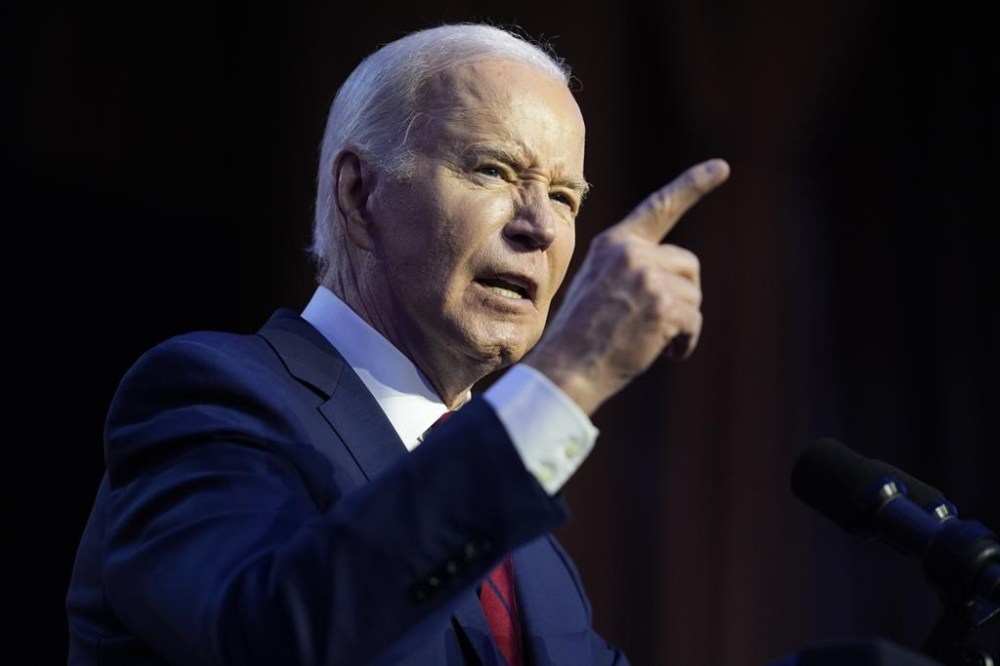
“Why? Because we welcome immigrants,” Biden said. “Look, think about it. Why is China stalling so badly economically? Why is Japan having trouble? Why is Russia? Why is India? Because they’re xenophobic. They don’t want immigrants.”
The president added: “Immigrants are what makes us strong. Not a joke. That’s not hyperbole, because we have an influx of workers who want to be here and want to contribute.”
There was no immediate reaction from either the Japanese or Indian governments. White House national security spokesman John Kirby said Biden was making a broader point about the U.S. posture on immigration.
“Our allies and partners know well in tangible ways how President Biden values them, their friendship, their cooperation and the capabilities that they bring across the spectrum on a range of issues, not just security related,” Kirby said Thursday morning when asked about Biden’s “xenophobic” remarks. “They understand how much he completely and utterly values the idea of alliances and partnerships.”
Biden’s comments came at the start of Asian American and Pacific Islander Heritage Month, and he was introduced at the fundraiser by Sen. Tammy Duckworth, D-Ill., one of two senators of Asian American descent. She is a national co-chair for his reelection campaign.
Japan has acknowledged issues with its shrinking population, and the number of babies born in the country in 2023 fell for the eighth straight year, according to data released in February. Kishida has called the low birth rate in Japan “the biggest crisis Japan faces” and the country has long been known for a more closed-door stance on immigration, although Kishida’s government has, in recent years, shifted its policies to make it easier for foreign workers to come to Japan.
Meanwhile, India’s population has swelled to become the world’s largest, with the United Nations saying it was on track to reach 1.425 billion. Its population also skews younger. Earlier this year, India enacted a new citizenship law that fast-tracks naturalization for Hindus, Parsis, Sikhs, Buddhists, Jains and Christians who fled to India from Afghanistan, Bangladesh and Pakistan. But it excludes Muslims, who are a majority in all three nations. It’s the first time that India has set religious criteria for citizenship.
—
Associated Press chief political reporter Steve Peoples and Associated Press writer Aamer Madhani contributed to this report.