

Russia defends veto of UN resolution to prohibit nukes in outer space, urges vote to ban all weapons
Advertisement
Read this article for free:
or
Already have an account? Log in here »
To continue reading, please subscribe:

Digital Subscription
One year of digital access for only $205*
- Enjoy unlimited reading on winnipegfreepress.com
- Read the E-Edition, our digital replica newspaper
- Access News Break, our award-winning app
- Play interactive puzzles
*First annual payment billed as $205.00 + GST for one year. This annual subscription will automatically renew at $233.00 + GST every 52 weeks (10% off the regular annual price of $259.35). Offer available to new and qualified returning subscribers only. Cancel any time.
To continue reading, please subscribe:
Add Free Press access to your Brandon Sun subscription for only an additional
$1 for the first 4 weeks*
- Enjoy unlimited reading on winnipegfreepress.com
- Read the E-Edition, our digital replica newspaper
- Access News Break, our award-winning app
- Play interactive puzzles
*Your next Brandon Sun subscription payment will increase by $1.00 and you will be charged $17.95 plus GST for four weeks. After four weeks, your payment will increase to $24.95 plus GST every four weeks.
Read unlimited articles for free today:
or
Already have an account? Log in here »
Hey there, time traveller!
This article was published 06/05/2024 (881 days ago), so information in it may no longer be current.
UNITED NATIONS (AP) — Russia on Monday defended its veto of a U.N. resolution urging all nations to prevent a nuclear arms race in outer space, challenging the U.S., Japan and their Western allies to support Moscow’s rival resolution calling for a ban on all weapons in space “for all time.”
Russia’s U.N. ambassador, Vassily Nebenzia, said the United States and Japan, which sponsored the vetoed resolution, are guilty of of “hypocrisy and double standards.” He accused the U.S. and Western nations more broadly of planning for the military exploration of outer space, including the deployment of weapons, in particular “strike combat systems.”
U.S. deputy ambassador Robert Wood countered, telling the U.N. General Assembly: “The truth is that Russia currently has several conventional anti-satellite weapons already in orbit, one of which it tested in 2019.” He added Russia has threatened to target satellites with weapons, and said there “is credible information that Russia is developing a new satellite carrying a nuclear device.”
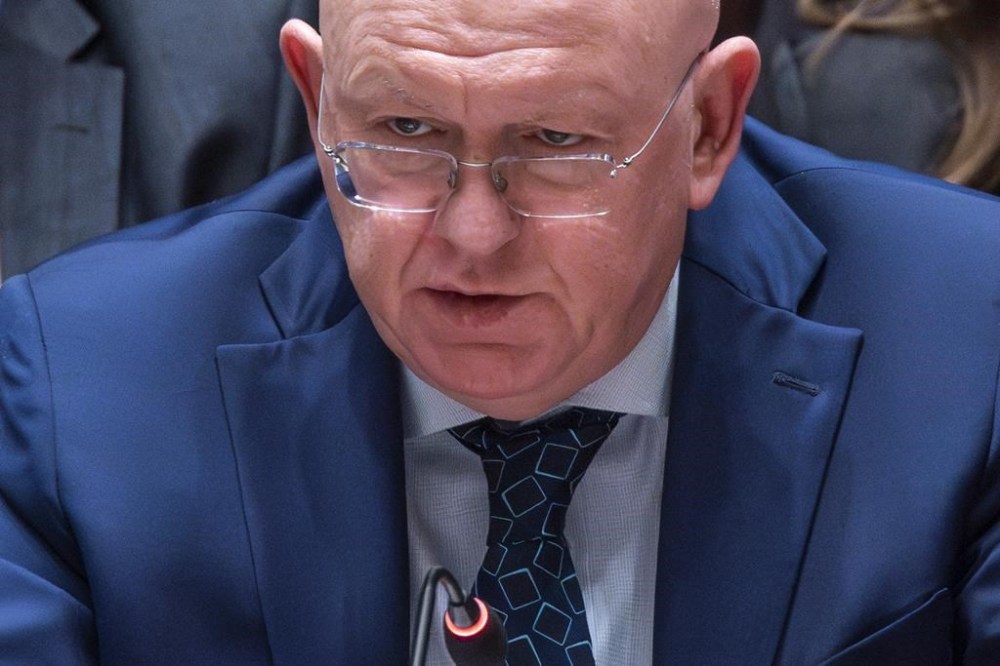
The verbal clash came on a day that Russia threatened to strike British military facilities and said it plans to hold drills simulating the use of battlefield tactical nuclear weapons. Moscow’s actions were a response to comments by senior Western officials about possible deeper involvement in the war in Ukraine.
In February 2023, Russian President Vladimir Putin responded to rising tensions with the West over its support for Ukraine by announcing that Moscow was suspending its participation in the New START treaty — the last remaining nuclear arms control pact with the United States.
The United Nations warned Monday of growing concern about recent increasing talk about nuclear weapons by various parties when asked about Russia’s planned drills simulating the use of tactical nukes.
“Current nuclear risks are at an alarmingly high level,” U.N. spokesman Stephane Dujarric said. “All actions that could lead to miscalculation, escalation with catastrophic consequences, must be avoided.”
Under a General Assembly resolution adopted in April 2022, any of the permanent member of the Security Council — the U.S, Russia, China, Britain and France — that vetoes a resolution must appear before the 193-member world body to explain why.
Before the U.S.-Japan resolution was put to a vote April 24, Russia and China unsuccessfully proposed an amendment that would have called on all countries to prevent all weapons — not just weapons of mass destruction — in outer space.
In the ensuing vote on the U.S.-Japan resolution, 13 countries voted “yes,” China abstained, and Russia voted “no,” vetoing the measure.
A week later, Russia circulated its rival resolution that calls on all countries to stop all weapons from being deployed in outer space as well as “the threat or use of force in outer space,” also “for all time.”
On Monday, Nebenzia argued that the United States and its allies oppose a ban on all weapons in outer space because they plan to deploy weapons there and hold out the threat of using force in outer space — “from outer space and against objects in outer space.”
Wood questioned the sincerity of Putin’s public comments that Russia has no intention of deploying nuclear weapons in space.
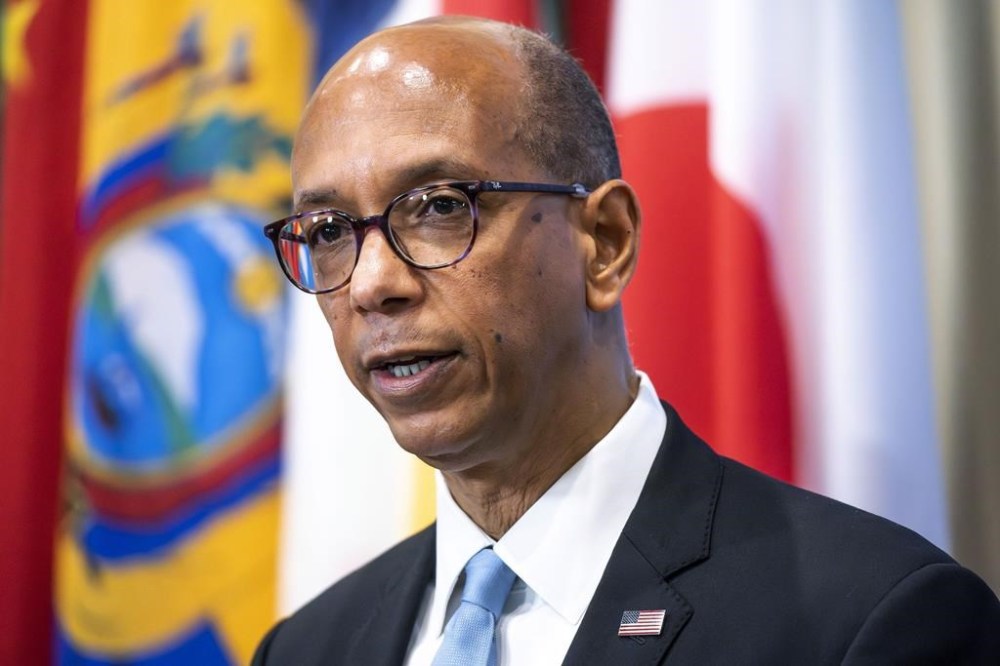
“If that were the case, Russia would not have vetoed this resolution,” Wood said. “Russia’s actions cast significant doubt as to whether it will uphold the existing legal obligations under the Outer Space Treaty and raise concerns about what this could mean for international peace and security.”
The vetoed U.S.-Japan resolution would have affirmed that countries which ratified the 1967 Outer Space Treaty must comply with their obligations not to put in orbit around the Earth “any objects” with weapons of mass destruction, or install them “on celestial bodies, or station such weapons in outer space.” The treaty was ratified by 114 countries, including the U.S. and Russia.
Wood said all countries should support the Outer Space Treaty and not let Russia distract from the pact’s provisions by seeking to advance its own resolution, which he said has language being discussed in other bodies where there is not yet consensus.
“Russia’s actions only seeks to divide states not unite us,” he said.
Japanese Ambassador Yamazaki Kazuyuki asked U.N. member nations to imagine what would happen if a nuclear weapon detonated in outer space.
“A large number of satellites and other critical space infrastructure would be taken down,” he said.
But the consequences wouldn’t be limited to outer space, Yamazaki said, saying there would be repercussions on people’s lives and it would obstruct development “in every region on Earth, disastrously and irreversibly.”