

US and Philippine forces stage combat drills near strategic channel off southern Taiwan
Advertisement
Read this article for free:
or
Already have an account? Log in here »
To continue reading, please subscribe:

Digital Subscription
One year of digital access for only $205*
- Enjoy unlimited reading on winnipegfreepress.com
- Read the E-Edition, our digital replica newspaper
- Access News Break, our award-winning app
- Play interactive puzzles
*First annual payment billed as $205.00 + GST for one year. This annual subscription will automatically renew at $233.00 + GST every 52 weeks (10% off the regular annual price of $259.35). Offer available to new and qualified returning subscribers only. Cancel any time.
To continue reading, please subscribe:
Add Free Press access to your Brandon Sun subscription for only an additional
$1 for the first 4 weeks*
- Enjoy unlimited reading on winnipegfreepress.com
- Read the E-Edition, our digital replica newspaper
- Access News Break, our award-winning app
- Play interactive puzzles
*Your next Brandon Sun subscription payment will increase by $1.00 and you will be charged $17.95 plus GST for four weeks. After four weeks, your payment will increase to $24.95 plus GST every four weeks.
Read unlimited articles for free today:
or
Already have an account? Log in here »
Hey there, time traveller!
This article was published 06/05/2024 (865 days ago), so information in it may no longer be current.
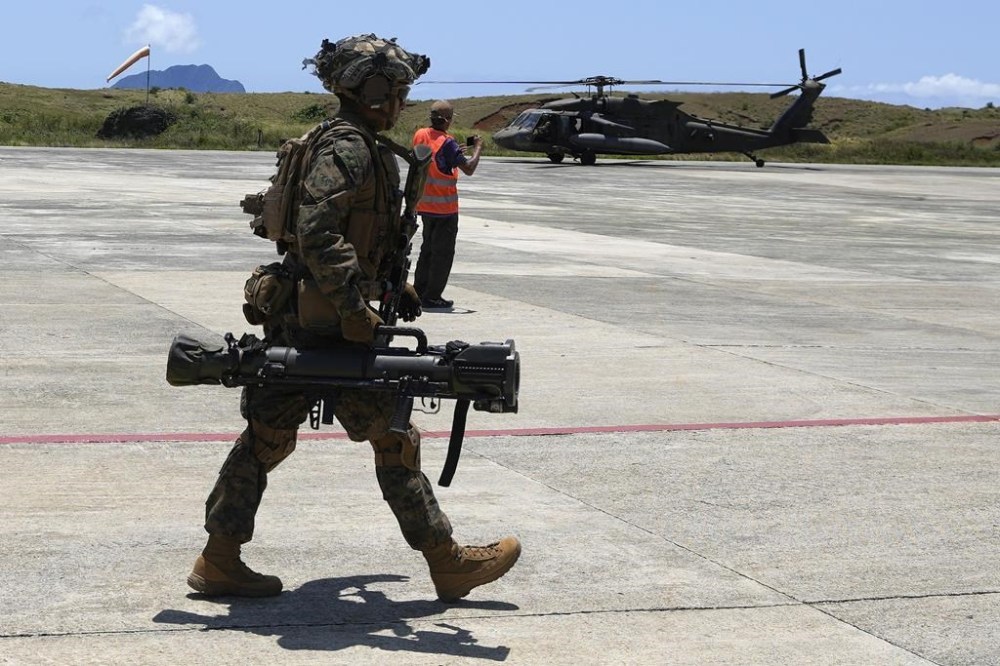
ITBAYAT, Philippines (AP) — U.S. Marines and their Filipino counterparts darted out of Black Hawk helicopters during combat drills Monday in the Philippines’ northernmost island town along the strategic Bashi Channel off southern Taiwan — a flashpoint in the military rivalry between Washington and Beijing.
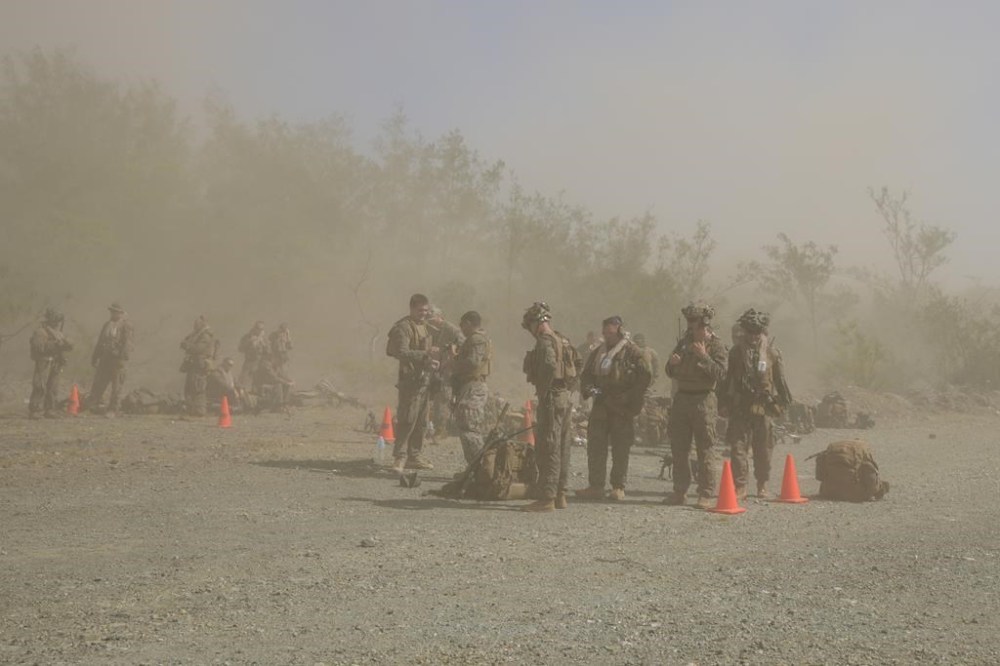
The show of allied battle readiness in Itbayat in Batanes province is part of annual military exercises that started last month, dubbed Balikatan, Tagalog for “shoulder-to-shoulder,” and involving more than 16,000 American and Philippine military personnel.
This year’s exercises by the longtime treaty allies — the largest yet — are meant to deter possible aggression. They come against the backdrop of China’s increasingly assertive actions in the disputed South China Sea, where Chinese and Philippine coast guards and accompanying ships have had several increasingly tense faceoffs since last year.
More than 250 French and Australian forces are also participating, along with observers from several allied and security partner nations, led by Japan and European nations. The drills, which began April 22, end later this week.
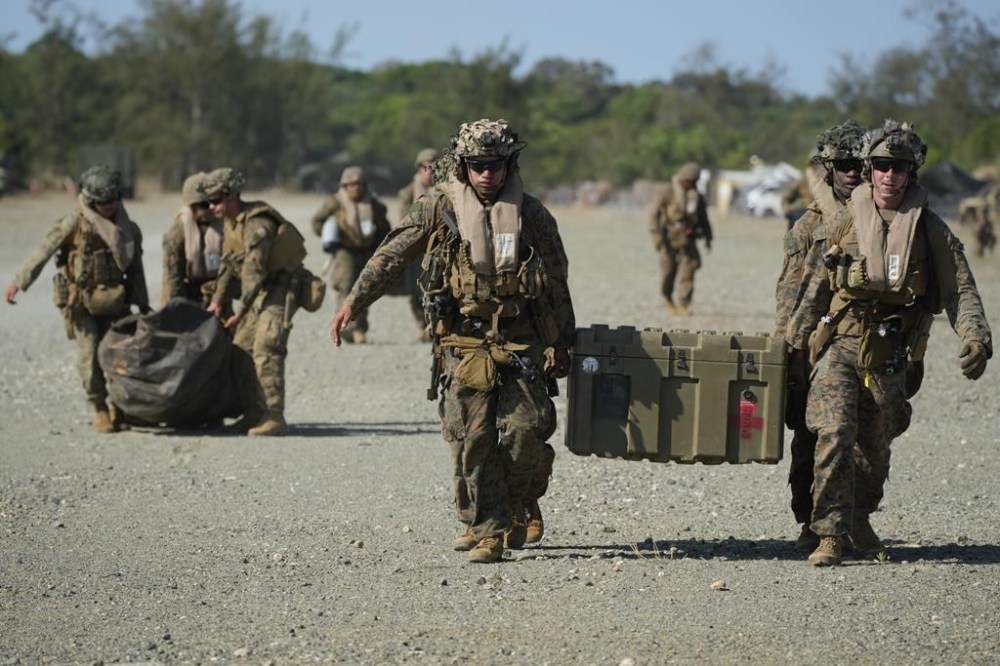
In Monday’s mock battle scenario, American and Filipino forces took positions at the airfield, ringed by low-lying hills, as three Army CH-47 Chinook helicopters landed to deliver combat supplies.
Marine 1st Lt. Annie Pentaleri said aerial combat reconnaissance and counter-reconnaissance drills were also planned in the far-flung region. The Associated Press was among a small group of journalists invited to attend the maneuvers.
“We are absolutely battle-ready and that’s what we train for day in and day out,” Marine Maj. Robert Patterson said. “It’s important to enhance inter-operability with our Filipino counterparts.”
Washington and Manila say the drills are not directed at any country and are crucial for improving the response to emergencies in the Philippines, one of the world’s most disaster-prone countries.
However, this year’s drills focus on territorial defense and are being staged mainly in two of the most sensitive fault lines in the regional rivalry between China and the United States: the disputed South China Sea and the Bashi Channel.
The critical waterway between Taiwan and the Philippines, an important trade conduit laden with international undersea cables, has been closely watched and guarded by Chinese and American forces. China considers Taiwant a part of its territory, to be annexed by force if necessary.
In a telephone call last month, Chinese President Xi Jinping stressed to President Joe Biden that Beijing will not tolerate separatist activities by Taiwan’s independence forces, as well as “exterior indulgence and support,” an apparent reference to Washington’s support for the island.
Biden raised concerns about China’s actions in the South China Sea, including efforts to impede the Philippines, which Washington is treaty-obligated to defend, from resupplying its forces on the fiercely disputed Second Thomas Shoal.
Derek Grossman, a senior defense analyst at RAND Corporation, said the message of deterrence was important. Philippine President Ferdinand Marcos Jr.’s decision to allow U.S. forces indefinite access to two Philippine air force and naval bases in Cagayan province near Batanes under a 2014 defense pact, “would likely upgrade the U.S. military’s ability to intervene in a Taiwan contingency in a more timely manner,” he said.
“Right now, a big concern is the U.S. simply won’t get there in time,” Grossman added.
The Balikatan exercises have included live-fire drills in the disputed South China Sea during joint naval sails by the U.S., France and the Philippines. An aircraft also dropped food and other supplies on a disputed island occupied by Filipino forces as part of the maneuvers in the disputed waters.
Separately on Monday, U.S. and Philippine forces practiced repelling invading forces in the coastal province of Ilocos Norte by firing missiles and artillery rounds on floating targets at sea. The northwestern province faces the South China Sea.
“It was a huge success, the weapons were spot on,” Marine Lt. Gen. Michael Cederholm said.
In escalating high-seas encounters in disputed areas, Chinese coast guard vessels have resorted to water cannons, blocking and other dangerous maneuvers that have left Philippine navy personnel injured and supply boats damaged. The Biden administration has repeatedly warned the U.S. is obligated to defend the Philippines, its oldest treaty ally in Asia, should it come under attack.
China has strongly criticized the exercises, saying the Philippines and countries outside Asia are joining forces against Beijing, warned that the drills could lead to confrontation and undermine regional stability.
Ahead of the drills, China specifically opposed the transport of a U.S. ground-launched missile system to the northern Philippines. No missile was to be fired as the goal was only to familiarize military participants with the hi-tech weaponry in a tropical setting.
Chinese Foreign Ministry spokesperson Lin Jian expressed China’s grave concern over the deployment of the missile system “at China’s doorstep.”
___
Follow AP’s Asia-Pacific coverage at https://apnews.com/hub/asia-pacific