

Putin reappoints his prime minister, a technocrat who has kept a low political profile
Advertisement
Read this article for free:
or
Already have an account? Log in here »
To continue reading, please subscribe:

Digital Subscription
One year of digital access for only $205*
- Enjoy unlimited reading on winnipegfreepress.com
- Read the E-Edition, our digital replica newspaper
- Access News Break, our award-winning app
- Play interactive puzzles
*First annual payment billed as $205.00 + GST for one year. This annual subscription will automatically renew at $233.00 + GST every 52 weeks (10% off the regular annual price of $259.35). Offer available to new and qualified returning subscribers only. Cancel any time.
To continue reading, please subscribe:
Add Free Press access to your Brandon Sun subscription for only an additional
$1 for the first 4 weeks*
- Enjoy unlimited reading on winnipegfreepress.com
- Read the E-Edition, our digital replica newspaper
- Access News Break, our award-winning app
- Play interactive puzzles
*Your next Brandon Sun subscription payment will increase by $1.00 and you will be charged $17.95 plus GST for four weeks. After four weeks, your payment will increase to $24.95 plus GST every four weeks.
Read unlimited articles for free today:
or
Already have an account? Log in here »
Hey there, time traveller!
This article was published 10/05/2024 (817 days ago), so information in it may no longer be current.
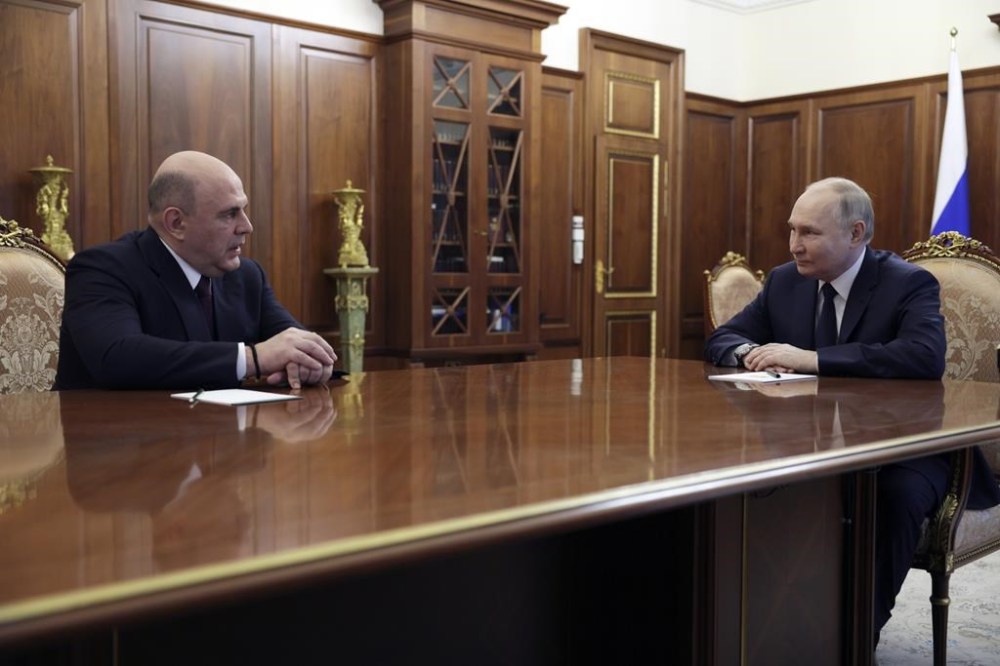
MOSCOW (AP) — Russian President Vladimir Putin reappointed Mikhail Mishustin as the country’s prime minister on Friday, a widely anticipated move to keep on a technocrat who has maintained a low political profile.
Mishustin and other technocrats in the Cabinet have been credited with maintaining a relatively stable economic performance despite bruising Western sanctions for Russia’s role in Ukraine. Most other Cabinet members are expected to keep their jobs, though the fate of Defense Minister Sergei Shoigu appeared uncertain.
In line with Russian law, Mishustin, 58, who held the job for the past four years, submitted his Cabinet’s resignation on Tuesday when Putin began his fifth presidential term at a glittering Kremlin inauguration.
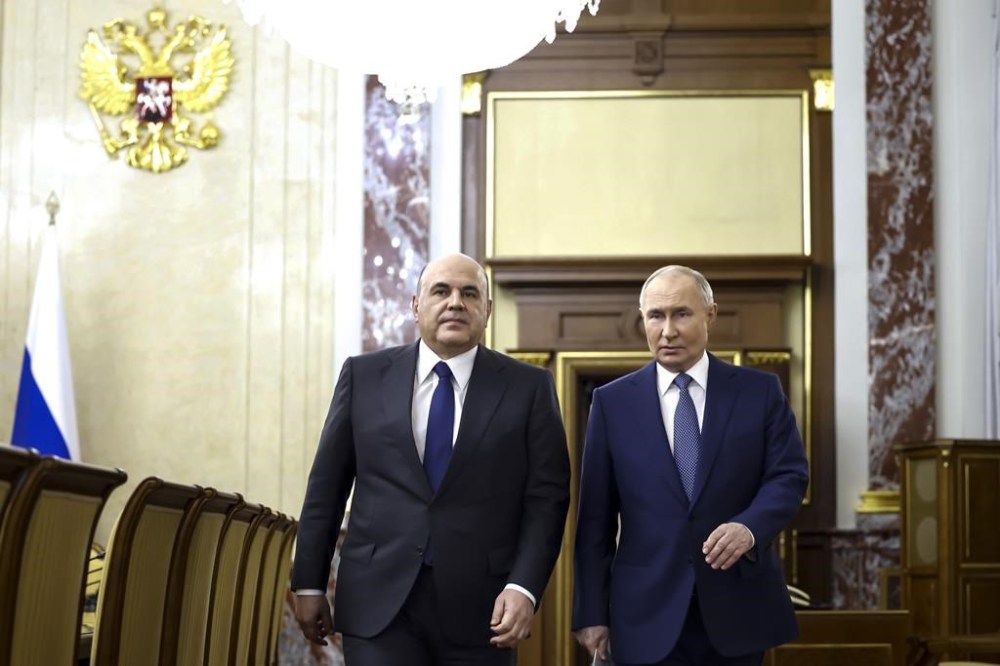
Mishustin, the former head of Russia’s tax service, steered clear of political statements and avoided media interviews during his previous tenure.
During Friday’s meeting with Putin, he assured the president that “there will be no breaks in the government’s work” and pledged to “ensure continuity on all national goals.”
“We will do everything for the development of our economy to justify people’s trust,” Mishustin said.
Hours after Putin submitted Mishustin’s candidacy to the lower house, the State Duma, lawmakers vetted it at a quickly organized session.
Under the constitutional changes approved in 2020, the lower house approves the candidacy of the prime minister, who then submits Cabinet members for approval. The changes were ostensibly meant to grant parliament broader power, but the procedure is widely seen as pro forma given the Kremlin’s overwhelming control over the body.
Most Cabinet members are expected to keep their jobs, but it was not clear if Shoigu, the defense minister, would be among them after last month’s arrest of his top associate, Timur Ivanov.
Ivanov, who served as deputy defense minister in charge of massive military construction projects, was arrested on bribery charges and was ordered to stay in custody pending official investigation.
The arrest of Ivanov was widely interpreted as an attack on Shoigu and a possible precursor of his dismissal despite his close personal ties with Putin.
Shoigu was broadly criticized for Russian military’s setbacks in the early stage of the fighting in Ukraine. He faced scathing attacks from mercenary chief Yevgeny Prigozhin, who marched on Moscow nearly a year ago to demand the ouster of Shoigu and the chief of the General Staff, Gen. Valery Gerasimov.
After Prigozhin’s death in a suspicious plane crash two months after the rebellion — widely seen as the Kremlin’s revenge — Shoigu appeared to shore up his position. But Ivanov’s arrest, interpreted by many as part of Kremlin’s political infighting, again exposed Shoigu’s vulnerability.