

Japan passes a revised law allowing joint child custody for divorced parents for the first time
Advertisement
Read this article for free:
or
Already have an account? Log in here »
To continue reading, please subscribe:

Digital Subscription
One year of digital access for only $205*
- Enjoy unlimited reading on winnipegfreepress.com
- Read the E-Edition, our digital replica newspaper
- Access News Break, our award-winning app
- Play interactive puzzles
*First annual payment billed as $205.00 + GST for one year. This annual subscription will automatically renew at $233.00 + GST every 52 weeks (10% off the regular annual price of $259.35). Offer available to new and qualified returning subscribers only. Cancel any time.
To continue reading, please subscribe:
Add Free Press access to your Brandon Sun subscription for only an additional
$1 for the first 4 weeks*
- Enjoy unlimited reading on winnipegfreepress.com
- Read the E-Edition, our digital replica newspaper
- Access News Break, our award-winning app
- Play interactive puzzles
*Your next Brandon Sun subscription payment will increase by $1.00 and you will be charged $17.95 plus GST for four weeks. After four weeks, your payment will increase to $24.95 plus GST every four weeks.
Read unlimited articles for free today:
or
Already have an account? Log in here »
Hey there, time traveller!
This article was published 17/05/2024 (842 days ago), so information in it may no longer be current.
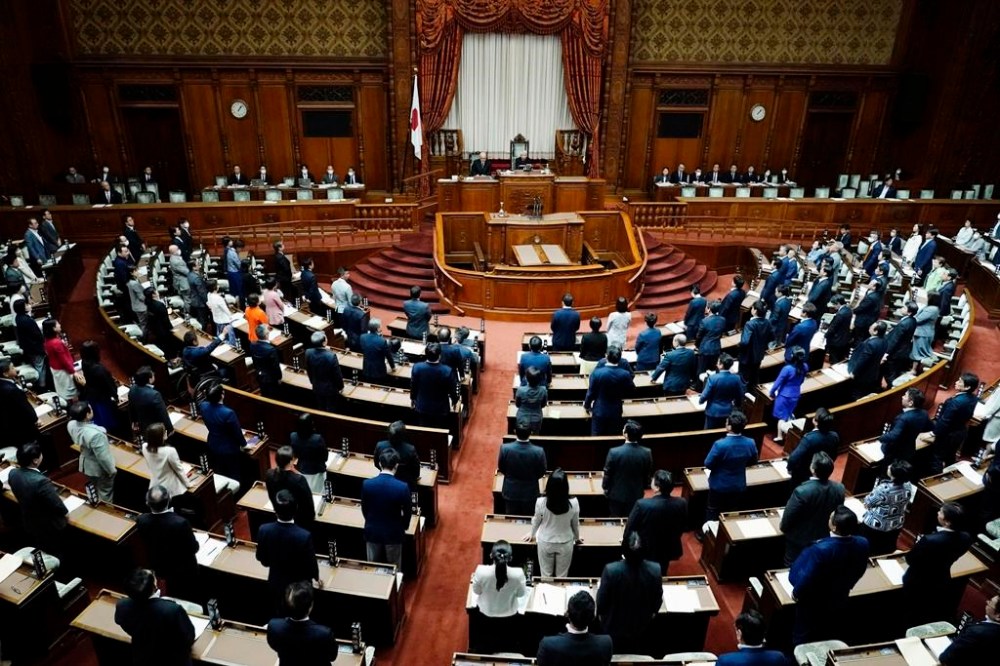
TOKYO (AP) — Japan’s parliament on Friday passed a revision to the country’s civil code that will allow divorced parents the option of joint child custody, a change that brings the nation in line with many other countries.
The revision, the first to custody rights in nearly 80 years, is to take effect by 2026. It will allow divorced parents to choose either dual or single custody while requiring them to cooperate in ensuring their children’s rights and wellbeing.
Under the current law, child custody is granted to only one divorced parent, almost always the mother.
The change comes as divorces are increasing in Japan and a growing number of divorced fathers hope to stay in touch with their children. A number of high-profile allegations made by divorced foreign fathers who blamed their former partners for abducting their children and returning to Japan also encouraged the change.
The revision requires the sharing of child rearing costs by the parent who is not the main custodian. Currently, most divorced mothers, who often are part-time workers with low incomes, do not receive financial support from their former husbands.
In cases in which domestic violence or abuse by either parent is suspected, the other person will have sole custody, according to the revision.
Supporters of joint custody say it allows both divorced parents to play a role in child rearing. Opponents, including rights groups and some victims of domestic violence, have raised concern that the new system could make it harder for parents to cut ties with abusive spouses and that they may not be allowed a real say in custody decisions.
The concerns prompted some modifications to the legislation during parliamentary debate to require authorities to make sure the custody decision was not one-sided.
Chief Cabinet Secretary Yoshimasa Hayashi told reporters that the revisions address concerns raised by domestic violence victims and their families. But the improvements don’t go far enough and the risk remains high for vulnerable members in the families, said Kazuko Ito, a lawyer who has campaigned against the revision.
Under the revision, divorced parents who choose joint custody must reach a consensus on their children’s education, long-term medical treatment and other key issues, and will need to seek a family court decision if an agreement cannot be reached.
Either parent can make decisions about their children’s daily activities, such as private lessons and meals, or emergency treatment.
The revision is to be reviewed five years after it takes effect.