

Jailed Guatemalan journalist to AP: ‘I can defend myself, because I am innocent”
Advertisement
Read this article for free:
or
Already have an account? Log in here »
To continue reading, please subscribe:

Digital Subscription
One year of digital access for only $205*
- Enjoy unlimited reading on winnipegfreepress.com
- Read the E-Edition, our digital replica newspaper
- Access News Break, our award-winning app
- Play interactive puzzles
*First annual payment billed as $205.00 + GST for one year. This annual subscription will automatically renew at $233.00 + GST every 52 weeks (10% off the regular annual price of $259.35). Offer available to new and qualified returning subscribers only. Cancel any time.
To continue reading, please subscribe:
Add Free Press access to your Brandon Sun subscription for only an additional
$1 for the first 4 weeks*
- Enjoy unlimited reading on winnipegfreepress.com
- Read the E-Edition, our digital replica newspaper
- Access News Break, our award-winning app
- Play interactive puzzles
*Your next Brandon Sun subscription payment will increase by $1.00 and you will be charged $17.95 plus GST for four weeks. After four weeks, your payment will increase to $24.95 plus GST every four weeks.
Read unlimited articles for free today:
or
Already have an account? Log in here »
Hey there, time traveller!
This article was published 21/05/2024 (865 days ago), so information in it may no longer be current.
GUATEMALA CITY (AP) — José Rubén Zamora has spent nearly two years locked in a dark 16- by 13-foot cell in a Guatemalan prison, allowed only one hour a day in the sunlight.
The journalist’s money laundering conviction was tossed out, and last week a judge finally ordered his conditional release to await a new trial. But the 67-year-old founder of the newspaper El Periodico never made it out. Two more cases against him include detention orders.
In a jail house interview Tuesday, Zamora told The Associated Press that he had heard he would be arrested in July 2022 a week before agents came for him. But, he said, “it never crossed my mind to flee. I have to face justice because I can defend myself, because I am innocent.”
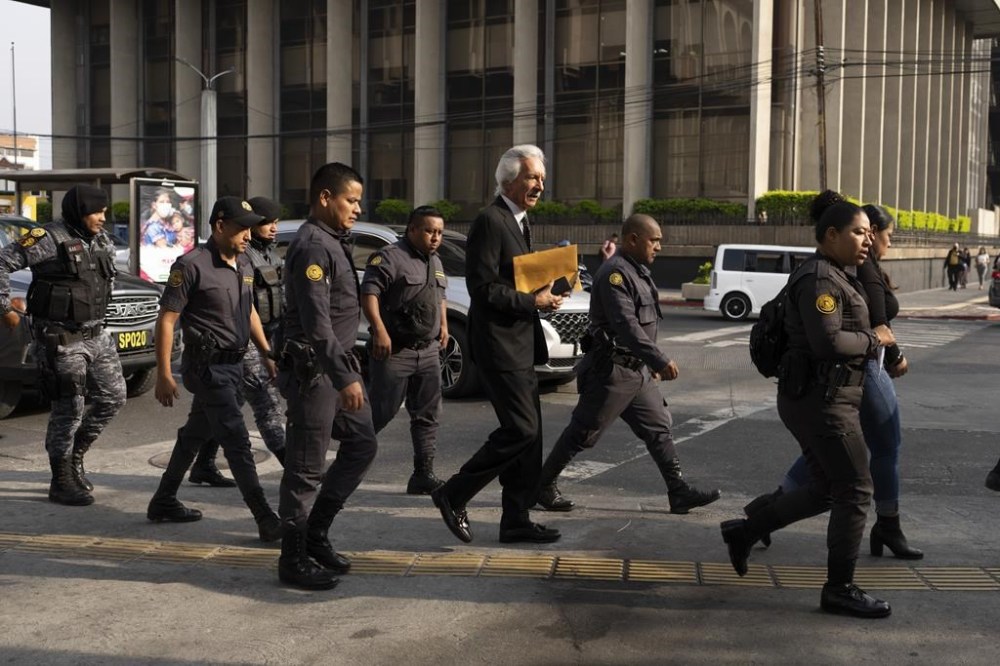
International press freedom organizations have labeled Zamora’s arrest and detention a political prosecution. Zamora concurs. He contends his legal problems were engineered by former President Alejandro Giammattei, who appeared many times in the pages of El Periodico accused of corruption.
Zamora said his treatment has improved somewhat since President Bernardo Arévalo took office in January, but the bar was low.
His first day in prison in July 2022, he had only a towel his wife had given him, which he used to cover the bare mattress where he sleeps. He went two weeks without talking to another prisoner. His only outside contact was with his lawyers, a changing cast of more than 10, two of whom were eventually also charged with obstructing justice.
Things always got worse for him before a hearing.
“There was one day when the head of the prison came to take me out of the cell every time I bathed or went to the bathroom, he wanted to search me,” Zamora said.
One night before a hearing, workers began installing bars near his cell starting at 6 p.m. and going to 5 a.m., he said.
The long hours without daylight, the isolation and being awakened several times a night by guards amount to psychological torture, Zamora said.
“Listen to how it sounds when it closes,” Zamora said of his steel cell door. “Imagine that six times a night.”
Zamora constantly brings up details of his cases. The only one to earn him a sentence – later thrown out – was for money laundering. Zamora explained that a well-known painter friend of his had donated a painting, which he then sold to pay the newspaper’s debts.
He believes his newspaper’s critical reporting on Giammattei’s administration led to the prosecutions by Attorney General Consuelo Porras, who Giammattei put up for a second term before leaving office.
The other cases revolve around alleged obstruction of justice and falsifying documents.
There are no trial dates for any of the cases.
“That case just like this one is staged,” Zamora said. “There’s nothing supporting it. It will collapse for them the same way.