

Louisiana Republicans reject Jewish advocates’ pleas to bar nitrogen gas as an execution method
Advertisement
Read this article for free:
or
Already have an account? Log in here »
To continue reading, please subscribe:

Digital Subscription
One year of digital access for only $205*
- Enjoy unlimited reading on winnipegfreepress.com
- Read the E-Edition, our digital replica newspaper
- Access News Break, our award-winning app
- Play interactive puzzles
*First annual payment billed as $205.00 + GST for one year. This annual subscription will automatically renew at $233.00 + GST every 52 weeks (10% off the regular annual price of $259.35). Offer available to new and qualified returning subscribers only. Cancel any time.
To continue reading, please subscribe:
Add Free Press access to your Brandon Sun subscription for only an additional
$1 for the first 4 weeks*
- Enjoy unlimited reading on winnipegfreepress.com
- Read the E-Edition, our digital replica newspaper
- Access News Break, our award-winning app
- Play interactive puzzles
*Your next Brandon Sun subscription payment will increase by $1.00 and you will be charged $17.95 plus GST for four weeks. After four weeks, your payment will increase to $24.95 plus GST every four weeks.
Read unlimited articles for free today:
or
Already have an account? Log in here »
Hey there, time traveller!
This article was published 21/05/2024 (863 days ago), so information in it may no longer be current.
BATON ROUGE, La. (AP) — An effort by Louisiana’s Jewish community to bar nitrogen gas as an execution method was blocked by a conservative legislative committee on Tuesday.
Alabama was the first state in the nation to use the gas earlier this year. Since then, several Republican-led states have added the method, prompting a backlash by opponents who say it is inhumane. Members of the Jewish community in Louisiana have another reason for rejecting it: They say it invokes trauma from the Holocaust, when the Nazis used lethal gas to kill millions of European Jews.
“I cannot remain silent against a method of execution that so deeply offends our people and displays blatant disrespect for our collective trauma,” said Rabbi David Cohen-Henriquez of Shir Chadash Conservative Congregation in Metairie, Louisiana.
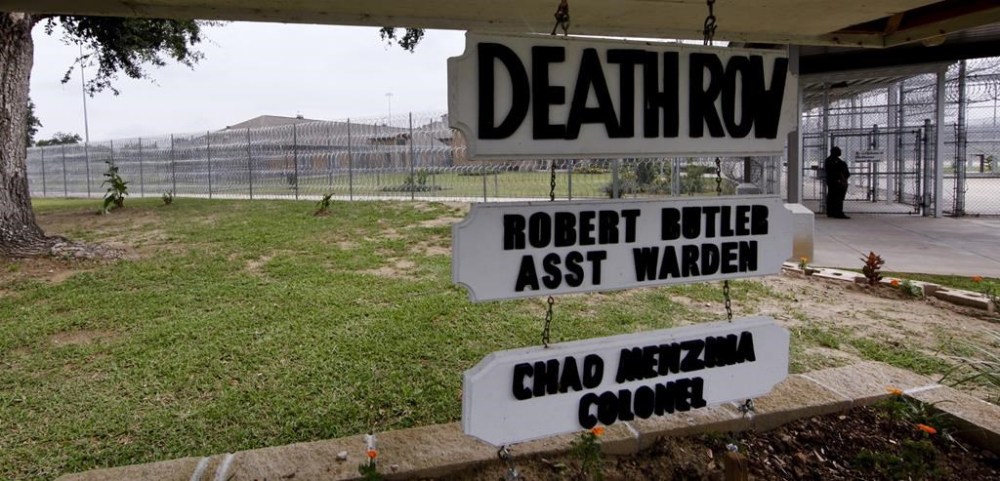
While the bill to remove nitrogen hypoxia executions from state law advanced in the GOP-dominated Senate, it came to a screeching halt in a House legislative committee Tuesday. During the hearing, Republican committee members and others argued against the parallels presented by Jewish advocates, saying the execution of death row inmates is not comparable to the Holocaust.
“We’re not talking about innocent children, men or women. … We’re talking about criminals who were convicted by a jury of 12,” said Republican state Rep. Tony Bacala.
The committee rejected the bill to eliminate the execution method by a vote of 8-3, along party lines. With less than two weeks left in legislative session, the measure is likely dead.
It was no secret that the effort faced an uphill battle in Louisiana’s reliably red legislature, which has overwhelmingly supported capital punishment. Under the direction of new, conservative Gov. Jeff Landry, lawmakers added both nitrogen gas and electrocution as allowable execution methods in February. The only previously allowed method was lethal injection, which had been paused in the state for 14 years because of a shortage of the necessary drugs. The shortage has forced Louisiana and other states to consider other methods, including firing squads.
In January, Alabama performed the first execution using nitrogen gas, marking the first time a new execution method had been used in the United States since lethal injection, which was introduced in 1982. Kenneth Eugene Smith, convicted of murder, was outfitted with a face mask that forced him to breathe pure nitrogen and deprived him of oxygen. He shook and convulsed in seizure-like movements for several minutes on a gurney before his breathing stopped and he was declared dead. State officials maintain that it was a “textbook” execution.
Alabama has scheduled a second execution using nitrogen gas, on Sept. 26, for Alan Eugene Miller, who was convicted of killing three men during a 1999 workplace shooting. Miller has an ongoing federal lawsuit challenging the execution method as a violation of the constitutional ban on cruel and unusual punishment, citing witness descriptions of Smith’s death.
About 60 people now sit on Louisiana’s death row. There are currently no scheduled executions.