

Reparations proposals for Black Californians advance to state Assembly
Advertisement
Read this article for free:
or
Already have an account? Log in here »
To continue reading, please subscribe:
Digital Subscription
One year of digital access for only $1.44 a week*
- Enjoy unlimited reading on winnipegfreepress.com
- Read the E-Edition, our digital replica newspaper
- Access News Break, our award-winning app
- Play interactive puzzles
*Billed as $5.77 plus GST every four weeks. After 52 weeks, price increases to the regular rate of $19.95 plus GST every four weeks. Offer available to new and qualified returning subscribers only. Cancel any time.
To continue reading, please subscribe:
Add Free Press access to your Brandon Sun subscription for only an additional
$1 for the first 4 weeks*
- Enjoy unlimited reading on winnipegfreepress.com
- Read the E-Edition, our digital replica newspaper
- Access News Break, our award-winning app
- Play interactive puzzles
*Your next Brandon Sun subscription payment will increase by $1.00 and you will be charged $17.95 plus GST for four weeks. After four weeks, your payment will increase to $24.95 plus GST every four weeks.
Read unlimited articles for free today:
or
Already have an account? Log in here »
Hey there, time traveller!
This article was published 21/05/2024 (887 days ago), so information in it may no longer be current.
SACRAMENTO, Calif. (AP) — The California Senate advanced a set of ambitious reparations proposals Tuesday, including legislation that would create an agency to help Black families research their family lineage and confirm their eligibility for any future restitution passed by the state.
Lawmakers also passed bills to create a fund for reparations programs and compensate Black families for property that the government unjustly seized from them using eminent domain. The proposals now head to the state Assembly.
State Sen. Steven Bradford, a Los Angeles-area Democrat, said California “bears great responsibility” to atone for injustices against Black Californians.
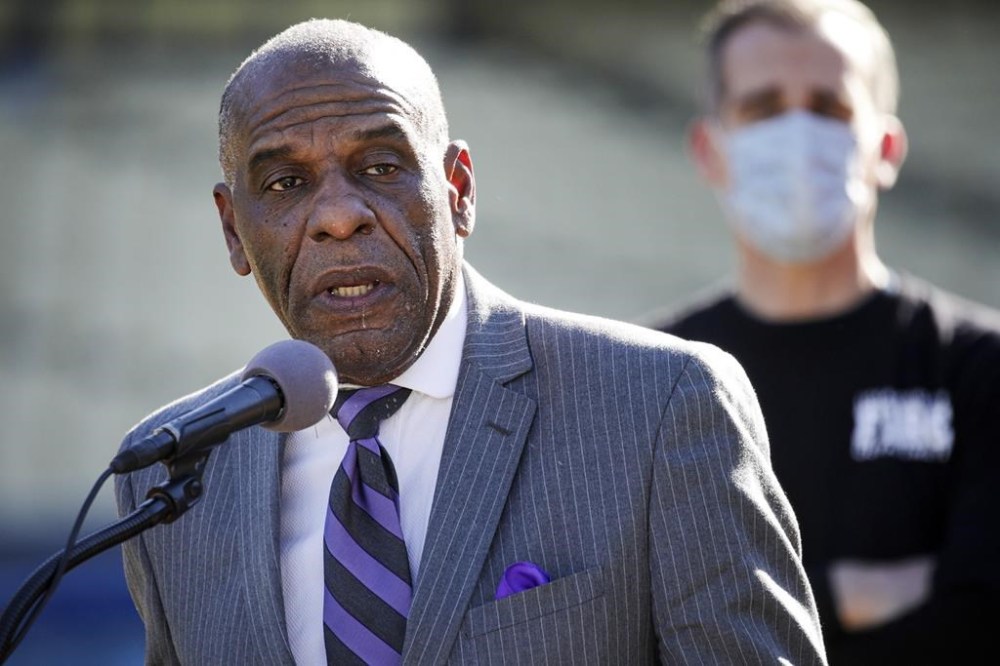
“If you can inherit generational wealth, you can inherit generational debt,” Bradford said. “Reparations is a debt that’s owed to descendants of slavery.”
The proposals, which passed largely along party lines, are part of a slate of bills inspired by recommendations from a first-in-the-nation task force that spent two years studying how the state could atone for its legacy of racism and discrimination against African Americans. Lawmakers did not introduce a proposal this year to provide widespread payments to descendants of enslaved Black people, which has frustrated many reparations advocates.
In the U.S. Congress, a bill to study reparations for African Americans that was first introduced in the 1980s has stalled. Illinois and New York state passed laws recently to study reparations, but no other state has gotten further along than California in its consideration of reparations proposals for Black Americans.
California state Sen. Roger Niello, a Republican representing the Sacramento suburbs, said he supports “the principle” of the eminent domain bill, but he doesn’t think taxpayers across the state should have to pay families for land that was seized by local governments.
“That seems to me to be a bit of an injustice in and of itself,” Niello said.
The votes come on the last week for lawmakers to pass bills in their house of origin, and days after a key committee blocked legislation that would have given property tax and housing assistance to descendants of enslaved people. The state Assembly advanced a bill last week that would make California formally apologize for its legacy of discrimination against Black Californians. In 2019, Democratic Gov. Gavin Newsom issued a formal apology for the state’s history of violence and mistreatment of Native Americans.
Some opponents of reparations say lawmakers are overpromising on what they can deliver to Black Californians as the state faces a multibillion-dollar budget deficit.
“It seems to me like they’re putting, number one, the cart before the horse,” said Republican Assemblymember Bill Essayli, who represents part of Riverside County in Southern California. “They’re setting up these agencies and frameworks to dispense reparations without actually passing any reparations.”
It could cost the state up to $1 million annually to run the agency, according to an estimate by the Senate Appropriations Committee. The committee didn’t release cost estimates for implementing the eminent domain and reparations fund bills. But the group says it could cost the state hundreds of thousands of dollars to investigate claims by families who say their land was taken because of racially discriminatory motives.
Chris Lodgson, an organizer with reparations-advocacy group the Coalition for a Just and Equitable California, said ahead of the votes that they would be “a first step” toward passing more far-reaching reparations laws in California.
“This is a historic day,” Lodgson said.
___
Austin is a corps member for The Associated Press/Report for America Statehouse News Initiative. Report for America is a nonprofit national service program that places journalists in local newsrooms to report on undercovered issues. Follow Austin on the social platform X: @sophieadanna