

Former intel agency chief set to become the Netherlands’ next prime minister in hard right coalition
Advertisement
Read this article for free:
or
Already have an account? Log in here »
To continue reading, please subscribe:

Digital Subscription
One year of digital access for only $205*
- Enjoy unlimited reading on winnipegfreepress.com
- Read the E-Edition, our digital replica newspaper
- Access News Break, our award-winning app
- Play interactive puzzles
*First annual payment billed as $205.00 + GST for one year. This annual subscription will automatically renew at $233.00 + GST every 52 weeks (10% off the regular annual price of $259.35). Offer available to new and qualified returning subscribers only. Cancel any time.
To continue reading, please subscribe:
Add Free Press access to your Brandon Sun subscription for only an additional
$1 for the first 4 weeks*
- Enjoy unlimited reading on winnipegfreepress.com
- Read the E-Edition, our digital replica newspaper
- Access News Break, our award-winning app
- Play interactive puzzles
*Your next Brandon Sun subscription payment will increase by $1.00 and you will be charged $17.95 plus GST for four weeks. After four weeks, your payment will increase to $24.95 plus GST every four weeks.
Read unlimited articles for free today:
or
Already have an account? Log in here »
Hey there, time traveller!
This article was published 28/05/2024 (846 days ago), so information in it may no longer be current.
THE HAGUE, Netherlands (AP) — A former head of the Dutch intelligence agency and counterterrorism office emerged Tuesday as the surprise nominee to become the Netherlands’ next prime minister, after he was given the backing of leaders cobbling together a four-party coalition headed by Geert Wilders’ far-right Party for Freedom.
Dick Schoof, the 67-year-old former head of the General Intelligence and Security Service and currently the top civil servant at the Ministry of Security and Justice, met with the leaders of the four parties before they announced he was their choice for prime minister at a late afternoon news conference.
His name had not been circulating as a possible prime minister and he conceded that his nomination was a surprise.
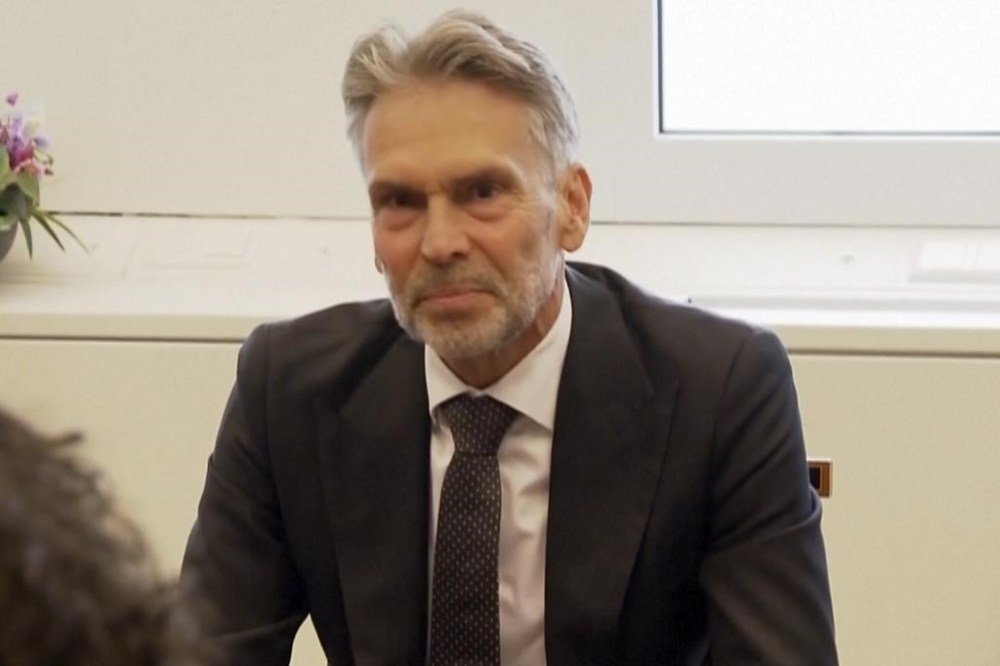
“The step I am taking is unexpected, but not illogical,” he told reporters in The Hague.
Schoof will draw on years of experience as a public servant as he takes on the leadership of a deeply divided nation as head of a technocrat administration that has embraced parts of Wilders’ radical ideology.
“In the end, the question you have to answer for yourself is, can I do something good? And my answer is, yes,” he said.
Besides once leading the top intelligence agency, Schoof is also a former counterterror chief in the Netherlands and ex-head of the country’s Immigration and Naturalization Service. Cutting immigration will be one of his administration’s key tasks once it is installed, likely over the summer.
Wilders congratulated Schoof and said he “has a great track record, is nonpartisan and therefore above the parties, has integrity and is also very likeable.”
Anti-Islam lawmaker Wilders convincingly won the November election but took months to cobble together an outline coalition deal with three other parties. The four leaders are aiming to select a team of ministers to form a technocrat Cabinet over the next month. Wilders, a divisive figure who has in the past been convicted of insulting Moroccans, agreed not to become prime minister because of opposition from his coalition partners.
Wilders is building a coalition with outgoing Prime Minister Mark Rutte’s center-right People’s Party for Freedom and Democracy, or VVD, the populist Farmer Citizen Movement and the centrist New Social Contract party.
Rutte’s government remains in power on a caretaker basis until the new administration is sworn in. The initial candidate for prime minister that Wilders had in mind, Ronald Plasterk, withdrew last week following reported allegations of his involvement in medical patent fraud.
A deal published last week by the four parties outlining their policy objectives is titled “Hope, courage and pride.” It pledges to introduce strict measures on asylum-seekers, scrap family reunification for refugees and reduce the number of international students studying in the country.
Analysts have questioned whether some of the policies are legally or constitutionally possible to enforce.
Addressing those concerns, Schoof said that throughout his career, “the functioning of the democratic rule of law has been a common thread in my work.”