

Insurance company Sura withdraws from Colombia’s health system as government pushes for control
Advertisement
Read this article for free:
or
Already have an account? Log in here »
To continue reading, please subscribe:

Digital Subscription
One year of digital access for only $205*
- Enjoy unlimited reading on winnipegfreepress.com
- Read the E-Edition, our digital replica newspaper
- Access News Break, our award-winning app
- Play interactive puzzles
*First annual payment billed as $205.00 + GST for one year. This annual subscription will automatically renew at $233.00 + GST every 52 weeks (10% off the regular annual price of $259.35). Offer available to new and qualified returning subscribers only. Cancel any time.
To continue reading, please subscribe:
Add Free Press access to your Brandon Sun subscription for only an additional
$1 for the first 4 weeks*
- Enjoy unlimited reading on winnipegfreepress.com
- Read the E-Edition, our digital replica newspaper
- Access News Break, our award-winning app
- Play interactive puzzles
*Your next Brandon Sun subscription payment will increase by $1.00 and you will be charged $17.95 plus GST for four weeks. After four weeks, your payment will increase to $24.95 plus GST every four weeks.
Read unlimited articles for free today:
or
Already have an account? Log in here »
Hey there, time traveller!
This article was published 28/05/2024 (867 days ago), so information in it may no longer be current.
BOGOTA, Colombia (AP) — Colombian insurance company Sura announced on Tuesday that it will withdraw from the nation’s health system because the resources it receives from Colombia’s government to manage more than 5 million patients are not enough to cover its growing costs.
Opposition leaders regretted the company’s decision and accused Colombia’s first left wing government of trying to push private insurers out of the health care market in order to force Colombians to use publicly owned insurance companies.
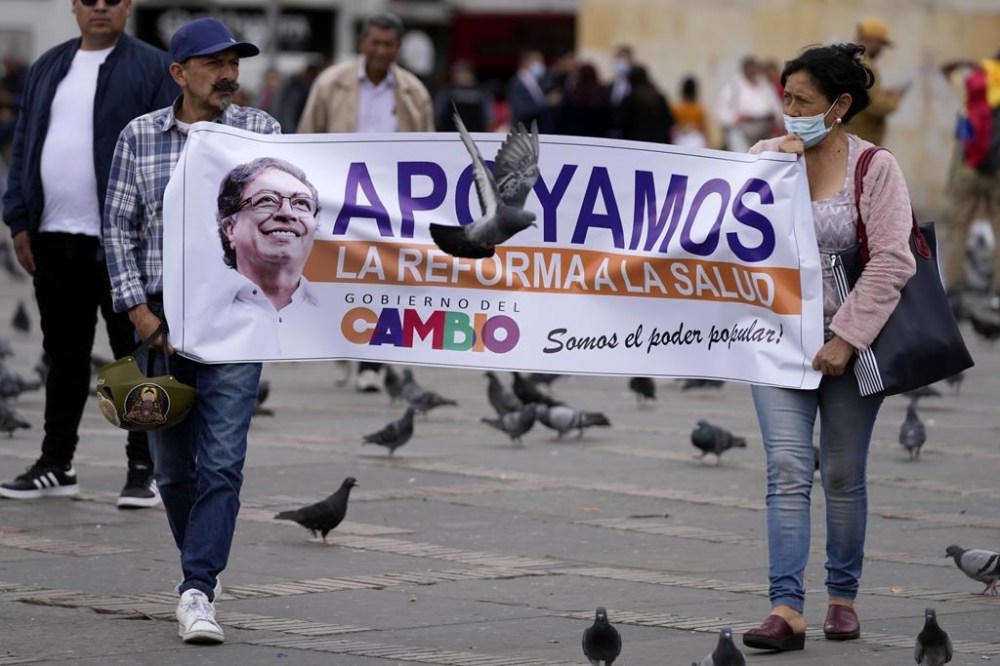
Some politicians also hinted there could be protests in the coming days over recent actions by the administration of President Gustavo Petro that have increasingly placed the health system under state control.
“The crisis at Sura is the crisis of our country,” the influential former President Alvaro Uribe wrote on his X account. “I hope there are widespread actions against these government decisions that are destroying the health sector.”
Under Colombia’s current health system, the nation’s government sets rates for health insurance payments, using a formula that depends largely on a person’s monthly income.
Monthly insurance payments are deposited in a government run fund, and are then distributed to insurance companies that manage patients, and are in charge of paying hospitals and other health care providers to ensure universal healthcare.
But thousands of complaints are filed each year by Colombians who argue insurance companies take too long to approve surgeries and other medical expenses, or sometimes even deny lifesaving treatments.
Hospitals have also complained of growing debts owed to them by the insurance companies, which soared during the pandemic and currently stand at $1.5 billion.
Petro has said these problems could be solved by taking private insurers out of the system, and replacing them with a government-run agency that would manage all of the nation’s patients, and make payments directly to hospitals.
But legislation required to reform Colombia’s health care structure has been rejected by Colombia’s congress amid concerns that Petro’s proposed reforms would give government bureaucrats too much power over health spending and could lead to mismanagement of resources by the Colombian state, which lacks the personnel and expertise to manage millions of health insurance accounts.
Government critics argue the government is now trying to bypass opposition in congress and impose its reforms in a de facto manner by starving private insurers of funding and taking other decisions that make it unviable for them to operate in Colombia.
In January, Colombia’s Ministry of Health raised an annual fee paid out to insurance companies for each affiliate by 12%, despite warnings from companies that these payments had to be raised by at least 15% to make their business viable.
Then in April, the government intervened in two major insurance companies because they did not meet financial reserve requirements set out by the Superintendency of Health.
Sergio Guzman, a political risk analyst in Bogota, estimates that Colombia’s government now directly or indirectly controls about half of the nation’s health insurance accounts. He said that amount will increase significantly if Sura’s 5 million affiliates are transferred to a state run insurance company once the company completes its withdrawal from the healthcare system.
“The government will stop at nothing to see the most extreme components of its reform agenda enacted,” Guzman said. “Despite whatever collateral damage will occur as a result.”
Jorge Restrepo, an economist at Bogota’s Javeriana University, said that with Sura’s withdrawal from Colombia’s health care system, thousands of jobs are threatened. Medical histories of patients will also have to be transferred to another insurer, in what can be a complicated process.
“The ball is now in the government’s court. With its actions, it will sculpt the future of healthcare in Colombia,” Restrepo said.