

NATO ministers meet in Prague as allies ease restrictions on Ukraine’s use of their weapons
Advertisement
Read this article for free:
or
Already have an account? Log in here »
To continue reading, please subscribe:

Digital Subscription
One year of digital access for only $205*
- Enjoy unlimited reading on winnipegfreepress.com
- Read the E-Edition, our digital replica newspaper
- Access News Break, our award-winning app
- Play interactive puzzles
*First annual payment billed as $205.00 + GST for one year. This annual subscription will automatically renew at $233.00 + GST every 52 weeks (10% off the regular annual price of $259.35). Offer available to new and qualified returning subscribers only. Cancel any time.
To continue reading, please subscribe:
Add Free Press access to your Brandon Sun subscription for only an additional
$1 for the first 4 weeks*
- Enjoy unlimited reading on winnipegfreepress.com
- Read the E-Edition, our digital replica newspaper
- Access News Break, our award-winning app
- Play interactive puzzles
*Your next Brandon Sun subscription payment will increase by $1.00 and you will be charged $17.95 plus GST for four weeks. After four weeks, your payment will increase to $24.95 plus GST every four weeks.
Read unlimited articles for free today:
or
Already have an account? Log in here »
Hey there, time traveller!
This article was published 31/05/2024 (861 days ago), so information in it may no longer be current.
PRAGUE (AP) — NATO foreign ministers were meeting in the Czech capital Friday to prepare for this summer’s leaders’ summit as the alliance boosts support for Ukraine and countries one-by-one remove restrictions on how Kyiv can use western-supplied weaponry to combat Russia’s invasion.
A day after U.S. President Joe Biden gave Ukraine the go-ahead to use American munitions to strike inside Russia for the limited purpose of defending Kharkiv, numerous ministers, including those from the Netherlands, Finland, Poland and Germany, expressed approval of the decision, saying that Ukraine has the absolute right to defend itself from attacks originating on Russian soil.
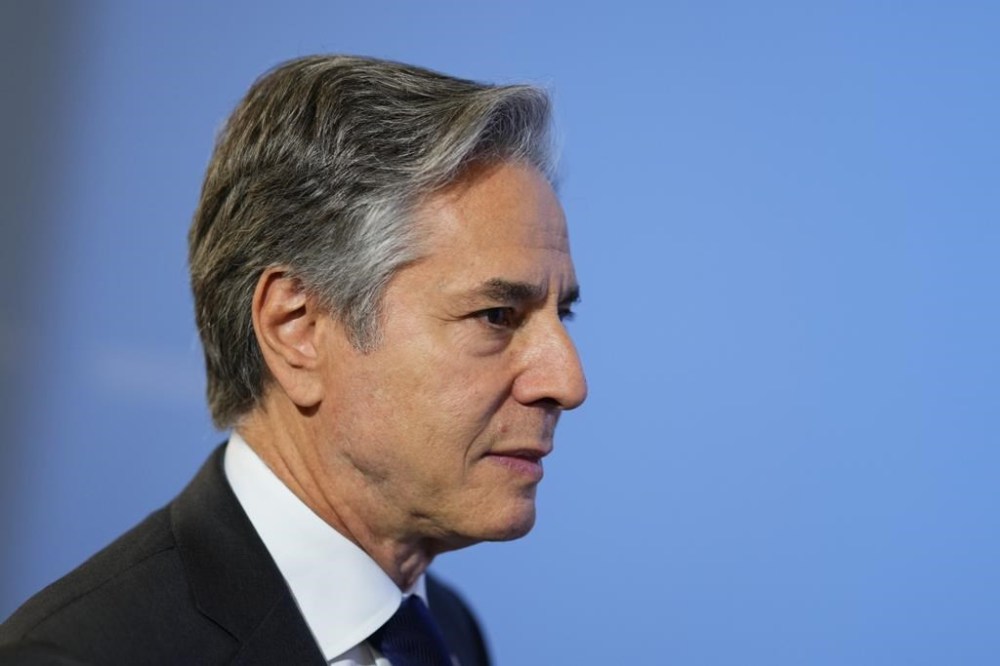
The chorus of allied voices backing greater leeway for Ukraine to use their weapons grew louder in recent weeks after Russia launched artillery strikes on Kharkiv from its territory, prompting appeals for help from Kyiv. U.S. Secretary of State Antony Blinken had hinted strongly this week that a change in Washington’s position was coming.
“This is a matter of upholding international law — Ukraine’s right to self-defense,” NATO chief Jens Stoltenberg said. “Russia has attacked Ukraine, (which) has the right to defend themselves. And that includes also attacking military legitimate targets inside Russia.”
“If you look at the battlefield now, Russia is launching attacks on Ukraine’s soil from Russian soil with artillery, missiles, and massing troops,” he said. “And, of course, it makes it very hard for Ukraine to defend themselves if they are not allowed to use advanced weapons to repel those attacks.”
Ukrainian officials had stepped up calls on the U.S. administration to allow their forces to defend themselves against attacks originating from Russian territory. Kharkiv, Ukraine’s second-largest city, is just 20 kilometers (12 miles) from the Russian border.
Ukrainian officials, most notably President Volodymyr Zelenskyy, have been increasingly vocal in arguing that the restriction was putting Ukrainian forces in an untenable situation as Russia intensified attacks around Kharkiv.
Russia has been exploiting a lengthy delay in replenishment of U.S. military aid and Western Europe’s inadequate military production that has slowed crucial deliveries to the battlefield for Ukraine.
The alliance is celebrating its 75th anniversary this year and leaders will be meeting in Washington in July to reaffirm their support. Stoltenberg said he expects to be able to announce at the summit that at least two-thirds of members are meeting their commitment to spend 2% of their gross domestic product on defense.