

UN migration and refugee agencies cite ‘fundamental’ right to asylum after US moves to restrict it
Advertisement
Read this article for free:
or
Already have an account? Log in here »
To continue reading, please subscribe:

Digital Subscription
One year of digital access for only $205*
- Enjoy unlimited reading on winnipegfreepress.com
- Read the E-Edition, our digital replica newspaper
- Access News Break, our award-winning app
- Play interactive puzzles
*First annual payment billed as $205.00 + GST for one year. This annual subscription will automatically renew at $233.00 + GST every 52 weeks (10% off the regular annual price of $259.35). Offer available to new and qualified returning subscribers only. Cancel any time.
To continue reading, please subscribe:
Add Free Press access to your Brandon Sun subscription for only an additional
$1 for the first 4 weeks*
- Enjoy unlimited reading on winnipegfreepress.com
- Read the E-Edition, our digital replica newspaper
- Access News Break, our award-winning app
- Play interactive puzzles
*Your next Brandon Sun subscription payment will increase by $1.00 and you will be charged $17.95 plus GST for four weeks. After four weeks, your payment will increase to $24.95 plus GST every four weeks.
Read unlimited articles for free today:
or
Already have an account? Log in here »
Hey there, time traveller!
This article was published 05/06/2024 (821 days ago), so information in it may no longer be current.
GENEVA (AP) — The U.N.’s migration and refugee agencies expressed concern over Biden administration plans for new asylum restrictions in the United States and said the right to asylum is fundamental.
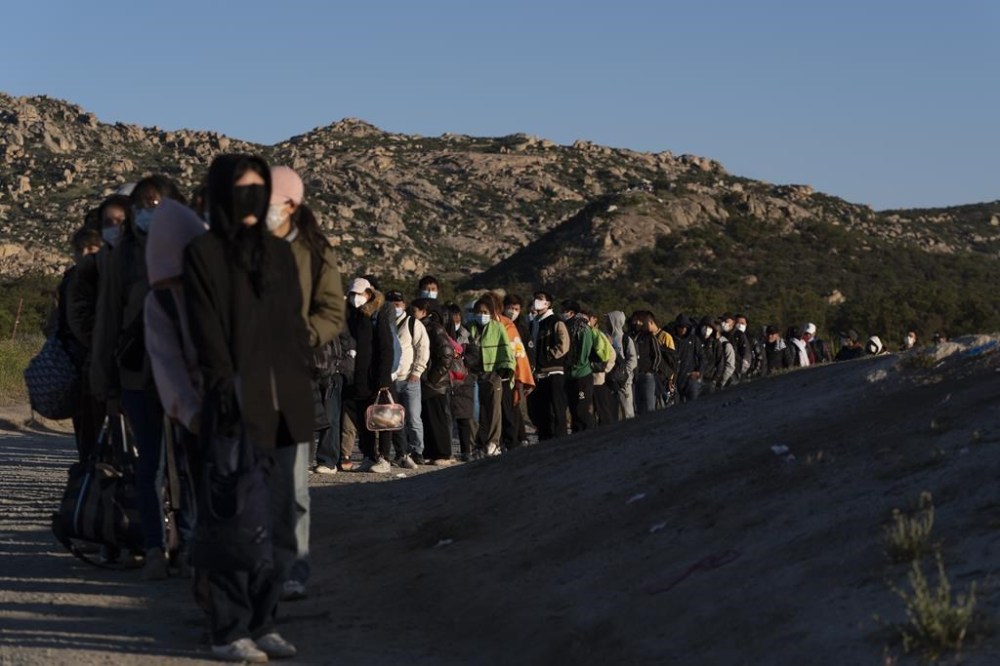
President Joe Biden on Tuesday unveiled plans to enact immediate significant restrictions on migrants seeking asylum at the U.S.-Mexico border as the White House tries to neutralize immigration as a political liability ahead of the November elections.
The move would bar migrants from being granted asylum when officials deem that the southern border with Mexico is overwhelmed. It comes after the collapse months ago of a bipartisan border security deal in Congress that most Republican lawmakers rejected at the behest of former President Donald Trump, the presumptive Republican presidential nominee.
Refugee agency UNHCR urged the U.S. to “reconsider restrictions that undermine the fundamental right to seek asylum.”
“The new measures will deny access to asylum for many individuals who are in need of international protection, and who may now find themselves without a viable option for seeking safety and even at risk of refoulement,” it said in a statement issued late Tuesday, referring to a term for turning people back to places where they could face persecution.
“Any person who claims to have a well-founded fear of being persecuted in their country of origin must have access to safe territory and have this claim assessed before being subject to deportation or removal,” the agency added.
The U.N.’s International Organization for Migration, which is run by Amy Pope, a former senior adviser on migration for Biden, was more muted.
“IOM acknowledges the challenges posed by the increasing irregular crossings of migrants at the United States-Mexico border,” the organization said in a statement emailed to The Associated Press. “It is crucial that any measures taken to manage migration respect the fundamental right to seek asylum, as well as to strengthen safe and regular migration pathways.”
Biden’s order will go into effect when the number of border encounters between ports of entry hits 2,500 per day, senior administration officials said. That means the order should go into effect immediately, because the daily averages are higher now.
Average daily arrests for illegal crossings from Mexico were last below 2,500 in January 2021, the month Biden took office. The last time the border encounters dipped to 1,500 a day was in July 2020, at the height of the COVID-19 pandemic.
The restrictions would be in effect until two weeks after the daily encounter numbers are at or below 1,500 per day between ports of entry, under a seven-day average.
As migration increases around the world with millions of people fleeing wars, hunger, climate change or simply seeking a better future for themselves and their families, wealthy countries have been looking for ways to restriction the influx. Far-right populist parties have been exploiting the issue with anti-migration rhetoric to gain votes in elections from Europe to the U.S. and beyond.
___
Grieshaber reported from Berlin.