

The far right made big gains in European elections. What’s next, and why does it matter?
Advertisement
Read this article for free:
or
Already have an account? Log in here »
To continue reading, please subscribe:

Digital Subscription
One year of digital access for only $205*
- Enjoy unlimited reading on winnipegfreepress.com
- Read the E-Edition, our digital replica newspaper
- Access News Break, our award-winning app
- Play interactive puzzles
*First annual payment billed as $205.00 + GST for one year. This annual subscription will automatically renew at $233.00 + GST every 52 weeks (10% off the regular annual price of $259.35). Offer available to new and qualified returning subscribers only. Cancel any time.
To continue reading, please subscribe:
Add Free Press access to your Brandon Sun subscription for only an additional
$1 for the first 4 weeks*
- Enjoy unlimited reading on winnipegfreepress.com
- Read the E-Edition, our digital replica newspaper
- Access News Break, our award-winning app
- Play interactive puzzles
*Your next Brandon Sun subscription payment will increase by $1.00 and you will be charged $17.95 plus GST for four weeks. After four weeks, your payment will increase to $24.95 plus GST every four weeks.
Read unlimited articles for free today:
or
Already have an account? Log in here »
Hey there, time traveller!
This article was published 10/06/2024 (841 days ago), so information in it may no longer be current.
BRUSSELS (AP) — For decades, the European Union — which has its roots in the defeat of Nazi Germany and fascist Italy — confined the nationalist far right to the political fringes.
With a strong showing in elections Sunday, far-right forces could now influence or block joint EU-wide policies on migration, security and climate change.
What’s next?
Senior EU party officials and number-crunchers met Monday to work out what kind of groups and alliances might be formed in the parliament for the next five years. Party presidents will hold their first formal talks on Tuesday.
EU presidents and prime ministers will hold a summit June 17 to take stock of the results. They will also discuss whether to return Ursula von der Leyen to the helm of the EU’s powerful executive branch, the European Commission.
The new parliament’s first session starts in mid-July in Strasbourg, France. Pro-EU conservative parties are expected to have the biggest group. Populist or far-right forces have more seats than ever, but their views diverge on many issues.
One thing is clear: The results will slow decision-making and the passing of legislation on issues from climate change to farm subsidies.
Why does it matter?
The two world wars and the Holocaust started in Europe, and EU was created to prevent such horrors. Longtime enemies agreed to open trade and borders and even share their currency, sacrificing some sovereignty to ensure stability after centuries of conflict.
The EU’s single market has helped keep Europe competitive in a globalized economy. Its collective economic weight means that its sanctions bite — one reason Russia’s Vladimir Putin benefits from divisions within the bloc.
The EU’s restrictions on carbon emissions have set a global example, as have its data privacy protections and regulations of Big Tech. All those measures required consensus from 27 diverse countries and approval by the European Parliament.
Meanwhile, democratic institutions and values have faced growing threats in several EU countries, from political violence in Germany, Slovakia and Denmark, to Hungary’s crackdown on free media, and mistreatment of migrants across the bloc.

What about Ukraine?
The EU has rallied behind Ukraine since Russia’s 2022 invasion, with many in Europe seeing the war as an existential threat. Five EU countries border Russia.
The EU has provided billions of euros in financial and military aid to Ukraine and put it on a path to EU membership, while imposing round after round of sanctions on Russian officials and companies and its energy sector.
There is no imminent threat to support for Ukraine, but the election results could complicate discussions about Ukraine.
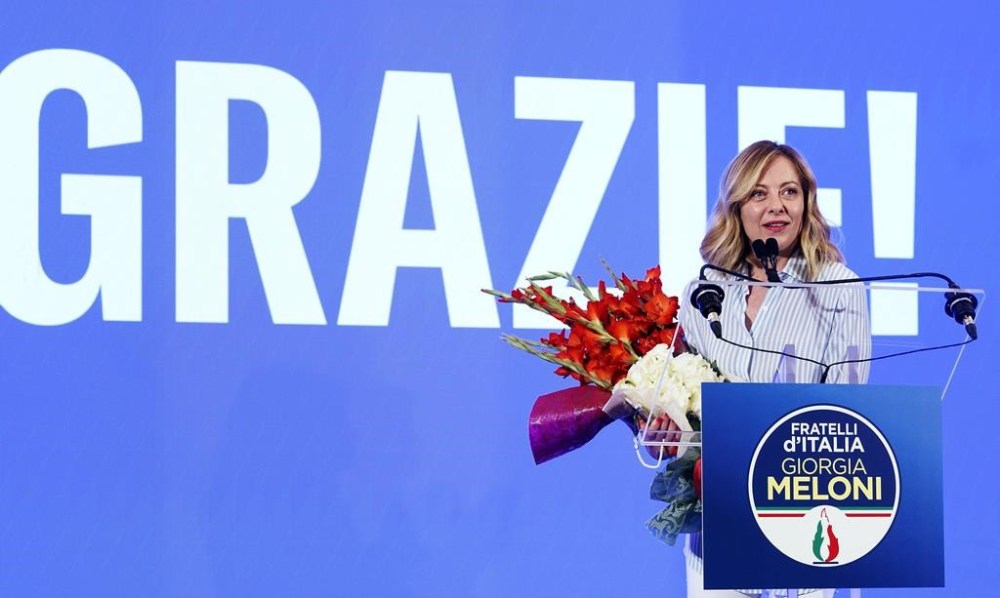
The nationalist parties in the European Conservatives and Reformists camp — which includes Italy’s far-right premier, Giorgia Meloni, — back Ukraine.
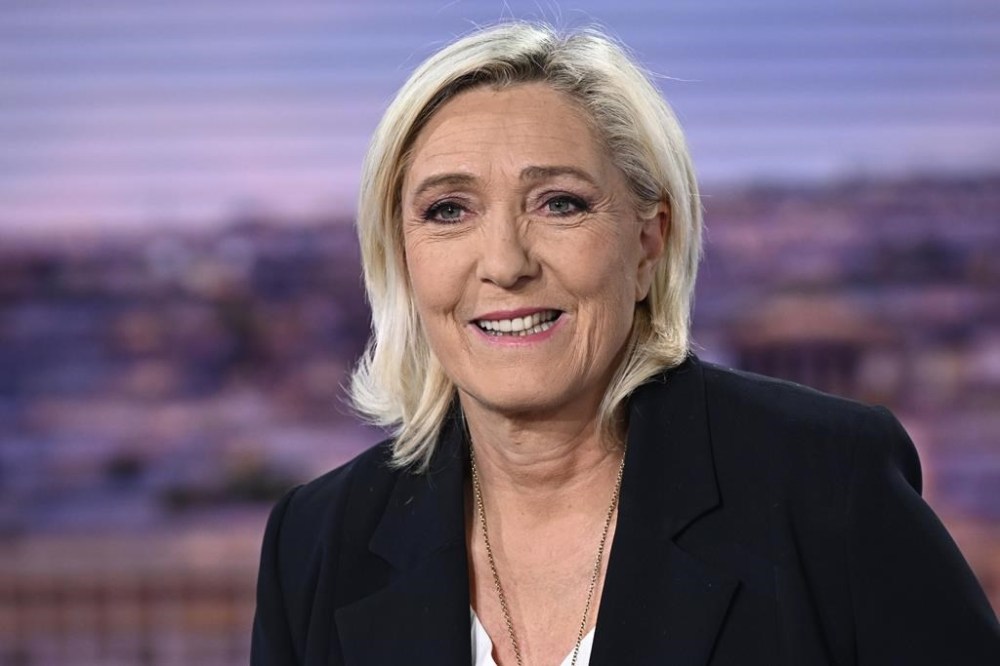
Those in the Identity and Democracy group, which includes France’s Marine Le Pen, are more Russia-friendly – and Hungary’s Prime Minister Viktor Orban remains Putin’s closest EU ally.
Divisions within the far right
That division over Ukraine highlights a fundamental challenge for far-right forces in Europe: Their focus on national interests makes it difficult to work together at a European level.
Parties on the right of the political spectrum are in three different pots: the populist ECR; the ID group, home to the more typical hard-right factions; and a large set of unaligned parties. Provisional results give these three groups at least 130 seats of the 720 total.
Their impact on decision-making in the parliament, and their ability to influence legislation and the nomination of senior EU officials, will depend on whether they can set aside differences and how they might work together.
The Alternative for Germany was recently expelled from ID after leader Maximilian Krah said not all Nazi-SS men “were necessarily criminals.”
Hungary’s ruling party, Fidesz, has no group at the moment; where Orban will take his support remains to be seen.
Analysts expect the far-right forces’ overall goal will be to further normalize their nationalist, anti-immigrant thinking within the parliament and beyond.
Upheaval in France
The big surprise came in Paris, where French President Emmanuel Macron announced snap legislative elections after his pro-business moderates suffered a crushing defeat by Le Pen’s far-right party in EU voting.
Macron said he could not ignore the new political reality after his pro-European party was projected to garner less than half the support of Le Pen’s National Rally.
He hopes voters will band together to contain the far right in national elections in a way they didn’t in the European ones.
But Sunday’s decision to dissolve parliament and send to the polls voters who just expressed their discontent with Macron’s politics was risky — it could result in the French far right leading a government for the first time since World War II.
Macron, who has three years left on his second and final presidential term, would then have to find a way to work with a prime minister from a party that deeply opposes most of his policies.
The elections will be held in two rounds, June 30 and July 7.
___
Charlton reported form Paris. Associated Press writers Lorne Cook and Sam Petrequin in Brussels contributed to this story.