

Japan has no plans to seek a suspension of Osprey flights despite restrictions in US
Advertisement
Read this article for free:
or
Already have an account? Log in here »
To continue reading, please subscribe:
Digital Subscription
One year of digital access for only $1.44 a week*
- Enjoy unlimited reading on winnipegfreepress.com
- Read the E-Edition, our digital replica newspaper
- Access News Break, our award-winning app
- Play interactive puzzles
*Billed as $5.77 plus GST every four weeks. After 52 weeks, price increases to the regular rate of $19.95 plus GST every four weeks. Offer available to new and qualified returning subscribers only. Cancel any time.
To continue reading, please subscribe:
Add Free Press access to your Brandon Sun subscription for only an additional
$1 for the first 4 weeks*
- Enjoy unlimited reading on winnipegfreepress.com
- Read the E-Edition, our digital replica newspaper
- Access News Break, our award-winning app
- Play interactive puzzles
*Your next Brandon Sun subscription payment will increase by $1.00 and you will be charged $17.95 plus GST for four weeks. After four weeks, your payment will increase to $24.95 plus GST every four weeks.
Read unlimited articles for free today:
or
Already have an account? Log in here »
Hey there, time traveller!
This article was published 14/06/2024 (859 days ago), so information in it may no longer be current.
TOKYO (AP) — Japan’s defense chief said Friday that Japanese and American V-22 Ospreys are being safely operated in his country, and that he has no plans to request a flight suspension despite restrictions in the U.S. where ongoing safety and performance assessments will continue until next year.
Defense Minister Minoru Kihara said that Japanese and U.S. military officials have closely communicated over technical issues involving the safety of Ospreys following a fatal November crash off Japan’s southern coast.
“Japanese and U.S. Ospreys have been operated safely and I believe there is no safety issue involved,” Kihara said. “We have no intention to seek a suspension of the operation.”
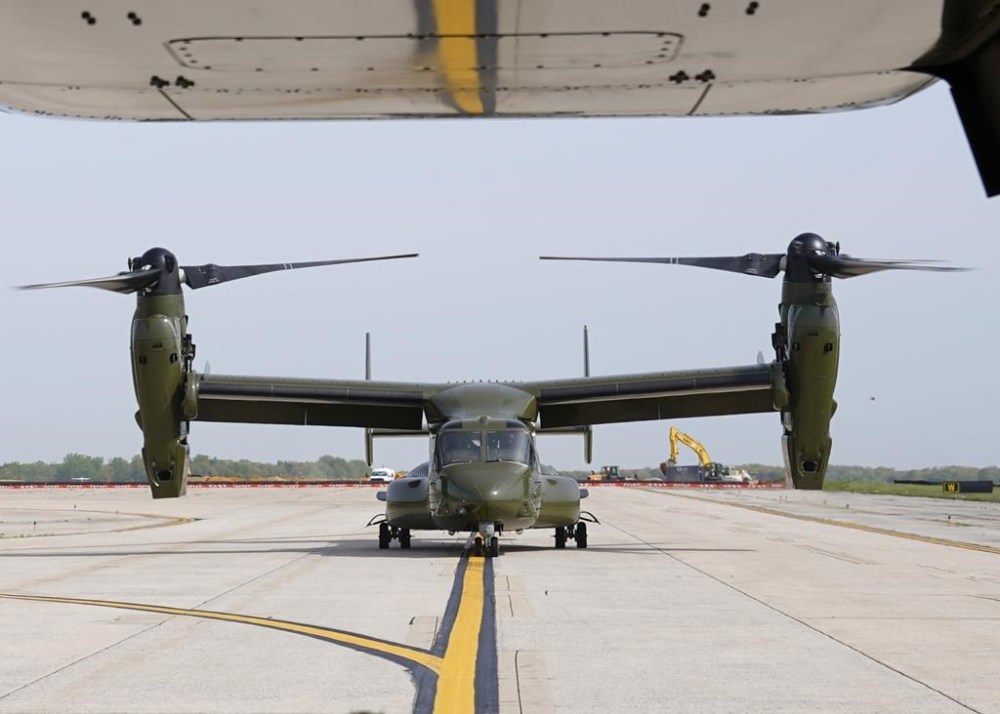
Aircraft that had completed necessary maintenance, in addition to further training of pilots, have returned to flight service, and they are operated with upgraded safety checks, maintenance, flight plans, emergency measures and other steps, he said.
Kihara was responding to a question about a remark by Vice Adm. Carl Chebi, head of U.S. Naval Air Systems Command, that hundreds of U.S. military Ospreys won’t be permitted to fly their full range of missions until at least 2025 while the Pentagon addresses safety concerns in the fleet.
The November crash killed eight U.S. servicemembers, causing the fleet to be grounded for about four months. The Ospreys in March returned to flight but not to full missions such as carrier operations.
Twenty-nine Ospreys deployed to U.S. military bases in Japan under the bilateral security alliance, as well as 14 others operated by Japan’s Ground Self Defense Force, which had been also grounded, resumed flights in mid-March.
Asked about restrictions to Ospreys operated in Japan, Kihara said that he couldn’t comment if or what restrictions are attached, citing national security reasons. He said he wasn’t informed of the content of Chebi’s remarks to U.S. Congress in advance, and that officials are asking Washington to explain details.
The Osprey, in use since 2007, can fly like an airplane and land like a helicopter. Critics say its innovative design has systematic flaws that are behind the unexpected failures. Among the reasons for the extension of restricted flight is that the military is still working to fix a clutch failure that was identified as one of the primary factors in a fatal crash in California in 2022.
Over the lifespan of the Osprey program, Chebi said a total of 64 service members have been killed in air and ground crashes, with 93 others injured.
___
Tara Copp contributed to this report from Washington.