

No lie: Perfectly preserved centuries-old cherries unearthed at George Washington’s Mount Vernon
Advertisement
Read this article for free:
or
Already have an account? Log in here »
To continue reading, please subscribe:

Digital Subscription
One year of digital access for only $205*
- Enjoy unlimited reading on winnipegfreepress.com
- Read the E-Edition, our digital replica newspaper
- Access News Break, our award-winning app
- Play interactive puzzles
*First annual payment billed as $205.00 + GST for one year. This annual subscription will automatically renew at $233.00 + GST every 52 weeks (10% off the regular annual price of $259.35). Offer available to new and qualified returning subscribers only. Cancel any time.
To continue reading, please subscribe:
Add Free Press access to your Brandon Sun subscription for only an additional
$1 for the first 4 weeks*
- Enjoy unlimited reading on winnipegfreepress.com
- Read the E-Edition, our digital replica newspaper
- Access News Break, our award-winning app
- Play interactive puzzles
*Your next Brandon Sun subscription payment will increase by $1.00 and you will be charged $17.95 plus GST for four weeks. After four weeks, your payment will increase to $24.95 plus GST every four weeks.
Read unlimited articles for free today:
or
Already have an account? Log in here »
Hey there, time traveller!
This article was published 17/06/2024 (796 days ago), so information in it may no longer be current.
MOUNT VERNON, Va. (AP) — George Washington never did cut down the cherry tree, despite the famous story to the contrary, but he did pack away quite a few bottles of the fruit at his Mount Vernon home.
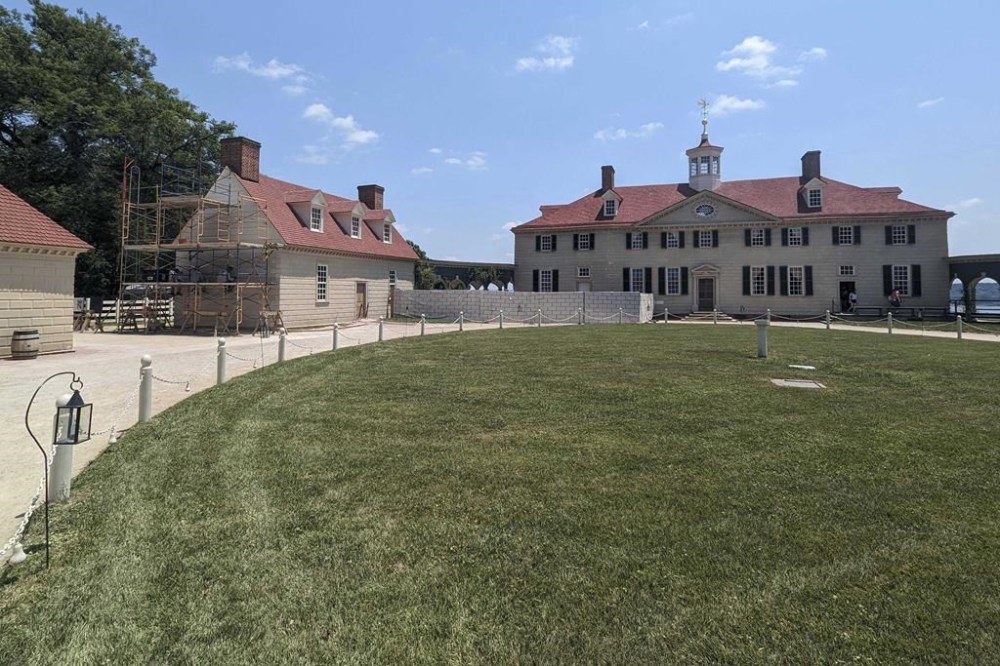
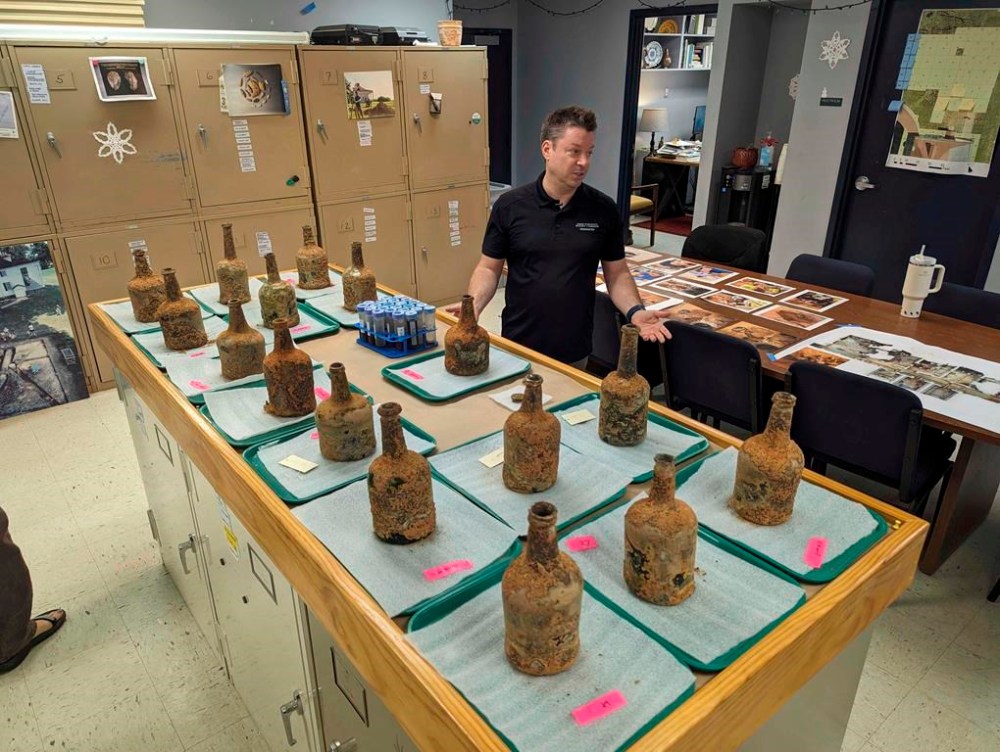
Dozens of bottles of cherries and berries — impossibly preserved in storage pits uncovered from the cellar of his mansion on the banks of the Potomac River — were discovered during an archaeological dig connected to a restoration project.
Jason Boroughs, Mount Vernon’s principal archaeologist, said the discovery of so much perfectly preserved food from more than 250 years ago is essentially unprecedented.
“Finding what is essentially fresh fruit, 250 years later, is pretty spectacular,” Boroughs said in an interview. “All the stars sort of have to align in the right manner for that to happen.”
Whole pieces of fruit, recognizable as cherries, were found in some of the bottles. Other bottles held what appear to be gooseberries or currants, though testing is underway to confirm that.
Mount Vernon is partnering with the U.S. Department of Agriculture, which is conducting DNA testing on the fruit. They are also examining more than 50 cherry pits recovered from the bottles to see if any of them can be planted.
“It’s kind of a longshot,” said Benjamin Gutierrez, a USDA plant geneticist, of the chances of using a cherry pit to grow a tree. Seeds preserve best when they are dry, and most of the samples found at Mount Vernon were waterlogged. A couple of pits tested initially were not viable as seeds.
Still, he said the bottles are a remarkable find. In addition to DNA testing, he said chemical testing may be able to show if particular spices were used to preserve the fruits.
Records at Mount Vernon show that George and Martha Washington were fond of cherries, at least when mixed with brandy. Martha Washington’s recipe for a “cherry bounce” cocktail survives, and Washington wrote that he took a canteen of cherry bounce with him on a trip across the Alleghenies in 1784.
These cherries, though, were most likely bottled to be eaten simply as cherries, Boroughs said.
The quality of the preservation reflect a high caliber of work. Slaves ran the plantation’s kitchen. The kitchen was overseen by an enslaved woman named Doll, who came to Mount Vernon in 1758 with Martha Washington, according to the estate.
“The enslaved folks who were taking care of the trees, picking the fruit, working in the kitchen, those would have been the folks that probably would have overseen and done this process,” Boroughs said. “It’s a highly skilled process. Otherwise they just wouldn’t have survived this way.”
The bottles were found only because Mount Vernon is doing a $40 million revitalization project of the mansion that they expect to be completed by the nation’s 250th birthday in 2026.
“When we do archaeology, it’s destructive,” Boroughs said. “So unless we have a reason to disturb those resources, we tend not to.”
“In this case, because of these needed structural repairs to the mansion, the ground was going to be disturbed. So we looked there first,” he continued. “We didn’t expect to find all this.”
They know the bottles predate 1775 because that’s when an expansion of the mansion led to the area being covered over with a brick floor.
Mount Vernon announced back in April, at the start of its archaeological work, that it had found two bottles. As the dig continued, the number increased to 35 in six distinct storage pits. Six of the bottles were broken, with the other 29 intact. Twelve held cherries, 16 held the other berries believed to be currants and gooseberries, and one larger bottle held both cherries and other berries.
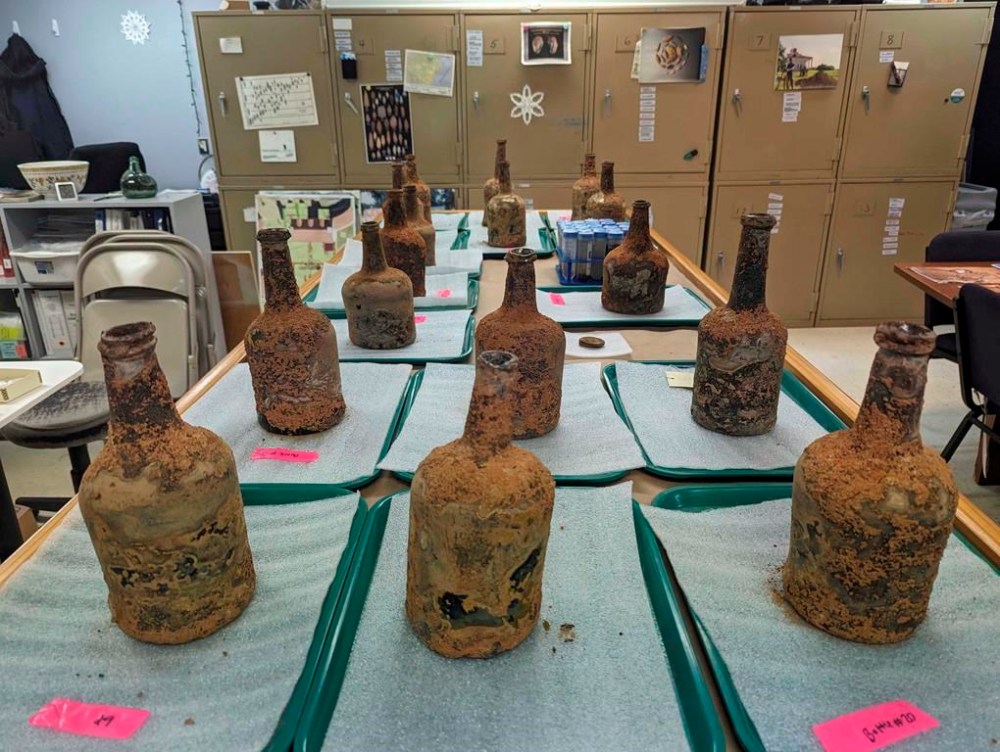
Boroughs believes they have now uncovered all the cherries and berries that survived.
“There is a lot of information that we’re excited to get from these bottles,” he said.
___
This story has been updated to correct that 29 bottles were found intact, not 19.