

Reclusive Taliban leader warns Afghans against earning money or gaining ‘worldly honor’
Advertisement
Read this article for free:
or
Already have an account? Log in here »
To continue reading, please subscribe:

Digital Subscription
One year of digital access for only $205*
- Enjoy unlimited reading on winnipegfreepress.com
- Read the E-Edition, our digital replica newspaper
- Access News Break, our award-winning app
- Play interactive puzzles
*First annual payment billed as $205.00 + GST for one year. This annual subscription will automatically renew at $233.00 + GST every 52 weeks (10% off the regular annual price of $259.35). Offer available to new and qualified returning subscribers only. Cancel any time.
To continue reading, please subscribe:
Add Free Press access to your Brandon Sun subscription for only an additional
$1 for the first 4 weeks*
- Enjoy unlimited reading on winnipegfreepress.com
- Read the E-Edition, our digital replica newspaper
- Access News Break, our award-winning app
- Play interactive puzzles
*Your next Brandon Sun subscription payment will increase by $1.00 and you will be charged $17.95 plus GST for four weeks. After four weeks, your payment will increase to $24.95 plus GST every four weeks.
Read unlimited articles for free today:
or
Already have an account? Log in here »
Hey there, time traveller!
This article was published 17/06/2024 (822 days ago), so information in it may no longer be current.
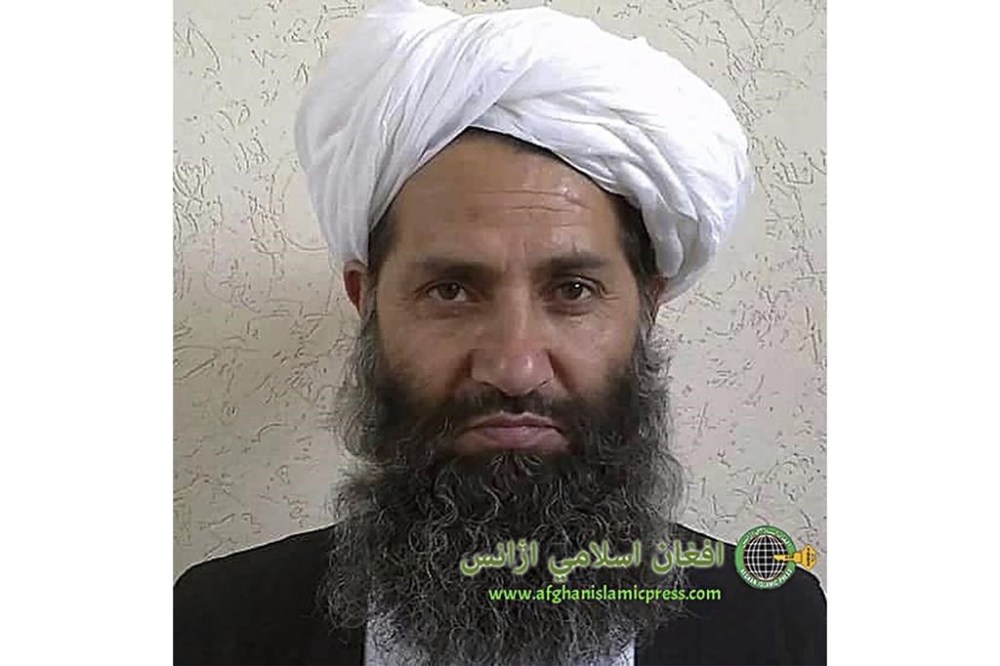
ISLAMABAD (AP) — The Taliban’s reclusive supreme leader on Monday warned Afghans against earning money or gaining worldly honor at a time when the country is in the grip of humanitarian crises and isolated on the global stage.
Hibatullah Akhundzada gave his warning in a sermon to mark the festival of Eid al-Adha at a mosque in southern Kandahar province, weeks before a Taliban delegation goes to Doha, Qatar for U.N.-hosted talks on Afghanistan.
This is the first round of talks the Taliban will attend since they seized power in August 2021. They weren’t invited to the conference of foreign special envoys to Afghanistan in the first round, and they snubbed the second round because they wanted to be treated as the country’s official representatives.
No government recognizes the Taliban as the legitimate rulers of Afghanistan, whose aid-dependent economy was plunged into turmoil following their takeover.
U.N. spokesperson Stéphane Dujarric said the invitation to the Doha meeting at the end of June does not imply recognition of the Taliban.
Akhundzada reminded Afghans of their duties as Muslims and made repeated calls for unity in his 23-minute sermon.
Messages by him and another influential Taliban figure, Sirajuddin Haqqani, to mark a religious festival in April showed tensions between hardliners and more moderate elements who want to scrap harsher policies and attract more outside support.
In Monday’s message, Akhundzada said he wanted brotherhood among Muslims and that he was unhappy about differences between citizens and Taliban officials. Public dissent over Taliban edicts is rare, and protests are swiftly and sometimes violently quashed.
He said he would willingly accept any decision to remove him as supreme leader, as long as there was unity and agreement on his ouster. But he was unhappy about differences and disagreement between people.
“We were created to worship Allah and not to earn money or gain worldly honor,” Akhundzada said. “Our Islamic system is God’s system and we should stand by it. We have promised God that we will bring justice and Islamic law (to Afghanistan) but we cannot do this if we are not united. The benefit of your disunity reaches the enemy; the enemy takes advantage of it.”
The Taliban have used their interpretation of Islamic law to bar girls from education beyond the age of 11, ban women from public spaces, exclude them from many jobs, and enforce dress codes and male guardianship requirements.
Akhundzada told Taliban officials to listen to the advice of religious scholars and entrust them with authority. He said officials shouldn’t be arrogant, boast, or deny the truth about Islamic law.
Pakistani journalist and author Ahmed Rashid, who has written several books about Afghanistan and the Taliban, said Akhundzada’s appeals for unity were a sign of desperation because he refused to spell out the real issues facing Afghans such as unemployment, economic development, and building a consensus for social reform.
“I would not be convinced that this was a meaningful speech if I were the Taliban,” said Rashid.
Michael Kugelman, director of the Wilson Center’s South Asia Institute, said Akhundzada’s focus on unity may also be preemptive and meant to nip in the bud any possibility that rifts could flare up again.
He also questioned if the audience being targeted went beyond Afghans to focus on the global Muslim community.
“Operationally speaking, the Taliban don’t have transnational goals. But the supreme leader looks to command respect beyond Afghanistan’s borders,” said Kugelman.