

New York state prisons violate solitary confinement rules, judge says
Advertisement
Read this article for free:
or
Already have an account? Log in here »
To continue reading, please subscribe:
Digital Subscription
One year of digital access for only $1.44 a week*
- Enjoy unlimited reading on winnipegfreepress.com
- Read the E-Edition, our digital replica newspaper
- Access News Break, our award-winning app
- Play interactive puzzles
*Billed as $5.77 plus GST every four weeks. After 52 weeks, price increases to the regular rate of $19.95 plus GST every four weeks. Offer available to new and qualified returning subscribers only. Cancel any time.
To continue reading, please subscribe:
Add Free Press access to your Brandon Sun subscription for only an additional
$1 for the first 4 weeks*
- Enjoy unlimited reading on winnipegfreepress.com
- Read the E-Edition, our digital replica newspaper
- Access News Break, our award-winning app
- Play interactive puzzles
*Your next Brandon Sun subscription payment will increase by $1.00 and you will be charged $17.95 plus GST for four weeks. After four weeks, your payment will increase to $24.95 plus GST every four weeks.
Read unlimited articles for free today:
or
Already have an account? Log in here »
Hey there, time traveller!
This article was published 20/06/2024 (718 days ago), so information in it may no longer be current.
ALBANY, N.Y. (AP) — New York’s state prison system has been holding inmates in solitary confinement for too long, in violation of state law, a state judge ruled this week.
State Supreme Court Justice Kevin Bryant said in a decision filed Thursday that the state Department of Corrections and Community Supervision did not provide sufficient evidence to refute allegations that it has failed to follow the limits on solitary confinement enshrined in state law in 2021.
“DOCCS has the responsibility to submit an administrative record that supports their actions and they have failed to meet this burden,” he wrote.
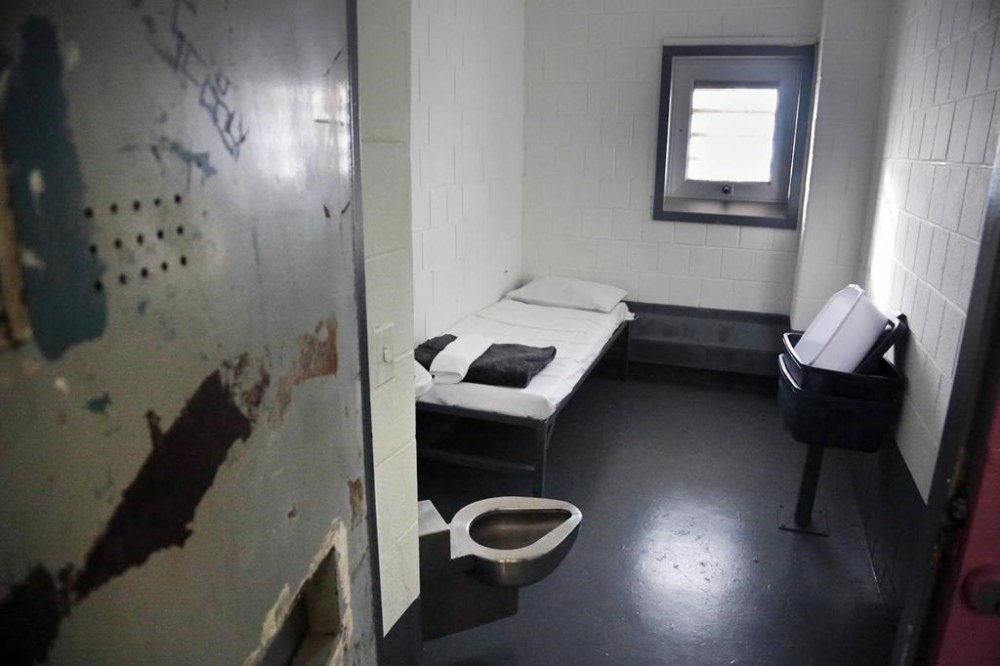
The decision comes after the New York Civil Liberties Union and Prisoners’ Legal Services of New York filed a class action lawsuit last June arguing the agency routinely flouts the state’s Humane Alternatives to Long-Term Solitary Confinement Act.
“No one is above the law — that includes prison officials,” the NYCLU said in a statement posted Thursday on the social platform X. “We’ll be watching closely to ensure DOCCS starts complying with the law.”
The corrections department in an emailed statement said it’s reviewing the judge’s decision.
It also highlighted some recent changes made by the department since Commissioner Daniel Martuscello took over last June.
Among them were updates to the agency’s segregated confinement policies, including additional steps and layers of review, such as a new “Confinement Justification Record Form” that must be completed and signed by all review officers, hearing officers and superintendents.
State law limits solitary confinement in most cases to three consecutive days, or six days in any given 30-day period.
But prisoners can be confined alone for longer periods for specified “heinous and destructive” acts, such as injuring someone or acquiring a deadly weapon. In those cases, the “extended segregation” limit is 15 consecutive days, or 20 days in a 60-day period.
The advocacy groups argued in their lawsuit that the corrections department was holding people in extended segregation even though they don’t meet the narrow criteria spelled out in the law.
One plaintiff, Luis Garcia, said he was sentenced to 730 days in solitary confinement after throwing suspected bodily fluids at guards, an offense that the advocacy groups argued did not meet the criteria for extended segregation.