

US struggles with shaky relations and troop cuts in African nations as military leaders meet
Advertisement
Read this article for free:
or
Already have an account? Log in here »
To continue reading, please subscribe:

Digital Subscription
One year of digital access for only $205*
- Enjoy unlimited reading on winnipegfreepress.com
- Read the E-Edition, our digital replica newspaper
- Access News Break, our award-winning app
- Play interactive puzzles
*First annual payment billed as $205.00 + GST for one year. This annual subscription will automatically renew at $233.00 + GST every 52 weeks (10% off the regular annual price of $259.35). Offer available to new and qualified returning subscribers only. Cancel any time.
To continue reading, please subscribe:
Add Free Press access to your Brandon Sun subscription for only an additional
$1 for the first 4 weeks*
- Enjoy unlimited reading on winnipegfreepress.com
- Read the E-Edition, our digital replica newspaper
- Access News Break, our award-winning app
- Play interactive puzzles
*Your next Brandon Sun subscription payment will increase by $1.00 and you will be charged $17.95 plus GST for four weeks. After four weeks, your payment will increase to $24.95 plus GST every four weeks.
Read unlimited articles for free today:
or
Already have an account? Log in here »
Hey there, time traveller!
This article was published 24/06/2024 (805 days ago), so information in it may no longer be current.
GABORONE, Botswana (AP) — The forced U.S. troop withdrawals from bases in Niger and Chad and the potential to shift some troops to other nations in West Africa will be key issues as the top U.S. military officer meets with his counterparts this week at a chiefs of defense conference.
Gen. CQ Brown, chairman of the Joint Chiefs of Staff, arrived in Botswana Monday as the U.S. faces a critical inflection point in Africa. Increasingly, military juntas that overthrew democratic governments in Mali, Burkina Faso and Niger are reassessing their ties to the U.S. and the West and turning instead to mercenaries linked to Russia for security assistance.
Speaking to reporters as he traveled to Gaborone, Brown said that as the U.S. pulls its 1,000 troops out of Niger, including from a critical counterterrorism and drone base there, other West African nations want to work with the U.S. and may be open to an expanded American presence.
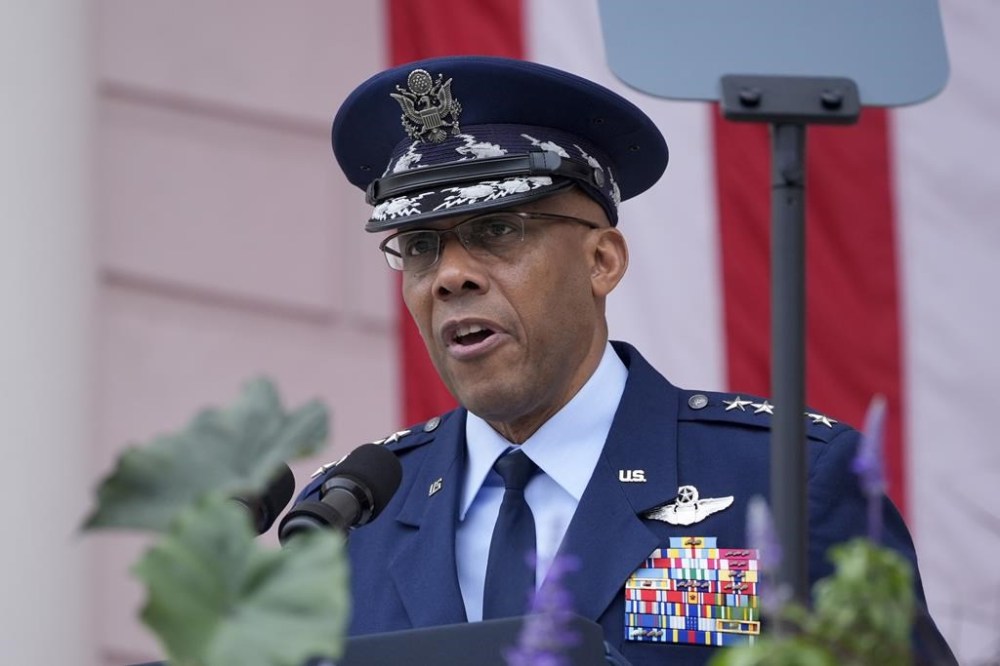
The conference, he said, will give him a chance to speak with a number of his African counterparts, and listen to their objectives and concerns.
“There’s other countries in the region where we already have either small presence or have relationships,” Brown said. “Part of this is looking at how we continue to build on those relationships which may provide opportunities for us to posture some of the capabilities we had in Niger in some of those locations.”
The U.S. needs to have a dialogue with those nations to see what type and size U.S. military presence they would want, he said, adding, “That’s why this conference is important.”
Brown and other defense officials say the conference is a chance to show African leaders that the U.S. can listen and accept local solutions. The U.S., said one defense official, has to adjust to the solutions that Africans have identified and not impose external Western ideals.
The official, who spoke on condition of anonymity to discuss military relationships, said the Botswana meeting is an opportunity to foster military relationships throughout the continent.
The troop cuts at key bases in Africa’s Sahel region raise questions about how to battle what has been a growing tide of violence by extremist groups, including those linked to the Islamic State group and al-Qaida.
The defense official said the U.S. is concerned about the spread of extremist activity from multiple groups into coastal West Africa in particular.
Niger’s ruling junta ordered U.S. forces out of the country in the wake of last July’s ouster of the country’s democratically elected president by mutinous soldiers.French forces had also been asked to leave as the junta turned to the Russian mercenary group Wagner for security assistance.
Washington officially designated the military takeover as a coup in October, triggering U.S. laws restricting the military support and aid. The fracture has broad ramifications for the U.S. because it forced troops to abandon the critical drone base at Agadez that was used for counterterrorism missions in the Sahel.
The senior defense official said the withdrawal of U.S. forces and all the equipment from Niger is about 30% complete, and will be completed on Sept. 15 as required. The official said that the pace of the pullout will ebb and flow, as troops leave based on when their weapons systems and equipment are taken out. Roughly 600 troops currently remain there.
Soon afterward, Chad ordered U.S. forces out of Adji Kossei Air Base near N’Djamena. About 75 U.S. Army special forces relocated to Europe, and about 20 troops remain in the country along with Marine security forces assigned to the U.S. Embassy.
The U.S. has described the troop cuts in Chad as temporary and could be revisited now that the presidential election there is over. And Brown said that the U.S. will work with the embassy leadership in Chad to take a look at what the future U.S. presence there will be.
Some African nations have expressed frustration with the U.S. for forcing issues, such as democracy and human rights, that many see as hypocrisy, given Washington’s close ties to some autocratic leaders elsewhere. Meanwhile, Russia offers security assistance without interfering in politics, making it an appealing partner for military juntas that seized power in places like Mali, Niger and Burkina Faso in recent years.
A key element in any U.S. discussions with African leaders is to recognize that America must calibrate what it asks and expects of those governments and their militaries, said Mvemba Dizolele, director of the Africa Program at the Center for Strategic and International Studies in Washington, D.C.
“Security and defense policy makers in the United States should not approach Africa thinking that deep inside every African military officer is an American officer waiting to come out,” said Dizolele. “That’s just not realistic. Every African officer is an officer who’s trying to do the best within the conditions that they’ve been dealt.”’
He said the U.S is not always ready to engage with some African countries because of various obstacles such as the Leahy Law that prohibits certain military assistance to foreign forces that violate human rights, and congressional spending restrictions that limit aid to countries whose leadership was overturned in a coup.
Meanwhile, other countries such as Russia and China will provide any military aid and equipment that the African countries can afford to buy, said Dizolele.