

Rainforest animal called a kinkajou rescued from dusty highway rest stop in Washington state
Advertisement
Read this article for free:
or
Already have an account? Log in here »
To continue reading, please subscribe:

Digital Subscription
One year of digital access for only $205*
- Enjoy unlimited reading on winnipegfreepress.com
- Read the E-Edition, our digital replica newspaper
- Access News Break, our award-winning app
- Play interactive puzzles
*First annual payment billed as $205.00 + GST for one year. This annual subscription will automatically renew at $233.00 + GST every 52 weeks (10% off the regular annual price of $259.35). Offer available to new and qualified returning subscribers only. Cancel any time.
To continue reading, please subscribe:
Add Free Press access to your Brandon Sun subscription for only an additional
$1 for the first 4 weeks*
- Enjoy unlimited reading on winnipegfreepress.com
- Read the E-Edition, our digital replica newspaper
- Access News Break, our award-winning app
- Play interactive puzzles
*Your next Brandon Sun subscription payment will increase by $1.00 and you will be charged $17.95 plus GST for four weeks. After four weeks, your payment will increase to $24.95 plus GST every four weeks.
Read unlimited articles for free today:
or
Already have an account? Log in here »
Hey there, time traveller!
This article was published 27/06/2024 (795 days ago), so information in it may no longer be current.
YAKIMA, Wash. (AP) — Why did the kinkajou cross the road? And what’s a kinkajou, anyway?
One of the mammals — which look like a cross between a monkey and a tiny bear — was found far from its normal rainforest habitat this week at a highway rest stop amid the rolling sagebrush plains of central Washington state, officials say.
Kinkajous have prehensile tails, and this one was spotted Sunday climbing on a tall wooden post along Interstate 82 southeast of Yakima, the state Department of Transportation said in a post on X.
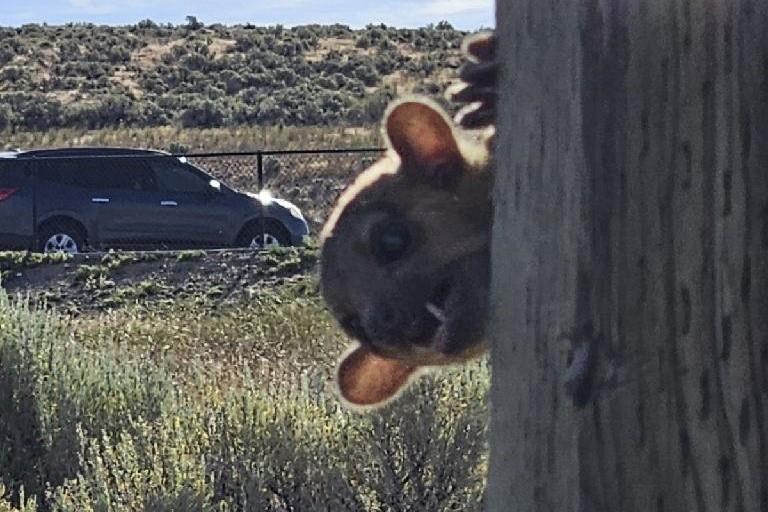
“We don’t know if it was dropped off or escaped,” the post said. The animal was rescued by the state Fish and Wildlife Department.
Kinkajous are carnivores that live in tropical rainforests from southern Mexico through Brazil, according to the Point Defiance Zoo & Aquarium in Tacoma, where this little creature was taken to live temporarily.
With sandy yellow fur, round ears and big dark eyes, they are capable of grasping objects and are often mistakenly called primates, the zoo said.
“Despite their cuteness, kinkajous do not make good pets,” the zoo said.
This particular kinkajou is being quarantined in the zoo’s hospital to ensure it’s not carrying any diseases and it will undergo a comprehensive wellness exam this week, officials said.
Kinkajous are not endangered but are hunted for their fur, and the illegal exotic pet trade-threatens their population, according to the zoo.