

Hurricane Beryl destroys crops in Jamaica, leaves islanders facing food shortages
Advertisement
Read this article for free:
or
Already have an account? Log in here »
To continue reading, please subscribe:

Digital Subscription
One year of digital access for only $205*
- Enjoy unlimited reading on winnipegfreepress.com
- Read the E-Edition, our digital replica newspaper
- Access News Break, our award-winning app
- Play interactive puzzles
*First annual payment billed as $205.00 + GST for one year. This annual subscription will automatically renew at $233.00 + GST every 52 weeks (10% off the regular annual price of $259.35). Offer available to new and qualified returning subscribers only. Cancel any time.
To continue reading, please subscribe:
Add Free Press access to your Brandon Sun subscription for only an additional
$1 for the first 4 weeks*
- Enjoy unlimited reading on winnipegfreepress.com
- Read the E-Edition, our digital replica newspaper
- Access News Break, our award-winning app
- Play interactive puzzles
*Your next Brandon Sun subscription payment will increase by $1.00 and you will be charged $17.95 plus GST for four weeks. After four weeks, your payment will increase to $24.95 plus GST every four weeks.
Read unlimited articles for free today:
or
Already have an account? Log in here »
Hey there, time traveller!
This article was published 08/07/2024 (820 days ago), so information in it may no longer be current.
KINGSTON, Jamaica (AP) — Jamaicans will contend with food shortages in the aftermath of Hurricane Beryl, which is estimated to have destroyed over $6.4 million in food crops and supporting infrastructure, officials in Jamaica said on Monday.
Floyd Green, Jamaica’s agriculture minister, said preliminary assessments indicate significant damage to crops including vegetables, tubers such as yam and cassava, and fruits like breadfruit, ackee, mangoes and bananas, which are popular food sources.
He said livestock and fishing sectors were also impacted significantly by the record-breaking storm that unleashed tumultuous winds and rainfall as it traveled westward just off Jamaica’s south coast last week on route to the Cayman Islands, Mexico, and Texas.
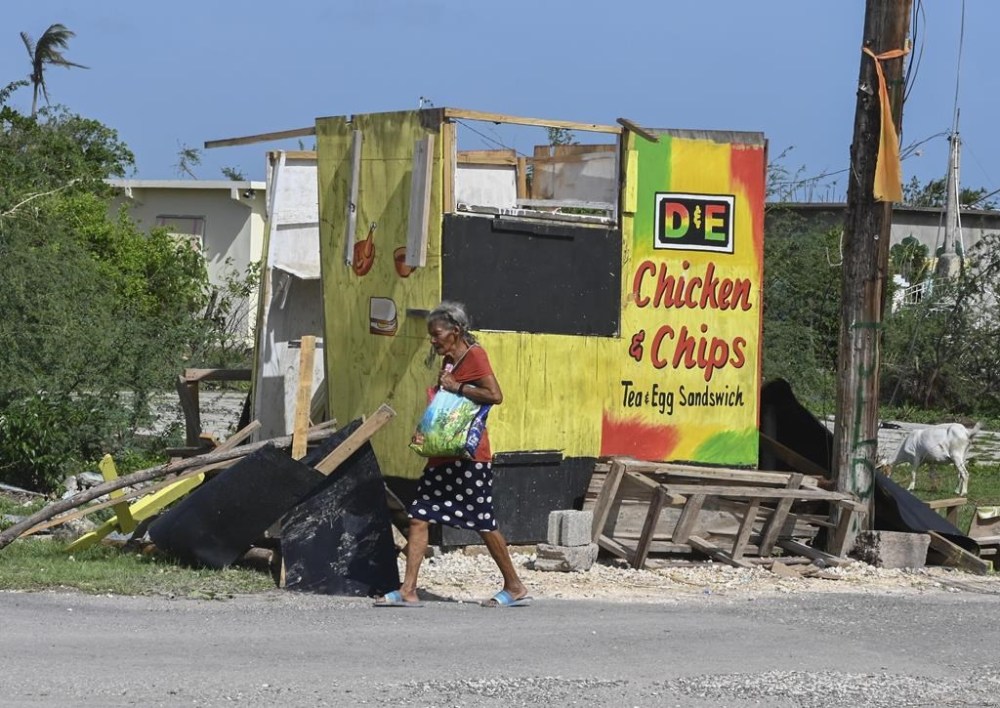
“We have seen about 85% of our bananas and our plantain lines go down in Portland and St Mary,” Green said after visiting farms in the southern parish of St Elizabeth.
Yam farmers in southern Trelawny have asked for assistance as they report significant damage to their operation.
“We do understand that it needs a quick response at this time and we know our farmers are out there and thankfully, they are resilient,” Green said. “They are planning to get back to farming and we at the ministry (of agriculture and fisheries) will be willing to assist them.”
The Jamaican agriculture minister said farmers who grow crops in greenhouses in the parishes of Clarendon, Manchester and St Elizabeth have been hard-hit.
“This is going to be a massive blow for our vegetable (crop) lines,” said Green.
Small-scale poultry farmers have sustained major damage to chicken houses, he said.
On Monday, Glendon Harris, a former president of the farmers’ lobby Jamaica Agricultural Society, forecast that the damage to the agricultural sector will result in a disruption to the food chain supply on the island.
“We are going to see a shortage of some of our basic food items,” Harris said. “St Elizabeth is the known breadbasket, and Manchester is close behind, so based on the hit they have taken, it is going to affect the ready food for the market across the island.”
The Jamaican government is continuing its assessment of the damage wrought by Hurricane Beryl, which caused widespread damage mainly along the south coast of Jamaica. Beryl diminished into tropical storm, hitting Texas on Monday, after hitting Mexico, Jamaica, Barbados and St. Vincent and the Grenadines. Three people were reported dead in Grenada, three in St. Vincent and the Grenadines, three in Venezuela and two in Jamaica.
The United Nations spokesman, Stephane Dujarric, said on Monday that the organization is supporting authorities to help with access to clean water, shelter, food and health services by sending teams to Saint Vincent and the Grenadines, Grenada and Jamaica.

Advertisement Advertise With Us