

Caribbean seeks help in fighting climate change after Hurricane Beryl devastates small islands
Advertisement
Read this article for free:
or
Already have an account? Log in here »
To continue reading, please subscribe:
Digital Subscription
One year of digital access for only $75*
- Enjoy unlimited reading on winnipegfreepress.com
- Read the E-Edition, our digital replica newspaper
- Access News Break, our award-winning app
- Play interactive puzzles
*Billed as $5.77 plus GST every four weeks. After 52 weeks, price increases to the regular rate of $19.95 plus GST every four weeks. Offer available to new and qualified returning subscribers only. Cancel any time.
Monthly Digital Subscription
$4.99/week*
- Enjoy unlimited reading on winnipegfreepress.com
- Read the E-Edition, our digital replica newspaper
- Access News Break, our award-winning app
- Play interactive puzzles
*Billed as $19.95 plus GST every four weeks. Cancel any time.
To continue reading, please subscribe:
Add Free Press access to your Brandon Sun subscription for only an additional
$1 for the first 4 weeks*
- Enjoy unlimited reading on winnipegfreepress.com
- Read the E-Edition, our digital replica newspaper
- Access News Break, our award-winning app
- Play interactive puzzles
*Your next Brandon Sun subscription payment will increase by $1.00 and you will be charged $17.95 plus GST for four weeks. After four weeks, your payment will increase to $24.95 plus GST every four weeks.
Read unlimited articles for free today:
or
Already have an account? Log in here »
Hey there, time traveller!
This article was published 12/07/2024 (680 days ago), so information in it may no longer be current.
SAN JUAN, Puerto Rico (AP) — Caribbean officials on Friday demanded more access to funding and help in fighting climate change, weeks after Hurricane Beryl devastated the region.
The urgent request was made at an OAS meeting in Washington, D.C., where officials noted that the historic storm exposed the vulnerability of small islands. Beryl killed at least seven people in the Caribbean and razed nearly all infrastructure on some of the islands that make up Grenada and St. Vincent and the Grenadines.
“(We) are on the front line,” said Virginia Albert-Poyotte, the delegate for St. Lucia, who asked that climate financing be made more available and that financial institutions include special disaster clauses.
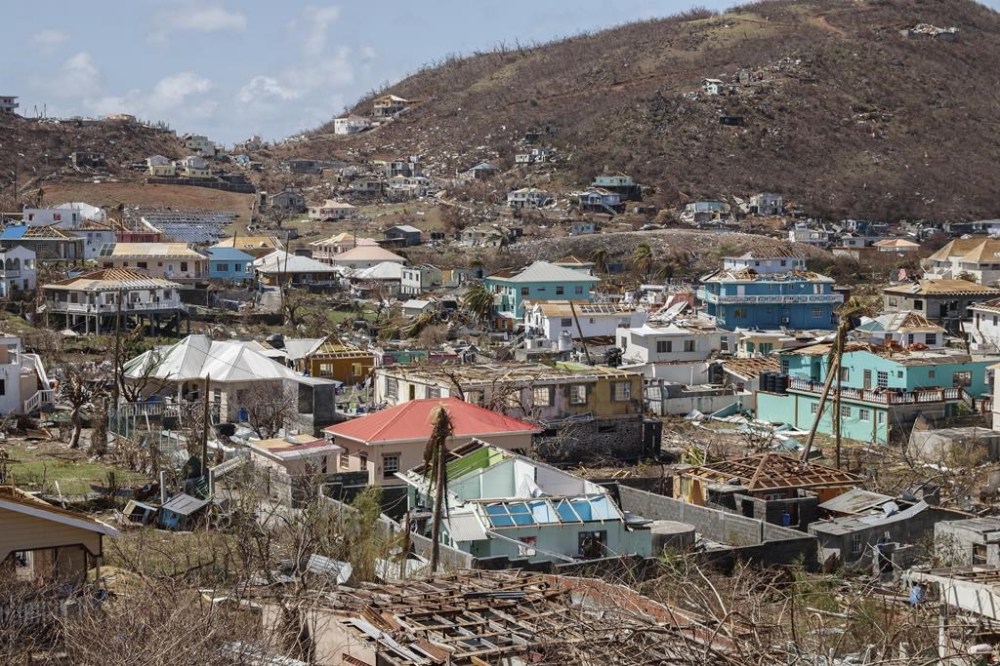
She and others noted that small Caribbean islands often have rickety infrastructure and fragile economies dependent on tourism and fishing.
A resolution approved Friday by the OAS stated that previous hurricanes have led to higher insurance premiums, unemployment and poverty. It called for the immediate operation of a loss and damage fund agreed upon at previous U.N. climate change conferences to help vulnerable countries rebuild and also prepare for future storms.
The resolution also requested that financial and development institutions release funds to small nations affected by disasters on a concessionary basis, “free from onerous conditions,” and to “cancel, defer or reschedule debt repayments.”
OAS Secretary General Luis Almagro noted that funds flowing toward islands affected by Beryl are insufficient, with the U.N. and Caribbean leaders requesting at least $9 million in assistance.
He warned that the severity of natural disasters is increasing, with Beryl as proof.
“This is yet another indication that the climate crisis is worsening,” he said.
Chet Neymour, the Bahamian delegate, criticized how top greenhouse gas emitters worldwide have remained “silent and noncommittal” about their responsibilities, noting that the Caribbean is one of the regions most affected by climate change and among those that contribute least to it.
“Nations like my own have had to go at it alone,” he said, noting that Hurricane Dorian pummeled the Bahamas in 2019 for two days as a Category 5 storm. “Lives are at stake.”
Officials talked about the need to invest in early warning systems and resilient infrastructure, noting that the Atlantic hurricane season has just started.
Delegate Lynn Young of Belize said governments also must prioritize talks about climate financing.
“Hurricane Beryl underscores an urgent reality,” he said. “ The crisis is here.”
Scientists are debating what exactly climate change does to hurricanes, but they agree it makes storms more likely to rapidly intensify.
Hurricane Beryl was the first-ever Category 4 storm to form in the Atlantic in June, going from an unnamed depression to a Category 4 in just 48 hours. A major factor in its quick intensification was record warm waters in the Atlantic.
The National Oceanic and Atmospheric Administration has predicted a well above average 2024 hurricane season, with between 17 and 25 named storms. The forecast calls for as many as 13 hurricanes and four major hurricanes.
An average Atlantic hurricane season produces 14 named storms, seven of them hurricanes and three major hurricanes.
____
Follow AP’s climate coverage at: https://apnews.com/hub/climate-and-environment