

Court voids last conviction of Kansas researcher in case that started as Chinese espionage probe
Advertisement
Read this article for free:
or
Already have an account? Log in here »
To continue reading, please subscribe:

Digital Subscription
One year of digital access for only $205*
- Enjoy unlimited reading on winnipegfreepress.com
- Read the E-Edition, our digital replica newspaper
- Access News Break, our award-winning app
- Play interactive puzzles
*First annual payment billed as $205.00 + GST for one year. This annual subscription will automatically renew at $233.00 + GST every 52 weeks (10% off the regular annual price of $259.35). Offer available to new and qualified returning subscribers only. Cancel any time.
To continue reading, please subscribe:
Add Free Press access to your Brandon Sun subscription for only an additional
$1 for the first 4 weeks*
- Enjoy unlimited reading on winnipegfreepress.com
- Read the E-Edition, our digital replica newspaper
- Access News Break, our award-winning app
- Play interactive puzzles
*Your next Brandon Sun subscription payment will increase by $1.00 and you will be charged $17.95 plus GST for four weeks. After four weeks, your payment will increase to $24.95 plus GST every four weeks.
Read unlimited articles for free today:
or
Already have an account? Log in here »
Hey there, time traveller!
This article was published 13/07/2024 (797 days ago), so information in it may no longer be current.
A federal appeals court has reversed the conviction of a researcher who was accused of hiding work he did in China while employed at the University of Kansas.
Feng “Franklin” Tao was convicted in April 2022 of three counts of wire fraud and one count of making a materially false statement. U.S. District Judge Julie Robinson threw out the wire fraud convictions a few months later but let the false statement conviction stand. She later sentenced him to time served.
But the 10th U.S. Circuit Court of Appeals in Kansas City, Missouri, on Thursday ruled that the government failed to provide sufficient evidence that Tao’s failure to disclose his potential conflict of interest actually mattered, and it directed the lower court to acquit him of that sole remaining count.
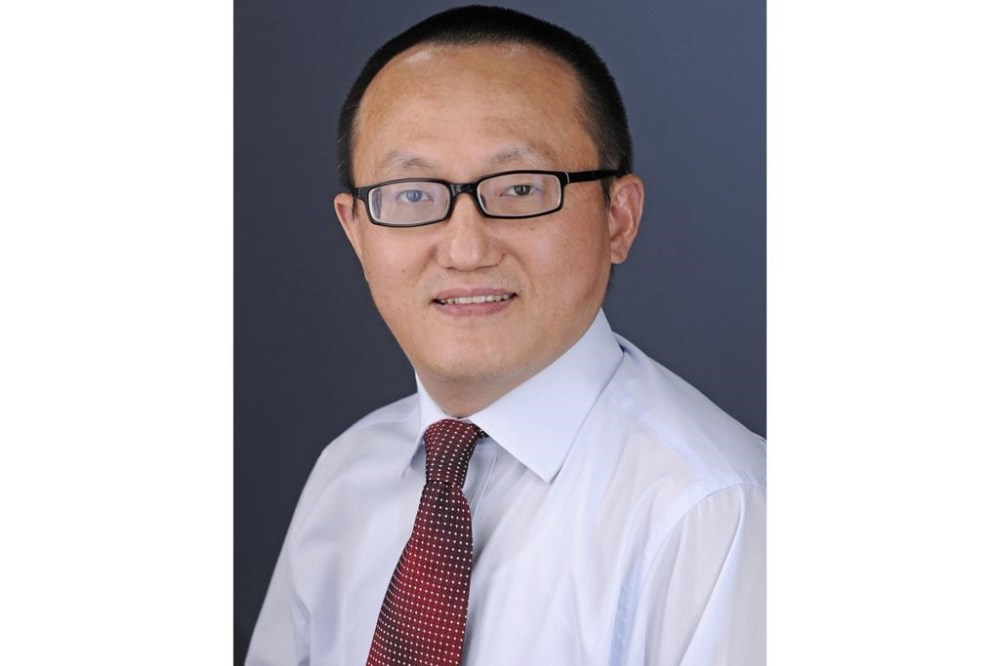
The case against Tao was part of the Trump administration’s China Initiative, which started in 2018 to thwart what the Justice Department said was the transfer of original ideas and intellectual property from U.S. universities to the Chinese government. The department ended the program amid public criticism and several failed prosecutions.
Tao was a tenured professor in the chemistry and petroleum engineering departments at the University of Kansas from 2014 until his arrest in 2019. The appeals court noted that while it began as an espionage case, the FBI found no evidence of espionage in the end.
But the professor was accused of failing to disclose when filling out an annual “institutional responsibilities form,” under the school’s conflict-of-interest policy, that he had been traveling to China to work on setting up a laboratory and to recruit staff for Fuzhou University, where he hoped to land a prestigious position. Federal prosecutors argued that Tao’s activities defrauded the University of Kansas, as well as the U.S. Department of Energy and National Science Foundation, which had awarded Tao grants for research projects at Kansas.
Tao’s attorneys argued in their appeal that the case against Tao was a “breathtaking instance of prosecutorial overreach” that sought to turn a human resources issue at the university into a federal crime.
In a 2-1 ruling, the majority said there was insufficient evidence for the jury to have found that Tao’s failure to disclose his relationship with the Chinese university affected any decisions by the Energy Department or Science Foundation regarding his research grants, and therefore it did not count as a “materially” false statement.
Appeals Judge Mary Beck Briscoe dissented, saying Tao’s failure to disclose his time commitments related to his potential position at Fuzhou University, was in fact, material to both agencies because they would have wanted to know in their roles as stewards of taxpayers’ money who are responsible for ensuring the trustworthiness of research results.