

Top EU leaders will boycott meetings hosted by Hungary’s Orbán after his outreach to Russia, China
Advertisement
Read this article for free:
or
Already have an account? Log in here »
To continue reading, please subscribe:

Digital Subscription
One year of digital access for only $205*
- Enjoy unlimited reading on winnipegfreepress.com
- Read the E-Edition, our digital replica newspaper
- Access News Break, our award-winning app
- Play interactive puzzles
*First annual payment billed as $205.00 + GST for one year. This annual subscription will automatically renew at $233.00 + GST every 52 weeks (10% off the regular annual price of $259.35). Offer available to new and qualified returning subscribers only. Cancel any time.
To continue reading, please subscribe:
Add Free Press access to your Brandon Sun subscription for only an additional
$1 for the first 4 weeks*
- Enjoy unlimited reading on winnipegfreepress.com
- Read the E-Edition, our digital replica newspaper
- Access News Break, our award-winning app
- Play interactive puzzles
*Your next Brandon Sun subscription payment will increase by $1.00 and you will be charged $17.95 plus GST for four weeks. After four weeks, your payment will increase to $24.95 plus GST every four weeks.
Read unlimited articles for free today:
or
Already have an account? Log in here »
Hey there, time traveller!
This article was published 15/07/2024 (796 days ago), so information in it may no longer be current.
BUDAPEST, Hungary (AP) — Top officials of the European Union will boycott informal meetings hosted by Hungary while the country holds the EU’s rotating presidency, after Hungary’s pro-Russian Prime Minister Viktor Orbán held a series of rogue meetings with foreign leaders about Ukraine that angered his European partners.
The highly unusual decision to have the European Commission president and other top officials of the body boycott the meetings in Budapest was made ‘’in light of recent developments marking the start of the Hungarian (EU) presidency,” commission spokesperson Eric Mamer posted Monday on X.
Hungary took over the six-month rotating role July 1, and since then Orbán has visited Ukraine, Russia, Azerbaijan, China, and the United States on a world tour he’s touted as “peace mission” aimed at brokering an end to Russia’s war in Ukraine.
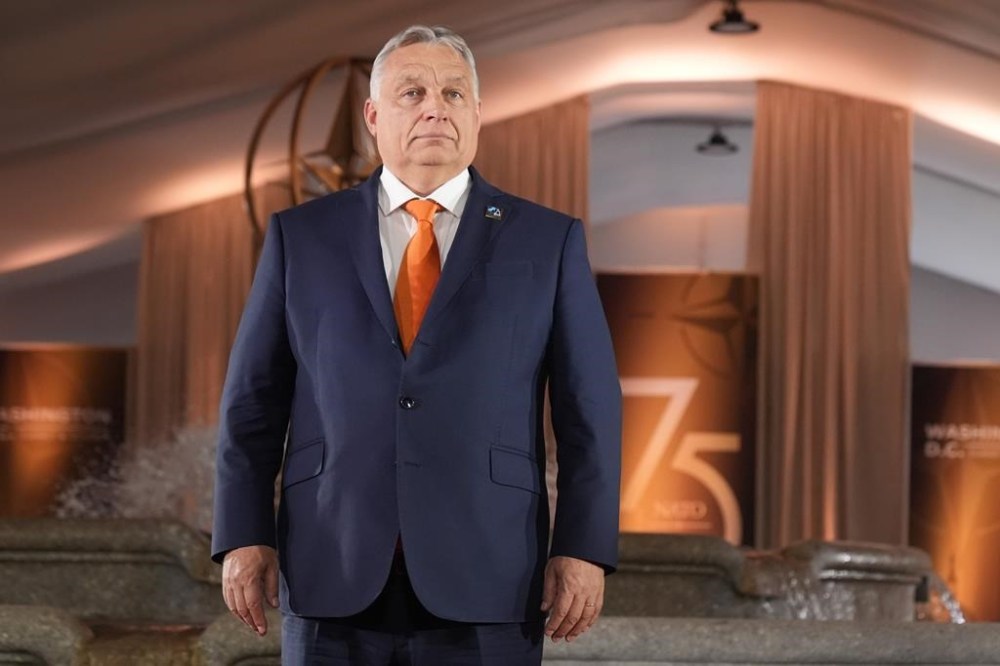
That angered many leaders in the EU, who said they had not been informed in advance of Orbán’s plans and rushed to emphasize that the nationalist leader was not acting on behalf of the bloc during his surprise meetings with Vladimir Putin and Xi Jinping.
Hungary’s European affairs minister, János Bóka, lashed out at the commission’s decision, writing on X on Monday that the body ‘’cannot cherry pick institutions and member states it wants to cooperate with.”
“Are all Commission decisions now based on political considerations?” Bóka wrote.
A Hungarian government spokesperson, Zoltán Kovács, also suggested the decision was a product of political bias, writing on X: “Sacrificing the institutional setup for private political purposes and disregarding (the Commission’s) role for ideological and political motives.”
The decision by the European Commission applies to informal meetings hosted by Hungary, and means senior civil servants will attend instead of top officials like the European Commission president, currently Ursula von der Leyen.
Orbán’s government has gone against the European mainstream by refusing to supply Kyiv with weapons to deter Russia’s invasion and by threatening to block financial assistance to the war-ravaged country.
In an interview with Hungarian newspaper Magyar Nemzet on Monday, Orbán’s political director said that following his trip to Moscow — the first such visit from an EU head of state or government in more than two years — the prime minister had briefed the leaders of other EU countries “in writing about the negotiations, the experiences of the first phase of the peace mission and the Hungarian proposals.”
“If Europe wants peace and wants to have a decisive say in settling the war and ending the bloodshed, it must now work out and implement a change of direction,” said Balázs Orbán, who is not related to the premier.
But von der Leyen accused Orbán of trying to mollify the Russian leader with the trip, writing on X: “Appeasement will not stop Putin. Only unity and determination will pave the path to a comprehensive, just and lasting peace in Ukraine.”
Hungary’s government has long argued for an immediate cease-fire and peace negotiations in the conflict in Ukraine, but has not outlined what such moves might mean for the country’s territorial integrity and future security. It has exhibited an adversarial posture toward Ukraine while maintaining close ties to Moscow, even after its full-scale invasion in Feb. 2022.
Orbán’s critics have accused him of acting against the unity and interests of the EU and NATO, of which Hungary is a member, and of pursuing an appeasement strategy concerning Russia’s aggression.