

Malaysia honors a new king in coronation marked by pomp and cannon fire
Advertisement
Read this article for free:
or
Already have an account? Log in here »
To continue reading, please subscribe:
Digital Subscription
One year of digital access for only $1.44 a week*
- Enjoy unlimited reading on winnipegfreepress.com
- Read the E-Edition, our digital replica newspaper
- Access News Break, our award-winning app
- Play interactive puzzles
*Billed as $5.77 plus GST every four weeks. After 52 weeks, price increases to the regular rate of $19.95 plus GST every four weeks. Offer available to new and qualified returning subscribers only. Cancel any time.
To continue reading, please subscribe:
Add Free Press access to your Brandon Sun subscription for only an additional
$1 for the first 4 weeks*
- Enjoy unlimited reading on winnipegfreepress.com
- Read the E-Edition, our digital replica newspaper
- Access News Break, our award-winning app
- Play interactive puzzles
*Your next Brandon Sun subscription payment will increase by $1.00 and you will be charged $17.95 plus GST for four weeks. After four weeks, your payment will increase to $24.95 plus GST every four weeks.
Read unlimited articles for free today:
or
Already have an account? Log in here »
Hey there, time traveller!
This article was published 20/07/2024 (826 days ago), so information in it may no longer be current.
KUALA LUMPUR, Malaysia (AP) — Traditional pomp and cannon fire on Saturday marked the coronation of Malaysia’s billionaire King Sultan Ibrahim Iskandar, who pledged to govern fairly during the five-year term he will serve under a unique rotating monarchy system.
Sultan Ibrahim, 65, was sworn in on Jan. 31. Saturday’s coronation at the national palace formalized his role as Malaysia’s 17th king in a ceremony steeped in Malay culture and pageantry.
Nine ethnic Malay state rulers take turns as Malaysia’s king for five-year terms under the country’s rotating monarchy, which began when Malaysia gained independence from Britain in 1957. Malaysia has 13 states but only nine have royal families, some which trace their roots to centuries-old Malay kingdoms that were independent states until they were brought together by the British.
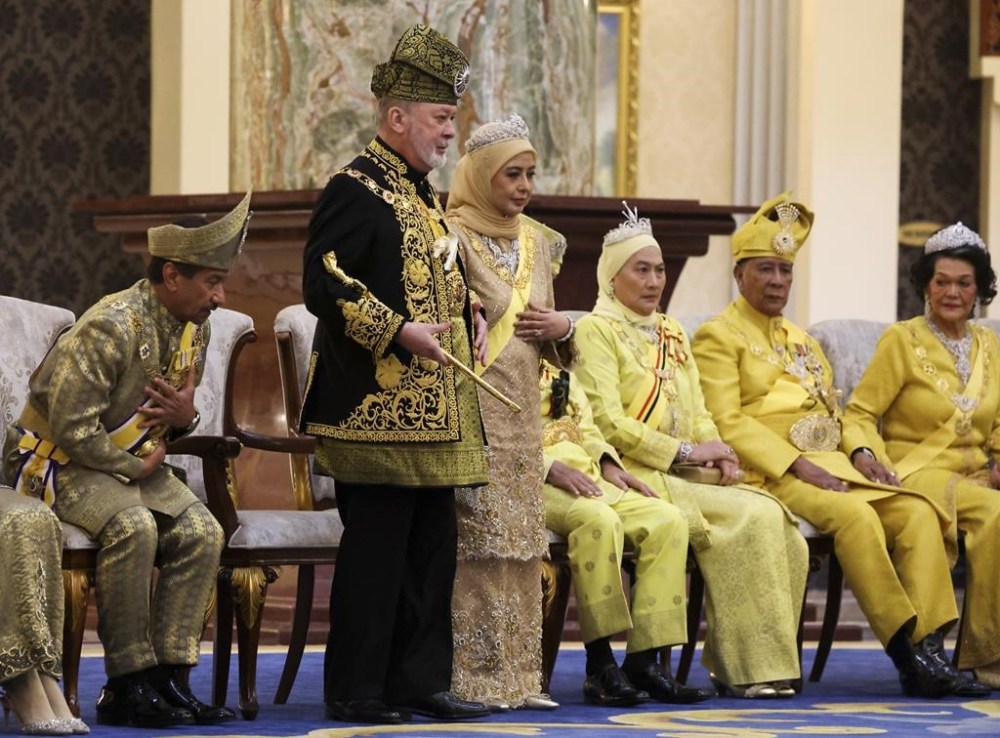
Donned in black and gold traditional ceremonial outfit and headgear, Sultan Ibrahim and Queen Raja Zarith Sofiah were greeted by military salute before they proceeded to the throne. The heads of the other royal families, Brunei Sultan Hassanal Bolkiah and Bahrain King Hamad Isa al Khalifa were seated on a stage beside the throne.
At the start of the proceedings, a copy of the Quran was presented to the Sultan who kissed it. The monarch received a gold dagger, a symbol of power. Prime Minister Anwar Ibrahim then pledged his government’s loyalty and said the royal institution was a pillar of strength for the nation. He then proclaimed Sultan Ibrahim as Malaysia’s new king.
“God willing, I will discharge my duties faithfully and honestly, and to rule fairly,” Sultan Ibrahim said in his coronation speech. He also urged Anwar’s government to step up efforts to improve the livelihood of the people and bolster the nation’s development. After the sultan took his oath, guests in the hall chanted “Long live the king” three times.
Sultan Ibrahim from southern Johor state bordering Singapore is one of the country’s richest men, with a business empire spanning from telecoms to real estate. He is known for his collection of luxury cars and motorbikes, and is the only state ruler with a small private army — a concession granted to his state when it joined modern-day Malaysia. The sultan is vocal about Malaysian politics, and has spoken out about corruption and racial discrimination.
Known as the Yang Di-Pertuan Agong, or He Who is Made Lord, the king plays a largely ceremonial role, with administrative power vested in the prime minister and Parliament. The monarch is the nominal head of the government and armed forces and is regarded as the protector of Islam and Malay tradition.
All laws, Cabinet appointments and the dissolution of Parliament for general elections require his formal assent. The king has the power to proclaim an emergency and pardon criminals.