

Britain’s Treasury chief vows to run the economy with ‘iron discipline’ amid demands for pay raises
Advertisement
Read this article for free:
or
Already have an account? Log in here »
To continue reading, please subscribe:

Digital Subscription
One year of digital access for only $205*
- Enjoy unlimited reading on winnipegfreepress.com
- Read the E-Edition, our digital replica newspaper
- Access News Break, our award-winning app
- Play interactive puzzles
*First annual payment billed as $205.00 + GST for one year. This annual subscription will automatically renew at $233.00 + GST every 52 weeks (10% off the regular annual price of $259.35). Offer available to new and qualified returning subscribers only. Cancel any time.
To continue reading, please subscribe:
Add Free Press access to your Brandon Sun subscription for only an additional
$1 for the first 4 weeks*
- Enjoy unlimited reading on winnipegfreepress.com
- Read the E-Edition, our digital replica newspaper
- Access News Break, our award-winning app
- Play interactive puzzles
*Your next Brandon Sun subscription payment will increase by $1.00 and you will be charged $17.95 plus GST for four weeks. After four weeks, your payment will increase to $24.95 plus GST every four weeks.
Read unlimited articles for free today:
or
Already have an account? Log in here »
Hey there, time traveller!
This article was published 21/07/2024 (797 days ago), so information in it may no longer be current.
LONDON (AP) — Britain’s new Treasury chief said Sunday she will run the economy with “iron discipline,” but suggested she’ll give public sector workers an above-inflation pay raise to help end a wave of strikes and strife.
The Labour Party government is under pressure from supporters and trade unions to spend more on salaries and welfare benefits, two weeks after it was elected on promises not to hike personal taxes or increase public borrowing,
“I think people know that things are a mess,” Treasury chief Rachel Reeves told the BBC, arguing the previous Conservative government had left “public services on their knees, a tax burden at a 70-year high, debt almost the same size as our entire economy.
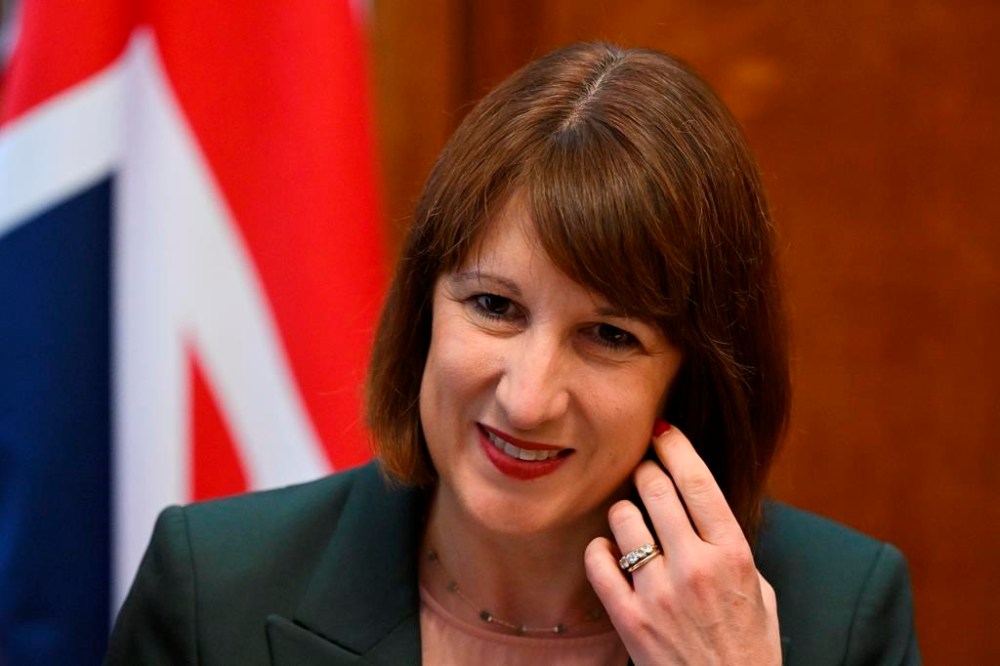
“I’m going to level with people about the scale of the challenge and then begin to fix the foundations,” she said. “I am going to run our economy with iron discipline, bringing stability back.”
The center-left Labour Party won a landslide election victory on July 4 on a promise to get the U.K.’s sluggish economy growing, unleash a wave of housebuilding and green energy projects and patch the country’s frayed public services.
It faces a wary, weary electorate eager for relief from a cost-of-living squeeze that saw interest rates top 11% in late 2022 after Russia’s invasion of Ukraine and the tax-cutting plans of briefly serving Conservative Prime Minister Liz Truss.
Inflation has fallen back to 2%, and Prime Minister Keir Starmer’s government wants to settle strikes by thousands of hospital doctors that have put more strain on the creaking state-funded National Health Service. Nurses, teachers, railway staff and other public-sector workers have also held walkouts over the past year to demand higher pay.
The Times of London reported that the independent bodies that advise on public sector pay had recommended a 5.5% raise for teachers and around 1.3 million NHS employees. Paul Johnson, director of the Institute for Fiscal Studies think-tank, said that could cost the government 3 billion pounds ($3.9 billion) more than it had budgeted for.
Reeves, the country’s first female chancellor of the exchequer, said the government was looking at the recommendations and would find a way to give workers a raise and “make the sums add up.”
“There is a cost to not settling, a cost of further industrial action, a cost in terms of the challenge that we face in recruiting, retaining doctors, nurses and teachers,” she said.
The government is also under pressure from anti-poverty groups and many Labour lawmakers to scrap a policy introduced by the Conservatives that limits a widely-paid welfare benefit and tax credit to a family’s first two children. The new government says it can’t afford to abolish the two-child cap.
Conservative lawmaker Jeremy Hunt, Reeves’ predecessor as Treasury chief, said it was “absolute nonsense” to claim his party had left the economy in the worst state in decades after its 14 years in office.
“She wants to lay the ground for tax rises,” he said of Reeves. “She should have been honest about that before the election.”