Vietnam Communist Party chief’s funeral draws thousands of mourners, including world leaders
Advertisement
Read this article for free:
or
Already have an account? Log in here »
To continue reading, please subscribe:

Digital Subscription
One year of digital access for only $205*
- Enjoy unlimited reading on winnipegfreepress.com
- Read the E-Edition, our digital replica newspaper
- Access News Break, our award-winning app
- Play interactive puzzles
*First annual payment billed as $205.00 + GST for one year. This annual subscription will automatically renew at $233.00 + GST every 52 weeks (10% off the regular annual price of $259.35). Offer available to new and qualified returning subscribers only. Cancel any time.
To continue reading, please subscribe:
Add Free Press access to your Brandon Sun subscription for only an additional
$1 for the first 4 weeks*
- Enjoy unlimited reading on winnipegfreepress.com
- Read the E-Edition, our digital replica newspaper
- Access News Break, our award-winning app
- Play interactive puzzles
*Your next Brandon Sun subscription payment will increase by $1.00 and you will be charged $17.95 plus GST for four weeks. After four weeks, your payment will increase to $24.95 plus GST every four weeks.
Read unlimited articles for free today:
or
Already have an account? Log in here »
Hey there, time traveller!
This article was published 25/07/2024 (803 days ago), so information in it may no longer be current.
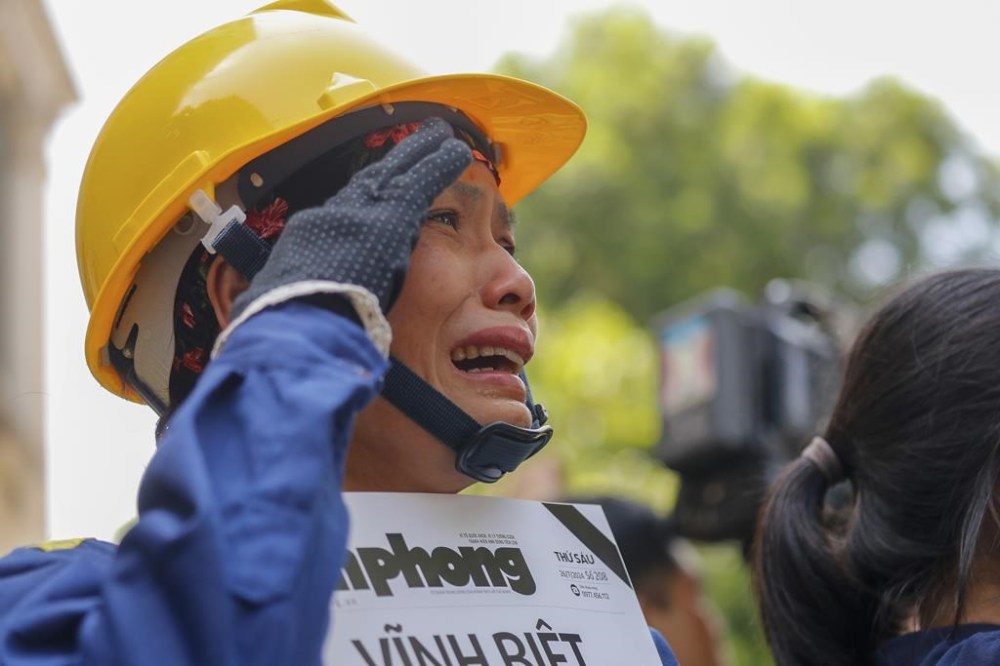
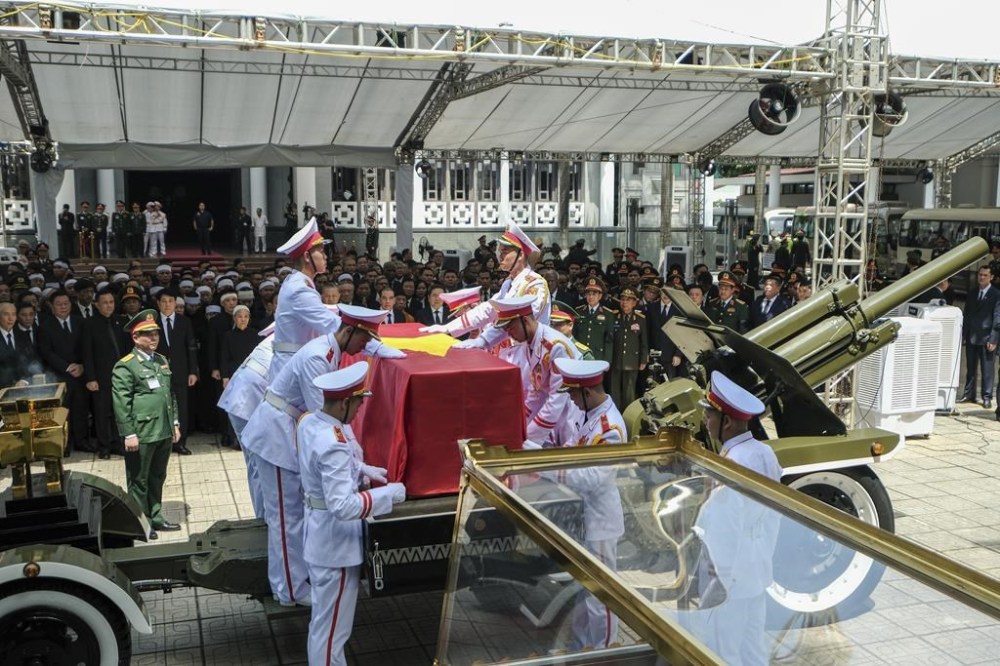
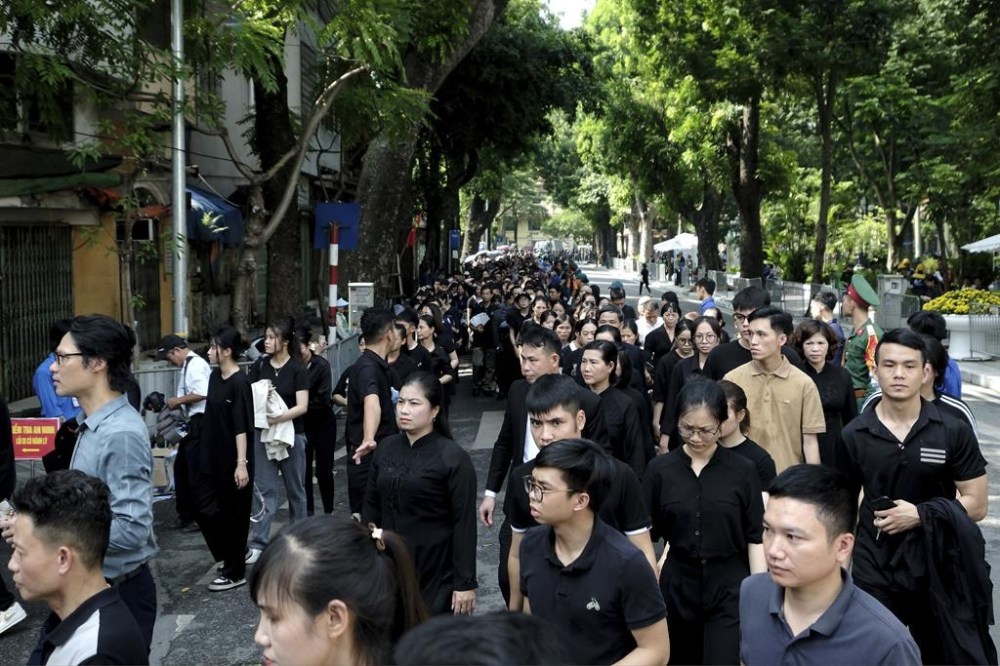
HANOI, Vietnam (AP) — Thousands of mourners gathered in Hanoi on Friday for the second day of the funeral of the man who dominated Vietnamese politics for over a decade, Communist Party general secretary Nguyen Phu Trong.
His death, at 80, last week in Hanoi marked the start of a succession struggle within the party that will likely to continue until the all-important National Party Congress of Vietnam’s Communist Party in 2026.
Trong’s coffin, draped in the red and yellow of Vietnam’s flag, was laid beneath his smiling portrait and dozens of medals at the National Funeral House in Hanoi on Thursday. All flags in the southeast Asian nation flew at half mast during the two-day period of national mourning, while all sports and entertainment were suspended.
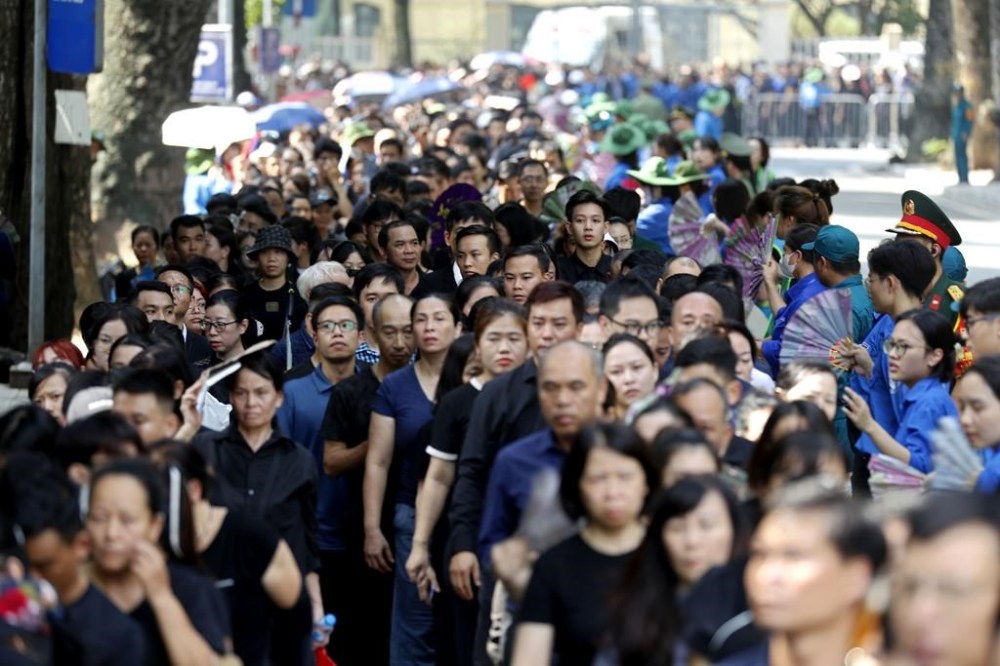
He will be buried at Mai Dich cemetery, the final resting place for military heroes and senior party officials, later on Friday.
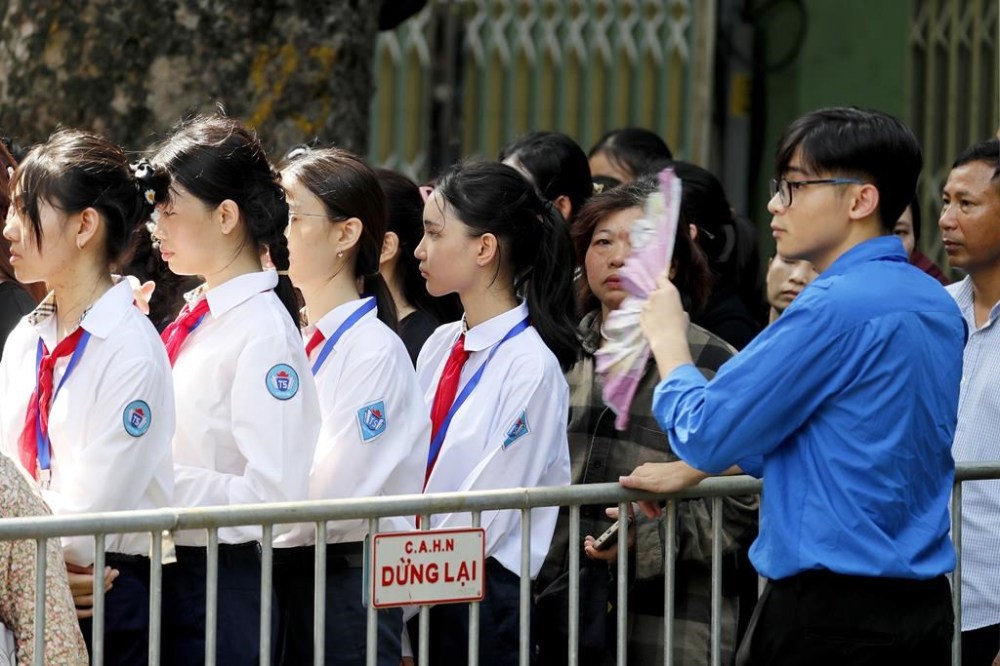
Top Communist Party officials paid tribute, including President To Lam, who took over as caretaker general secretary a day before Trong’s death was announced. Thousands of people, many of whom who had traveled from far-flung provinces, queued up in Hanoi late into Thursday to light incense and pay their respects.
Politburo member Luong Cuong said Thursday that his death was “an extremely huge, irreparable loss to the Party, the state, the people and his family.”
South Korean Prime Minister Han Duck-soo; Wang Huning, the fourth-ranked leader in the Chinese Communist Party; former Japanese Prime Minister Yoshihide Suga; Cuban National Assembly President Esteban Lazo Hernandez; and Indian National Security Advisor Ajit Doval were among those in attendance on Thursday.
U.S. president Joe Biden had said earlier that Trong was a “champion of the deep ties” between Americans and the Vietnamese.
Russian President Vladimir Putin said in a statement on Telegram that Trong would be remembered as a “true friend” of Russia who made a “great personal contribution” to the improvement of ties between the two nations.
Trong, who studied in the Soviet Union from 1981 to 1983, was the first Vietnamese Communist Party chief to visit the White House. He advocated a pragmatic foreign policy of “bamboo diplomacy,” a phrase he coined that refers to the plant’s flexibility, bending but not breaking in the shifting headwinds of geopolitics.
Vietnam is unlikely to abandon that approach, under which it has pursued pragmatic cooperation with its much larger and more powerful neighbor China while maintaining good ties with other countries like the U.S., Japan and India, said Gregory B. Poling, who heads the Southeast Asia Program at the Center for Strategic and International Studies.
Trong, a Marxist-Leninist ideologue, viewed corruption as the single gravest threat to the party’s legitimacy. He launched a sweeping anti-corruption campaign known as “blazing furnace,” which has singed both business and political elites.
Since 2016, thousands of party officials have been disciplined. They included former presidents Nguyen Xuan Phuc and Vo Van Thuong and the former head of parliament, Vuong Dinh Hue. In all, eight members of the powerful Politburo were ousted on corruption allegations, compared to none between 1986 and 2016.
The anti-graft campaign was led by then-top security official To Lam until he was made president in May after his predecessor resigned amid corruption allegations.
Lam is likely to keep playing a dual role as the President and the caretaker party chief until 2026, said Poling. He added that Lam is the current favorite to get a full term as Trong’s successor, but there is no guarantee.
Also unclear is what direction the anti-corruption movement will take in the short term without Trong. “But in the long term, it does seem like it’ll inevitably wind down because it was so linked to his legacy, his program.” He said.
Poling also said that without a leader of Trong’s stature, different factions in the party may struggle to resolve their differences.
“They’ll have to figure out what the future looks like, which is a necessary first step to passing on power to the next generation,” he said.