

In a show of growing ties, Russian warships make a new visit to Cuban waters
Advertisement
Read this article for free:
or
Already have an account? Log in here »
To continue reading, please subscribe:

Digital Subscription
One year of digital access for only $205*
- Enjoy unlimited reading on winnipegfreepress.com
- Read the E-Edition, our digital replica newspaper
- Access News Break, our award-winning app
- Play interactive puzzles
*First annual payment billed as $205.00 + GST for one year. This annual subscription will automatically renew at $233.00 + GST every 52 weeks (10% off the regular annual price of $259.35). Offer available to new and qualified returning subscribers only. Cancel any time.
To continue reading, please subscribe:
Add Free Press access to your Brandon Sun subscription for only an additional
$1 for the first 4 weeks*
- Enjoy unlimited reading on winnipegfreepress.com
- Read the E-Edition, our digital replica newspaper
- Access News Break, our award-winning app
- Play interactive puzzles
*Your next Brandon Sun subscription payment will increase by $1.00 and you will be charged $17.95 plus GST for four weeks. After four weeks, your payment will increase to $24.95 plus GST every four weeks.
Read unlimited articles for free today:
or
Already have an account? Log in here »
Hey there, time traveller!
This article was published 27/07/2024 (800 days ago), so information in it may no longer be current.
HAVANA (AP) — Three Russian warships arrived in Cuban waters on Saturday, Moscow’s second such maritime voyage in as many months in a reflection of deepening ties between Russia and Cuba.
The naval group, consisting of a training ship, patrol frigate and refueling tanker, are expected to remain docked in Cuba’s port of Havana until August 30. The arrival of the vessels comes mere weeks after another squadron of Russian warships, including a powerful nuclear-powered submarine, visited Havana as part of planned military exercises last month.
American officials closely tracked the mid-June military exercises, saying that the four-vessel group posed no real threat. At the time, experts described the warships’ Caribbean tour as a symbolic show of strength in response to continued U.S. and Western support for Ukraine.
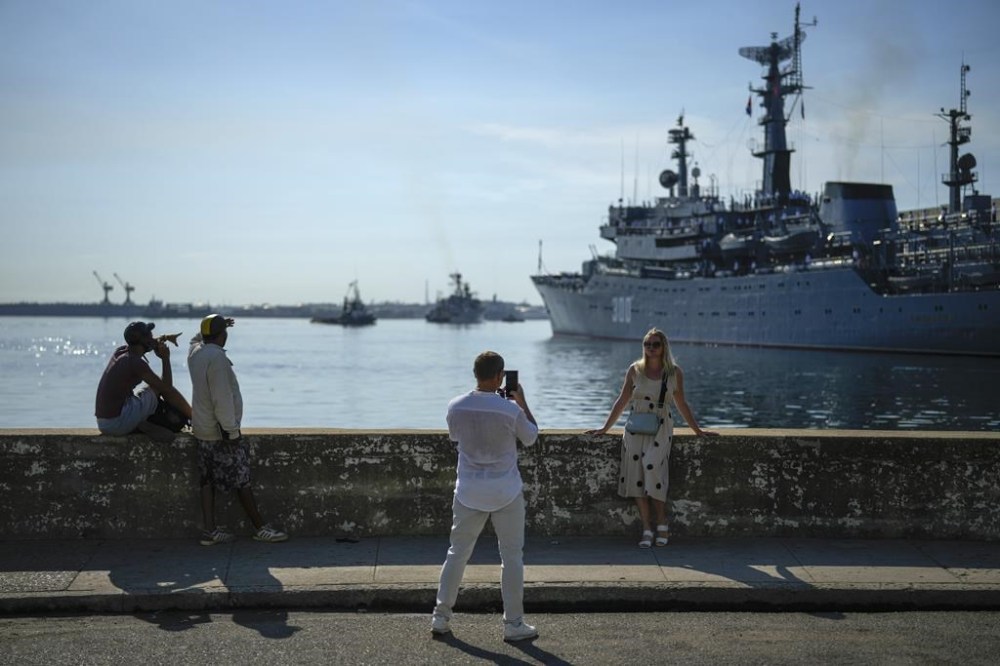
Cuban defense officials announced the latest port call earlier this week, calling the arrival of the Russian warships a “historical practice” and show of “friendship and collaboration.” But neither government elaborated on the purpose of this latest deployment.
The docking of the flotilla has sparked a flurry of excitement among the general public, with Cubans strolling the port avenue to get a better glimpse of the warships Saturday and authorities saying interested visitors would be admitted on board the Russian training ship, called Smolny, on Sunday and Monday.
“It’s a friendly thing. A bond between Russia and the Cubans,” said 29-year-old onlooker Maydelis Perez, pointing the hulking warships out to her three children. “I’m taking a family outing.”
Russia is a longtime ally of Venezuela and Cuba, and its warships and aircraft have periodically made forays into the Caribbean and docked in Havana. Though Cuba is not a key player in Russian foreign policy, experts say that Russia sees Cuba as strategically important given its continued clout among developing nations.
Cuba and Russia — both under severe U.S. sanctions — have strengthened their political and economic ties in recent years, particularly as Moscow aims to boost diplomatic support for its war in Ukraine and Havana seeks whatever economic assistance it can get.
Cuba has consistently abstained on U.N. resolutions on the invasion of Ukraine and avoided criticism of Moscow’s war. Russia has sold significant volumes of oil to Cuba, which has struggled under Washington’s economic embargo.