

Senegal’s media outlets stage a blackout day to bring attention to press freedom concerns
Advertisement
Read this article for free:
or
Already have an account? Log in here »
To continue reading, please subscribe:

Digital Subscription
One year of digital access for only $205*
- Enjoy unlimited reading on winnipegfreepress.com
- Read the E-Edition, our digital replica newspaper
- Access News Break, our award-winning app
- Play interactive puzzles
*First annual payment billed as $205.00 + GST for one year. This annual subscription will automatically renew at $233.00 + GST every 52 weeks (10% off the regular annual price of $259.35). Offer available to new and qualified returning subscribers only. Cancel any time.
To continue reading, please subscribe:
Add Free Press access to your Brandon Sun subscription for only an additional
$1 for the first 4 weeks*
- Enjoy unlimited reading on winnipegfreepress.com
- Read the E-Edition, our digital replica newspaper
- Access News Break, our award-winning app
- Play interactive puzzles
*Your next Brandon Sun subscription payment will increase by $1.00 and you will be charged $17.95 plus GST for four weeks. After four weeks, your payment will increase to $24.95 plus GST every four weeks.
Read unlimited articles for free today:
or
Already have an account? Log in here »
Hey there, time traveller!
This article was published 13/08/2024 (755 days ago), so information in it may no longer be current.
DAKAR, Senegal (AP) — Media organizations in Senegal staged a blackout day on Tuesday to protest a government crackdown they say targets them directly and is aimed at curtailing press freedoms in the West African country.
Television screens went blank on the main TV stations TFM, ITV and 7 TV, and radio outlets such as RFM and iradio were silent. Most of the daily newspapers did not publish Tuesday’s editions, except for the government-owned Le soleil and the private pro-government WalfQuotidien and Yoor Yoor Bi.
The move comes as tensions have been rising between media organizations and the government, triggering international concerns over press freedoms in one of Africa’s most stable democracies. Separately, Senegal’s main media companies have accumulated massive debt over the years, threatening the sector’s economic survival.
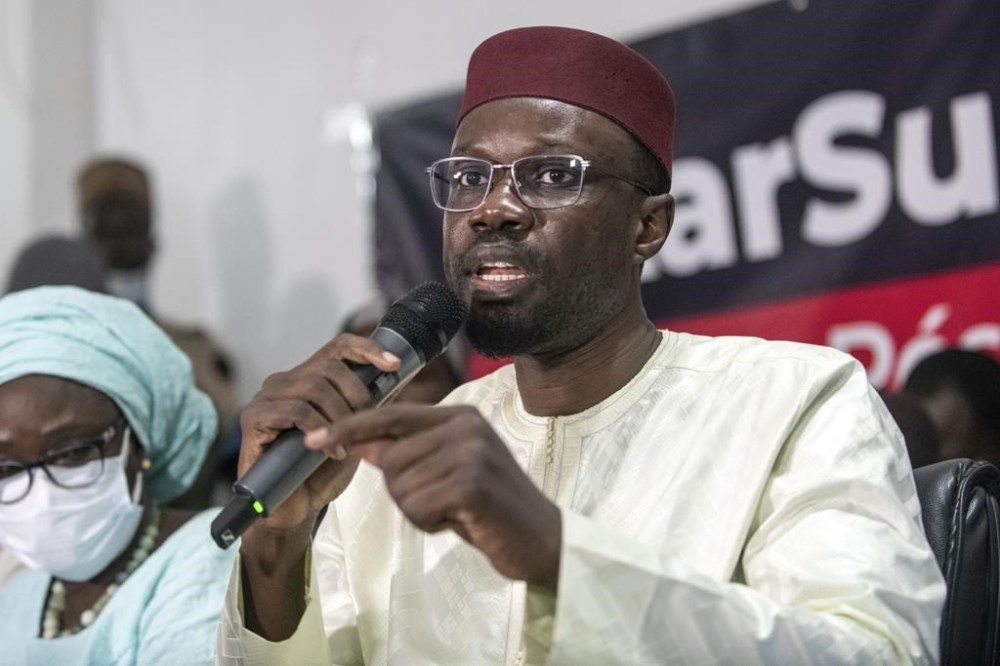
The Senegalese Council of Press Distributors and Publishers, an organization representing both private and public media companies, claimed that the government had frozen banks accounts belonging to the media outlets, allegedly for owing back taxes, “seized production equipment” and “unilaterally and illegally terminated advertising contracts.”
The claims, published in an editorial in Le Quotidien on Monday, could not be independently verified. Government officials were not immediately available for comment.
“For nearly three months, the Senegalese press has experienced one of the darkest phases of its history,” the organization wrote in the editorial.
In June, Senegal’s Prime Minister Ousmane Sonko, who took office earlier this year, denounced what he described as a “misappropriation of public funds” in the media industry.
Cases of police brutality against journalists and arrests of government critics have also increased in Senegal over the past few years, according to the international watchdog Reporters Without Borders, which has urged Senegalese authorities to safeguard press freedoms.
The group, known by its French acronym RSF, says Senegal fell from the 49th to 94th place on its World Press Freedom Index, an annual ranking of countries that assesses multiple factors, including a reporter’s ability to work and security, in the last three years.
“Journalists are not sufficiently protected when doing their job and politicians are not playing their role in the matter,” Sadibou Marong, the West Africa chief at RSF, told The Associated Press. “Even worse, the political forces have jeopardized the right to inform and be informed.”
___
AP Africa news: https://apnews.com/hub/africa