

Taiwan drills with anti-amphibious landing missiles to deter China
Advertisement
Read this article for free:
or
Already have an account? Log in here »
To continue reading, please subscribe:

Digital Subscription
One year of digital access for only $205*
- Enjoy unlimited reading on winnipegfreepress.com
- Read the E-Edition, our digital replica newspaper
- Access News Break, our award-winning app
- Play interactive puzzles
*First annual payment billed as $205.00 + GST for one year. This annual subscription will automatically renew at $233.00 + GST every 52 weeks (10% off the regular annual price of $259.35). Offer available to new and qualified returning subscribers only. Cancel any time.
To continue reading, please subscribe:
Add Free Press access to your Brandon Sun subscription for only an additional
$1 for the first 4 weeks*
- Enjoy unlimited reading on winnipegfreepress.com
- Read the E-Edition, our digital replica newspaper
- Access News Break, our award-winning app
- Play interactive puzzles
*Your next Brandon Sun subscription payment will increase by $1.00 and you will be charged $17.95 plus GST for four weeks. After four weeks, your payment will increase to $24.95 plus GST every four weeks.
Read unlimited articles for free today:
or
Already have an account? Log in here »
Hey there, time traveller!
This article was published 26/08/2024 (733 days ago), so information in it may no longer be current.
PINGTING, Taiwan (AP) — Taiwan drilled Monday with anti-amphibious landing missiles as part of strategy to remain mobile and deadly in an attempt to deter an attack from China, which claims the democratically ruled island as its own territory to be brought under its control by force if necessary.
Troops fired tube-launched, optically tracked, wire-guided missiles known as TOW 2A missiles mounted on M1167 Humvees at floating targets off a beach in Pingtung County during the two days of exercises. The area on Taiwan’s southern tip faces both toward the Taiwan Strait and China, and toward the Pacific Ocean.
The missiles are among the most effective and popular anti-tank weapons in the world and a key component in what some experts say is Taiwan’s best strategy to resist a potential Chinese invasion. China has ramped up its military threat in recent years based on its vast edge in numbers of warplanes, ships and missiles.
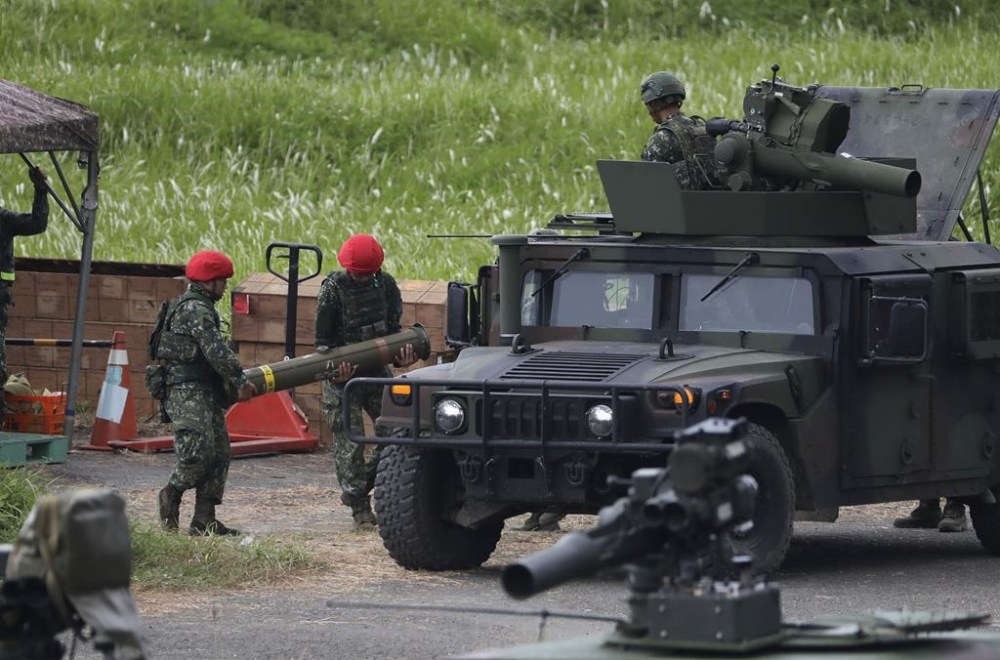
Taiwan bought 1,700 units of the newer TOW 2B system from the U.S., the last of which are due to be delivered by the end of the year. The two days of testing will also gauge the more sophisticated TOW 2B’s interoperability with the TOW 2A and its ability to acquire targets at night, the Defense Ministry said.
Advocates of such weaponry argue that these more mobile systems stand the best chance in an asymmetric battle against a much larger Chinese force. China has the world’s largest standing military, but most of Taiwan is composed of steep mountains, mud flats and heavily built-up urban areas poorly suited to such a conventional force. Others have argued Taiwan needs more warplanes and surface ships.
China sends warplanes and warships near Taiwan on a near-daily basis in an attempt to intimidate its citizens and degrade the island’s defenses. In response, Taiwan has extended the period of national military service to one year, building its own submarines and importing sophisticated new equipment from the U.S.
The vast majority of Taiwanese favor the current status of de-facto independence for their island, which separated from mainland China amid civil war in 1949.