

New Zealand’s Māori King dies after 18-year reign
Advertisement
Read this article for free:
or
Already have an account? Log in here »
To continue reading, please subscribe:

Digital Subscription
One year of digital access for only $205*
- Enjoy unlimited reading on winnipegfreepress.com
- Read the E-Edition, our digital replica newspaper
- Access News Break, our award-winning app
- Play interactive puzzles
*First annual payment billed as $205.00 + GST for one year. This annual subscription will automatically renew at $233.00 + GST every 52 weeks (10% off the regular annual price of $259.35). Offer available to new and qualified returning subscribers only. Cancel any time.
To continue reading, please subscribe:
Add Free Press access to your Brandon Sun subscription for only an additional
$1 for the first 4 weeks*
- Enjoy unlimited reading on winnipegfreepress.com
- Read the E-Edition, our digital replica newspaper
- Access News Break, our award-winning app
- Play interactive puzzles
*Your next Brandon Sun subscription payment will increase by $1.00 and you will be charged $17.95 plus GST for four weeks. After four weeks, your payment will increase to $24.95 plus GST every four weeks.
Read unlimited articles for free today:
or
Already have an account? Log in here »
Hey there, time traveller!
This article was published 29/08/2024 (740 days ago), so information in it may no longer be current.
NUKU’ALOFA, Tonga (AP) — New Zealand’s Māori King, Kiingi Tuheitia Pootatau Te Wherowhero VII, died Friday at age 69, days after the celebration of his 18th year on the throne.
He was the seventh monarch in the Kiingitanga movement, holding a position created in 1858 to unite New Zealand’s Indigenous Māori tribes in the face of British colonization.
Tuheitia died in hospital after heart surgery, said Rahui Papa, a spokesperson for the Kiingitanga, the Māori King Movement, in a post on Instagram.
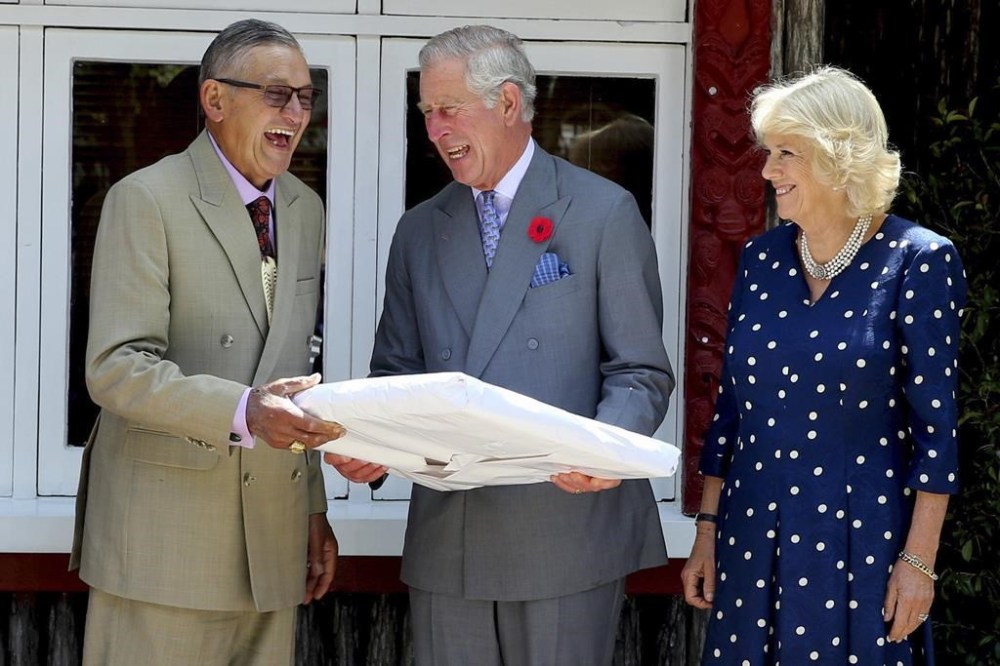
The movement’s primary goals were to end the sale of land to non-Indigenous people, stop inter-tribal warfare, and provide a springboard for the preservation of Māori culture, the Waikato-Tainui tribe website said. The monarch has a largely ceremonial but consequential role in New Zealand, where Māori make up close to 20% of the population.
“The death of King Tuheitia is a moment of great sadness for followers of Kiingitanga, Maaoridom and the entire nation,” Papa wrote on social media.
New Zealand Prime Minister Christopher Luxon paid tribute to Tuheitia, saying his “unwavering commitment to his people and his tireless efforts to uphold the values and traditions of the Kiingitanga have left an indelible mark on our nation.”
“I will remember his dedication to Aotearoa New Zealand,” Luxon said, using the country’s Māori and English names, “his commitment to mokopuna, his passion for te ao Māori (Māori worldview), and his vision for a future where all people are treated with dignity and respect.”
Luxon presented his statement from Tonga, where he is attending a South Pacific leaders’ summit.
In recent months, Tuheitia has coordinated national unity talks for Māori in response to Luxon government policies.
Critics accuse the center-right government of being anti-Māori in its efforts to reverse policies favoring Indigenous people and language.
King Charles III, New Zealand’s constitutional head of state, and his wife, Queen Camilla, were “profoundly saddened” by Tuheitia’s death.
“I had the greatest pleasure of knowing Kiingi Tuheitia for decades. He was deeply committed to forging a strong future for Māori and Aotearoa New Zealand founded upon culture, traditions and healing, which he carried out with wisdom and compassion,” Charles said in a statement.