

Ohio Supreme Court clears ballot language saying anti-gerrymandering measure calls for the opposite
Advertisement
Read this article for free:
or
Already have an account? Log in here »
To continue reading, please subscribe:

Digital Subscription
One year of digital access for only $205*
- Enjoy unlimited reading on winnipegfreepress.com
- Read the E-Edition, our digital replica newspaper
- Access News Break, our award-winning app
- Play interactive puzzles
*First annual payment billed as $205.00 + GST for one year. This annual subscription will automatically renew at $233.00 + GST every 52 weeks (10% off the regular annual price of $259.35). Offer available to new and qualified returning subscribers only. Cancel any time.
To continue reading, please subscribe:
Add Free Press access to your Brandon Sun subscription for only an additional
$1 for the first 4 weeks*
- Enjoy unlimited reading on winnipegfreepress.com
- Read the E-Edition, our digital replica newspaper
- Access News Break, our award-winning app
- Play interactive puzzles
*Your next Brandon Sun subscription payment will increase by $1.00 and you will be charged $17.95 plus GST for four weeks. After four weeks, your payment will increase to $24.95 plus GST every four weeks.
Read unlimited articles for free today:
or
Already have an account? Log in here »
Hey there, time traveller!
This article was published 16/09/2024 (755 days ago), so information in it may no longer be current.
COLUMBUS, Ohio (AP) — The Ohio Supreme Court let stand late Monday ballot language that will describe this fall’s Issue 1 as requiring gerrymandering, when the proposal is intended to do the opposite.
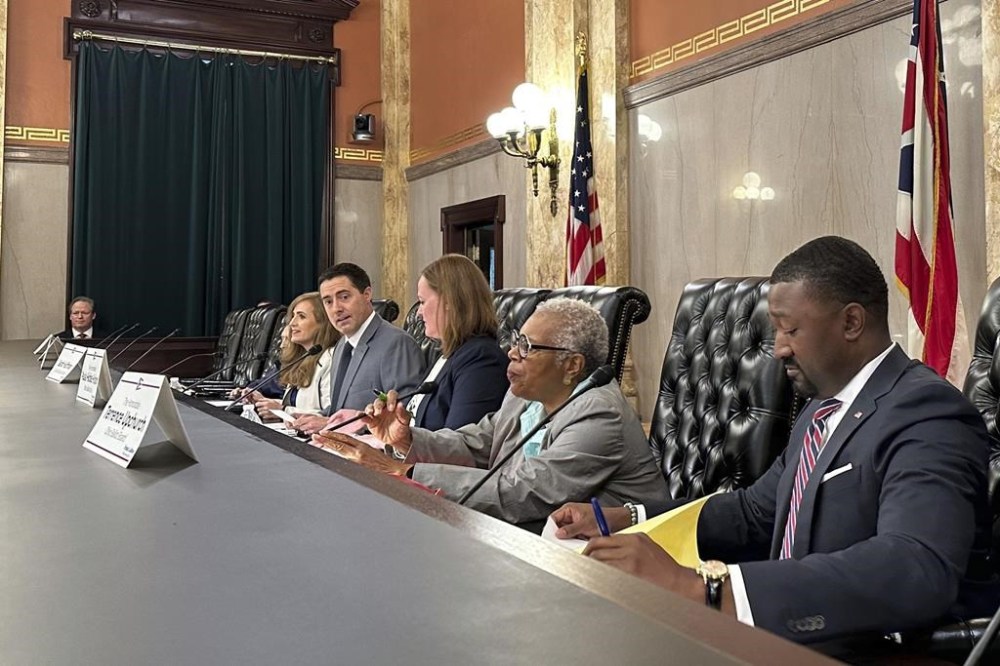
In a 4-3 ruling, the high court ordered two of eight disputed sections of the ballot description rewritten, while upholding the other six the issue’s backers had contested. The court’s three Democratic justices dissented. The ballot language was approved by the Republican-controlled Ohio Ballot Board.
Citizens Not Politicians, the group behind the Nov. 5 amendment, brought the lawsuit last month, asserting the language “may be the most biased, inaccurate, deceptive, and unconstitutional” the state has ever seen.
The bipartisan coalition’s proposal calls for replacing Ohio’s troubled political map-making system with a 15-member, citizen-led commission of Republicans, Democrats and independents. The proposal emerged after seven different versions of congressional and legislative maps created after the 2020 Census were declared unconstitutionally gerrymandered to favor Republicans.
In Monday’s opinion, the court’s majority noted that it can only invalidate language approved by the ballot board if it finds the wording would “mislead, deceive, or defraud the voters.” The majority found most of the language included in the approved summary and title didn’t do that, but merely described the extensive amendment in detail.
The two sections that justices said were mischaracterized involve when a lawsuit would be able to be filed challenging the new commission’s redistricting plan and the ability of the public to provide input on the map-making process.
In a statement, Citizens Not Politicians said they disagreed with much of the decision, but agreed with justices’ conclusions that portions of the language were “inaccurate,” “defective” and amounted to “argumentation” against Issue 1.
“The Ohio Supreme Court ruled seven times that politicians broke the law with unconstitutional gerrymanders, and the Ohio Supreme Court ruled today that politicians broke the law with lies about our Issue 1 amendment to end the gerrymandering they hold dear,” the campaign said.
The group added: “Politicians are lying and doing everything they can to confuse voters.”
Chief Justice Sharon Kennedy and Justices Patrick Fischer, Patrick DeWine and Joseph Deters joined the majority opinion, while Justices Michael Donnelly, Melody Stewart and Jennifer Brunner dissented.
Fischer wrote a separate concurring opinion in which he defended language voters will now see in November. The measure’s description will say that the commission created by Issue 1 is “required to gerrymander the boundaries of state legislative and congressional districts to favor the two largest political parties.” He said the language, proposed at the last minute by Republican state Sen. Theresa Gavarone, is accurate because the panel will have to create maps that ensure certain political outcomes.
Republican Secretary of State Frank LaRose, who chairs the ballot board, praised Monday’s ruling.
“This decision is a huge win for Ohio voters, who deserve an honest explanation of what they’re being asked to decide,” he said in a statement, adding that the approved description will help voters sort out what’s actually being proposed amid a barrage of expected television advertising.
The exact language of the constitutional amendment also will be posted at polling locations.
LaRose has reconvened the ballot board for Wednesday morning to rewrite the two sections ruled unconstitutional, just as it had to do last year with portions of an amendment that enshrined access to abortion in Ohio’s state constitution. That issue passed easily, despite the ballot language dispute.