

Remains of South African freedom fighters arrive home from Zimbabwe and Zambia
Advertisement
Read this article for free:
or
Already have an account? Log in here »
To continue reading, please subscribe:

Digital Subscription
One year of digital access for only $205*
- Enjoy unlimited reading on winnipegfreepress.com
- Read the E-Edition, our digital replica newspaper
- Access News Break, our award-winning app
- Play interactive puzzles
*First annual payment billed as $205.00 + GST for one year. This annual subscription will automatically renew at $233.00 + GST every 52 weeks (10% off the regular annual price of $259.35). Offer available to new and qualified returning subscribers only. Cancel any time.
To continue reading, please subscribe:
Add Free Press access to your Brandon Sun subscription for only an additional
$1 for the first 4 weeks*
- Enjoy unlimited reading on winnipegfreepress.com
- Read the E-Edition, our digital replica newspaper
- Access News Break, our award-winning app
- Play interactive puzzles
*Your next Brandon Sun subscription payment will increase by $1.00 and you will be charged $17.95 plus GST for four weeks. After four weeks, your payment will increase to $24.95 plus GST every four weeks.
Read unlimited articles for free today:
or
Already have an account? Log in here »
Hey there, time traveller!
This article was published 25/09/2024 (738 days ago), so information in it may no longer be current.
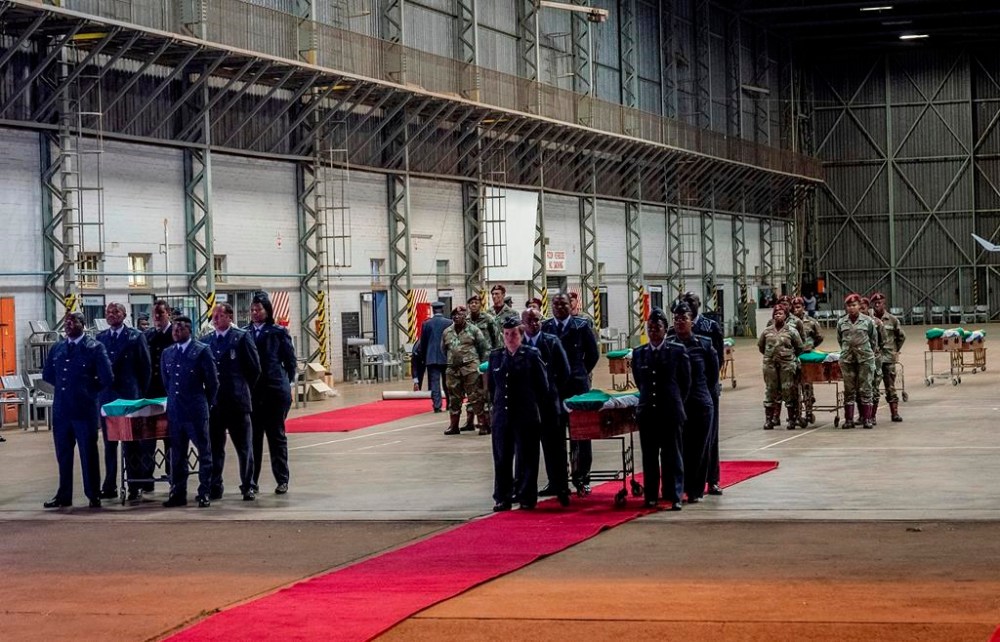
JOHANNESBURG (AP) — The remains of 42 South African freedom fighters who died while exiled in Zimbabwe and Zambia during the struggle against white minority rule arrived in their home country Wednesday.
The remains were received by government officials and family members at Waterkloof Air Force Base in the capital Pretoria after being exhumed for reburial in the country of their birth.
This was part of a government program to bring closure to families, whose loved ones died away from home while serving in the underground structures of both the African National Congress and Pan Africanist Congress, according to officials.
Before the apartheid system ended in South Africa in 1994, many activists left the country to receive military training elsewhere with the aim of returning home to wage an armed struggle.
Others left the country to avoid being arrested by the apartheid regime for their involvement in anti-apartheid activities, and chose Zimbabwe and Zambia where the underground structures were the strongest.
After it was banned in South Africa, the African National Congress party of Nelson Mandela, shifted its headquarters to the Zambian capital, Lusaka.
Many died in exile and were buried in those countries.
Among the remains returned to South Africa were those of freedom struggle stalwarts Duma Nokwe, Florence Mophosho and Basil February.
Speaking during a Heritage Day event in South Africa on Tuesday, South Africa’s Deputy President Paul Mashatile said the repatriation was part of efforts to teach future generations about the role played by many in the struggle against apartheid.
“As a national memory project, this initiative aims to commemorate, celebrate, educate, promote, preserve, conserve, and provide a durable testament to South Africa’s road to freedom,” Mashatile said.
President Cyril Ramaphosa is expected to host a homecoming ceremony for the repatriated remains on Friday before they are handed over to families for reburials.
The government said Wednesday it was in the process of repatriating the remains of other South Africans from Lesotho, Ethiopia, Tanzania, Angola, Russia and other countries.
“I hope this process will culminate in getting more people in other countries who died under difficult conditions. We welcome them back to connect with their families,” Deputy Defense Minister Bantu Holomisa said.
___
Follow AP’s Africa coverage at https://apnews.com/hub/africa