

Swiss glaciers are receding again after 2 punishing years and despite a good start to 2024
Advertisement
Read this article for free:
or
Already have an account? Log in here »
To continue reading, please subscribe:

Digital Subscription
One year of digital access for only $205*
- Enjoy unlimited reading on winnipegfreepress.com
- Read the E-Edition, our digital replica newspaper
- Access News Break, our award-winning app
- Play interactive puzzles
*First annual payment billed as $205.00 + GST for one year. This annual subscription will automatically renew at $233.00 + GST every 52 weeks (10% off the regular annual price of $259.35). Offer available to new and qualified returning subscribers only. Cancel any time.
To continue reading, please subscribe:
Add Free Press access to your Brandon Sun subscription for only an additional
$1 for the first 4 weeks*
- Enjoy unlimited reading on winnipegfreepress.com
- Read the E-Edition, our digital replica newspaper
- Access News Break, our award-winning app
- Play interactive puzzles
*Your next Brandon Sun subscription payment will increase by $1.00 and you will be charged $17.95 plus GST for four weeks. After four weeks, your payment will increase to $24.95 plus GST every four weeks.
Read unlimited articles for free today:
or
Already have an account? Log in here »
Hey there, time traveller!
This article was published 01/10/2024 (738 days ago), so information in it may no longer be current.
GENEVA (AP) — The volume of Switzerland’s glaciers shrank again this summer, compounding the negative impact of climate change after a devastating two-year run that depleted the ice by more than 10%, scientific experts reported Tuesday.
The cryosphere observation team at the Swiss Academy of Sciences reported that high temperatures in July and August, combined with the heat-absorbing impact of reddish-yellow dust blown northward from the Sahara Desert onto Swiss glaciers, led to a loss of 2.5% of their volume this year.
The shrinkage came despite “extremely favorable” conditions through June, the academy said, thanks to 30% more snowfall in the preceding winter compared to average levels, meaning that the glaciers had an extra layer of protective covering of snow — before temperatures rose.
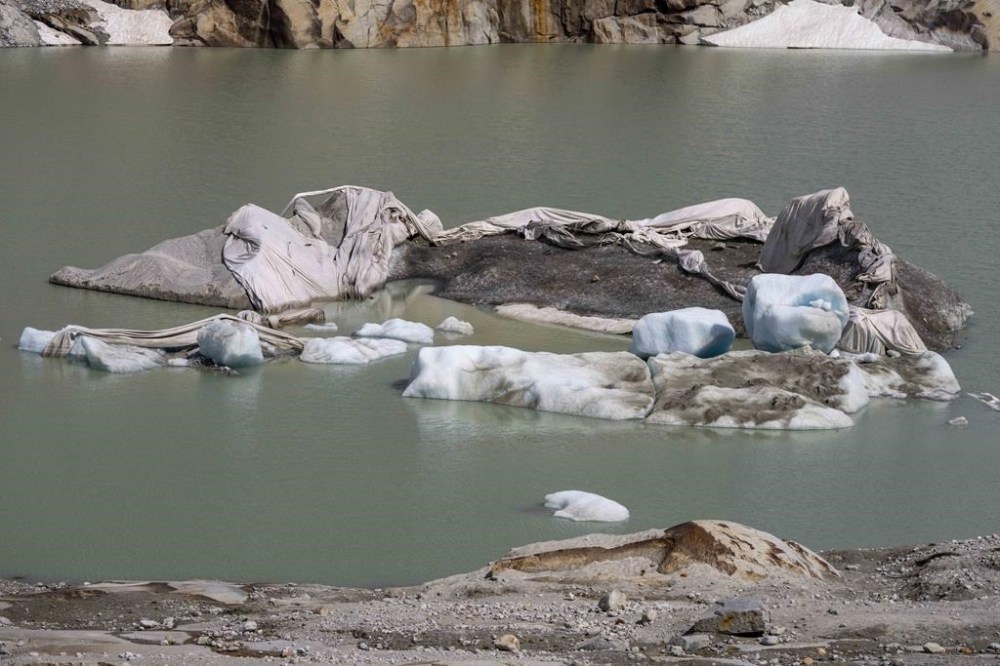
“August saw the greatest loss of ice recorded since measurements began,” the academy said in a statement summarizing the findings.
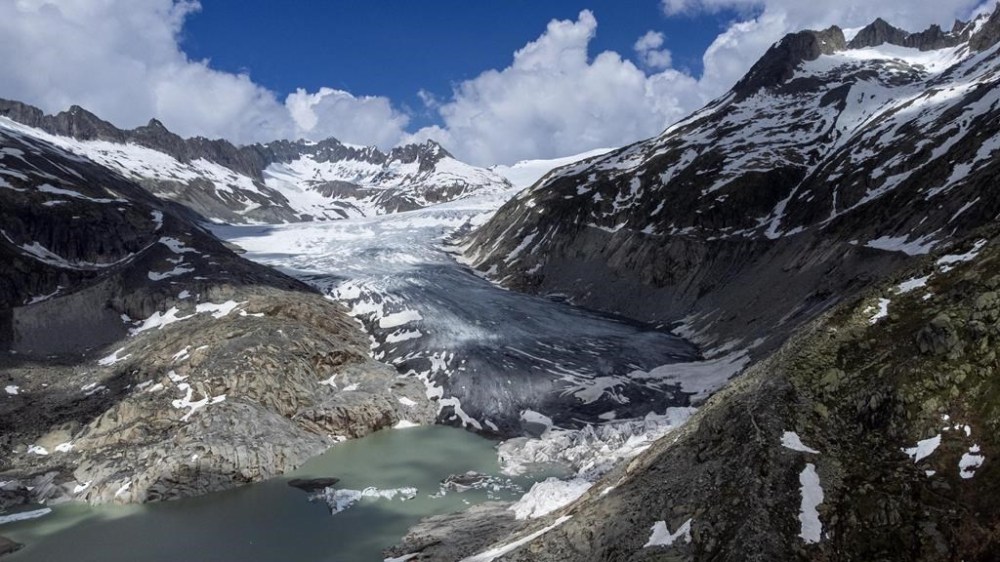
“The retreat of the glacier tongues and their disintegration continue unabated as a result of climate change,” it said, adding that the 2.5% loss of volume was higher than the average levels over the last decade.
Experts at the Glacier Monitoring in Switzerland network, known as GLAMOS, said that more than half of the glaciers it monitored completely lost their snow coverage throughout the summer.
Several topmost measurement points on glaciers, such as Plaine Morte and Gries in the south and Silvretta in the east, recorded melt rates of a meter or more, the network said in a report for the Swiss Academy of Sciences.
GLAMOS cited three factors: “very high” average air temperatures in July and August; good weather in those months in which there was no fresh snow; and southwesterly winds in the winter and spring that dumped the Saharan dust onto the Alps, causing a warming effect on the ice.
Switzerland is home to the most glaciers of any country in Europe, and saw 4% of its total glacier volume disappear last year. That was the second-biggest decline in a single year on top of a 6% drop in 2022.
___
Follow AP’s climate and environment coverage at https://apnews.com/hub/climate-and-environment