

Drought has dried a major Amazon River tributary to its lowest level in over 122 years
Advertisement
Read this article for free:
or
Already have an account? Log in here »
To continue reading, please subscribe:
Monthly Digital Subscription
$1 per week for 24 weeks*
- Enjoy unlimited reading on winnipegfreepress.com
- Read the E-Edition, our digital replica newspaper
- Access News Break, our award-winning app
- Play interactive puzzles
*Billed as $4.00 plus GST every four weeks. After 24 weeks, price increases to the regular rate of $19.95 plus GST every four weeks. Offer available to new and qualified returning subscribers only. Cancel any time.
Monthly Digital Subscription
$4.99/week*
- Enjoy unlimited reading on winnipegfreepress.com
- Read the E-Edition, our digital replica newspaper
- Access News Break, our award-winning app
- Play interactive puzzles
*Billed as $19.95 plus GST every four weeks. Cancel any time.
To continue reading, please subscribe:
Add Free Press access to your Brandon Sun subscription for only an additional
$1 for the first 4 weeks*
*Your next subscription payment will increase by $1.00 and you will be charged $16.99 plus GST for four weeks. After four weeks, your payment will increase to $23.99 plus GST every four weeks.
Read unlimited articles for free today:
or
Already have an account? Log in here »
Hey there, time traveller!
This article was published 04/10/2024 (546 days ago), so information in it may no longer be current.
MANAUS, Brazil (AP) — One of the Amazon River’s main tributaries has dropped to its lowest level ever recorded, Brazil’s geological service said Friday, reflecting a severe drought that has devastated the Amazon rainforest and other parts of the country.
The level of the Negro River at the port of Manaus was at 12.66 meters on Friday, as compared with a normal level of about 21 meters. It is the lowest since measurements started 122 years ago. The previous record low level was recorded last year, but toward the end of October.
The Negro River’s water level might drop even more in coming weeks based on forecasts for low rainfall in upstream regions, according to the geological service’s predictions. Andre Martinelli, the agency’s hydrology manager in Manaus, was quoted as saying the river was expected to continue receding until the end of the month.
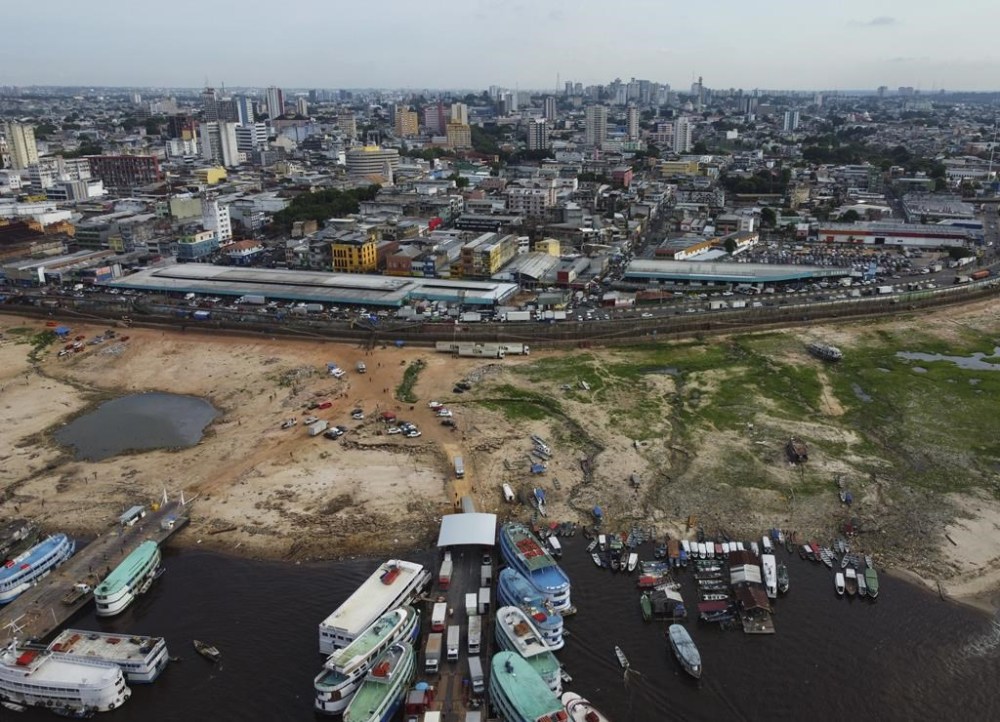
Water levels in Brazil’s Amazon always rise and fall with its rainy and dry seasons, but the dry portion of this year has been much worse than usual. All of the major rivers in the Amazon basin are at critical levels, including the Madeira River, the Amazon River’s longest tributary.
The Negro River drains about 10% of the Amazon basin and is the world’s sixth-largest by water volume. Manaus, the biggest city in the rainforest, is where the Negro joins the Amazon River.
For locals, the drought has made basic daily activities impossible. Gracita Barbosa, 28, works as a cashier on a floating shop on the Negro River. She’s out of work because boats that once stopped there can no longer navigate the river due to the low water levels. Barbosa can no longer bathe in the river and now has to travel longer distances to collect drinking water.
___
Sá Pessoa reported from Sao Paulo.
