

Lithuanians vote in parliamentary election with many looking for change despite a strong economy
Advertisement
Read this article for free:
or
Already have an account? Log in here »
To continue reading, please subscribe:

Digital Subscription
One year of digital access for only $205*
- Enjoy unlimited reading on winnipegfreepress.com
- Read the E-Edition, our digital replica newspaper
- Access News Break, our award-winning app
- Play interactive puzzles
*First annual payment billed as $205.00 + GST for one year. This annual subscription will automatically renew at $233.00 + GST every 52 weeks (10% off the regular annual price of $259.35). Offer available to new and qualified returning subscribers only. Cancel any time.
To continue reading, please subscribe:
Add Free Press access to your Brandon Sun subscription for only an additional
$1 for the first 4 weeks*
- Enjoy unlimited reading on winnipegfreepress.com
- Read the E-Edition, our digital replica newspaper
- Access News Break, our award-winning app
- Play interactive puzzles
*Your next Brandon Sun subscription payment will increase by $1.00 and you will be charged $17.95 plus GST for four weeks. After four weeks, your payment will increase to $24.95 plus GST every four weeks.
Read unlimited articles for free today:
or
Already have an account? Log in here »
Hey there, time traveller!
This article was published 12/10/2024 (733 days ago), so information in it may no longer be current.
VILNIUS, Lithuania (AP) — Lithuanians voted Sunday in the first round of parliamentary elections that could lead to the center-right governing coalition being replaced by the opposition Social Democrats and smaller center-left parties.
Despite economic successes, strict COVID-19 measures and an influx of migrants have cast shadows over conservative Prime Minister Ingrida Šimonytė’s government, which took office in 2020.
Although European Union member Lithuania has seen annual double-digit personal income growth and has one of the lowest inflation rates in the 27-nation bloc, many voters don’t seem to be impressed.
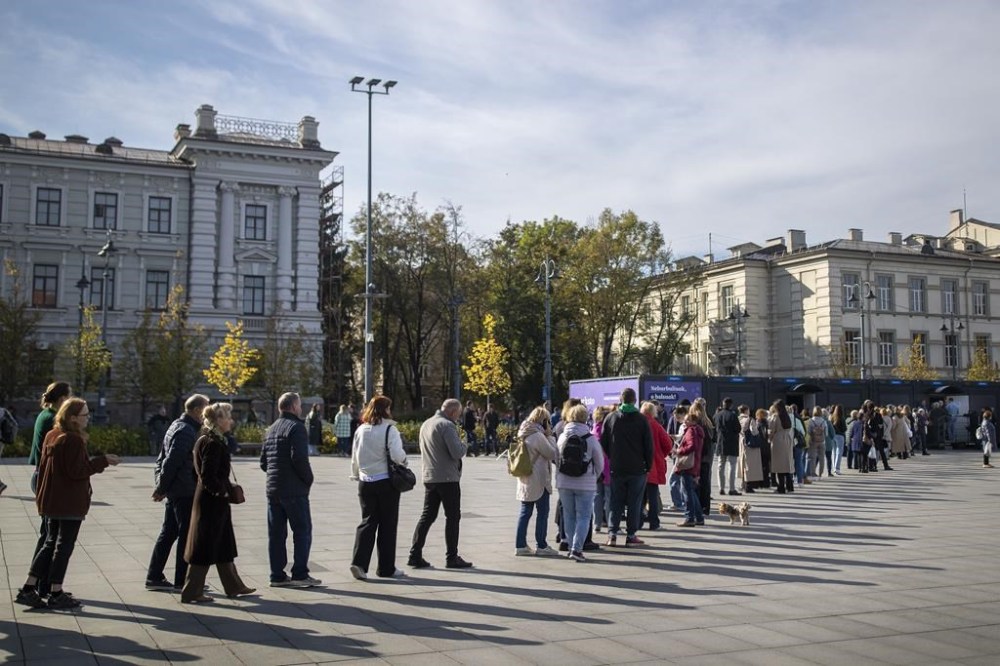
“There’s a lot of disappointment and discontent among voters,” said Rima Urbonaitė, a political analyst at Vilnius’ Mykolas Romeris University. “It is related to numerous crises and shocks and cannot be compensated by economic factors like positive change in purchasing power.”
Šimonytė has faced criticism for strict measures during the pandemic, with many complaining that her government didn’t do enough to help companies during lockdown. Others say thousands of people didn’t have proper access to health care services.
Šimonytė also has been lambasted for her handling of migrants arriving via Belarus. Lithuania has its eastern neighbor, as well as Russia, of orchestrating the influx of people, mostly from Africa and the Middle East.
A recent survey by pollster Vilmorus says that the Social Democratic Party, led by Vilija Blinkevičiūtė, would top the poll, with twice as many votes as Šimonytė’s Homeland Union. Nemuno Aušra, a newly registered party of right-wing politician Remigijus Žemaitaitis, who was impeached earlier this year for making antisemitic statements, would come in between them.
However no party would obtain more than 20% of the vote, forcing anyone hoping to govern to to look for alliances.
The Social Democrats have ruled out an alliance with Žemaitaitis’ party, meaning that three or four parties, likely small groups representing the political center, will be necessary to form a governing coalition.
“I have voted for the conservatives my entire life, but this year I’m thinking of giving my ballot to another good party, not to them,” said Darius Mikalauskas, a 51-year-old teacher in Vilnius. “Šimonytė and the entire Homeland Union looks battered, worn out and they would better spend some time on the spare bench.”
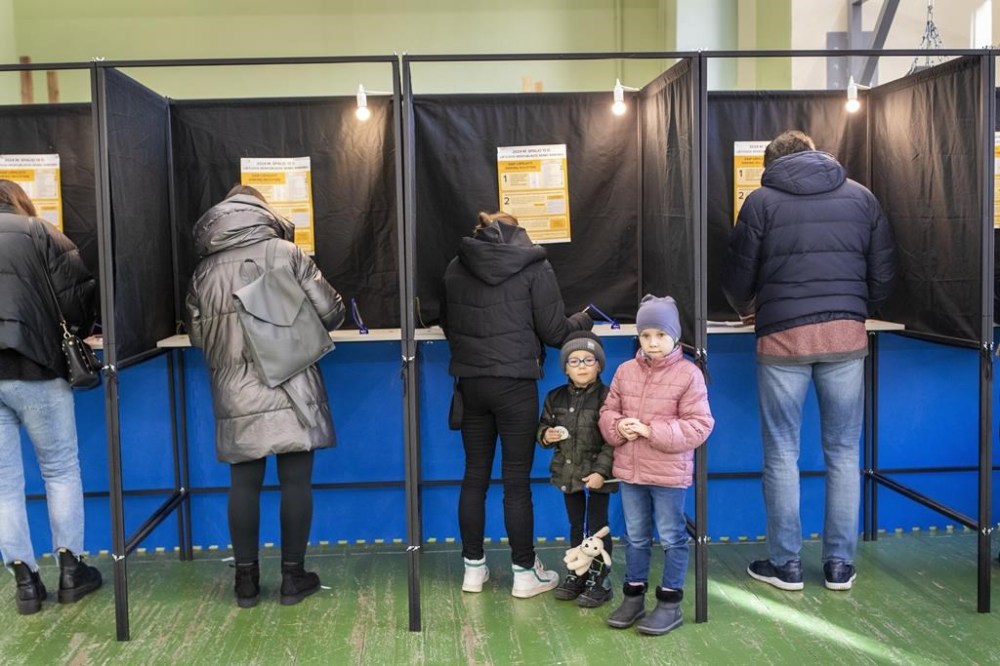
Analysts say a shift to the left wouldn’t bring significant changes to the foreign policy of Lithuania, which also borders Russia’s Kaliningrad exclave to the west. But the vote comes at a time when Russia’s war in Ukraine is fueling greater fears about Moscow’s intentions, particularly in the strategically important Baltic region.
“In this country, the foreign policy course is determined mainly by the president,” Urbonaitė said. Earlier this year, President Gitanas Nauseda beat Šimonytė in the presidential election to take a second five-year term.
In 2020, Šimonytė led her Homeland Union to victory in the parliamentary election. She later formed a coalition with two liberal parties, the Freedom Party and the Liberal Movement.
About 2.4 million people are eligible to elect 141 members of the parliament, or Seimas, for a four-year term in two rounds. On Sunday, 70 lawmakers will be elected by party lists, joined by those in single-mandate constituencies who manage to win more than 50% of votes. The runoff is Oct. 27, when the majority of single-member constituencies will vote to choose between the two leading candidates.