

Can an elephant sue to leave a zoo? Colorado’s top court must now decide
Advertisement
Read this article for free:
or
Already have an account? Log in here »
To continue reading, please subscribe:

Digital Subscription
One year of digital access for only $205*
- Enjoy unlimited reading on winnipegfreepress.com
- Read the E-Edition, our digital replica newspaper
- Access News Break, our award-winning app
- Play interactive puzzles
*First annual payment billed as $205.00 + GST for one year. This annual subscription will automatically renew at $233.00 + GST every 52 weeks (10% off the regular annual price of $259.35). Offer available to new and qualified returning subscribers only. Cancel any time.
To continue reading, please subscribe:
Add Free Press access to your Brandon Sun subscription for only an additional
$1 for the first 4 weeks*
- Enjoy unlimited reading on winnipegfreepress.com
- Read the E-Edition, our digital replica newspaper
- Access News Break, our award-winning app
- Play interactive puzzles
*Your next Brandon Sun subscription payment will increase by $1.00 and you will be charged $17.95 plus GST for four weeks. After four weeks, your payment will increase to $24.95 plus GST every four weeks.
Read unlimited articles for free today:
or
Already have an account? Log in here »
Hey there, time traveller!
This article was published 24/10/2024 (694 days ago), so information in it may no longer be current.
BOULDER, Colo. (AP) — Five elephants in a Colorado zoo could someday sue for their freedom, if the state’s Supreme Court sides with an animal rights group and declares them “persons” under the law. But first, the justices had a few questions about cats and dogs.
“How do I know when it stops?” Justice Melissa Hart said during Thursday’s hearing, wondering whether this ruling might someday lead to emancipating people’s pets. At stake is whether the elephants from the Cheyenne Mountain Zoo should be treated as people under the law. It was a question asked several times but never really answered.
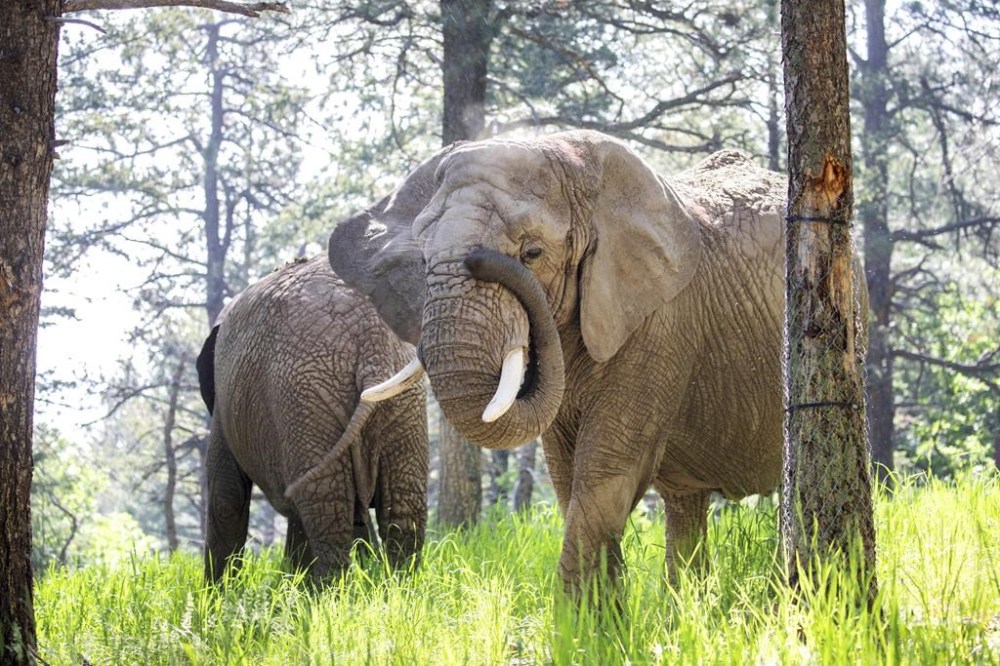
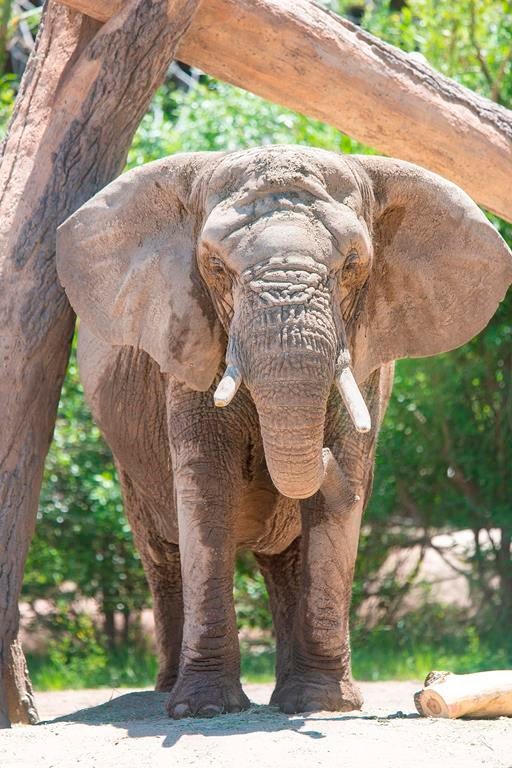
The NonHuman Rights Project says the elephants — Missy, Kimba, Lucky, LouLou, and Jambo — should be able to use a long-held process that’s mainly for prisoners to dispute their detention. The group says the animals, born in the wild in Africa, are showing signs of brain damage because the zoo is essentially a prison for such intelligent and social creatures, known to roam for miles a day. They want the animals released to one of the two accredited elephant sanctuaries in the United States because the group doesn’t think they can live the wild anymore.
The group unsuccessfully sued in 2022 on behalf of an elephant at the Bronx Zoo named Happy. The highest court in New York ruled that Happy, while intelligent and deserving of compassion, cannot be considered a person who is illegally confined with the ability to pursue a petition seeking release.
The New York ruling said giving such rights to an elephant “would have an enormous destabilizing impact on modern society.”
The Cheyenne Mountain Zoo says moving the elephants and potentially placing them with new animals would be cruel at their age, possibly causing unnecessary stress. It says they aren’t used to being in larger herds and, based on its experience, they don’t have the skills or desire to join one.
The justices will issue a ruling in the coming weeks or months.
During the hearing, the group’s lawyer, Jake Davis, urged the justices to focus on the five “individuals” he represents. He asked them to rule that the elephants can pursue a habeas corpus petition and send the case back to a lower court, which would consider the petition and decide if the animals should leave the zoo. However, he did say domesticated animals like dogs, which are familiar with lounging on the couch, are in much different category than wild animals.
Justice Maria Berkenkotter said Davis “beautifully and painfully” described the elephants’ rocking behavior, which the group says shows distress. But she wondered if the group should instead try changing the law at the state legislature or passing a ballot measure to protect the elephants.
Chief Justice Monica Marquez pressed the zoo’s attorney on a main point made by the animal rights group— that the right to habeas corpus has been extended over the years, such as to enslaved people and women in abusive marriages.
All those extensions were made to human beings, countered John Suthers, a former U.S. attorney and Colorado attorney general who represented the zoo. He pointed to Happy’s case in New York, where the judges ruled that the right to challenge detention belongs to human beings because they are humans who can be held accountable by the legal system.
“This court, no court is the proper venue for what they’re trying to accomplish,” he said.