

North Korean test of ICBM is condemned by two-thirds of UN Security Council
Advertisement
Read this article for free:
or
Already have an account? Log in here »
To continue reading, please subscribe:

Digital Subscription
One year of digital access for only $205*
- Enjoy unlimited reading on winnipegfreepress.com
- Read the E-Edition, our digital replica newspaper
- Access News Break, our award-winning app
- Play interactive puzzles
*First annual payment billed as $205.00 + GST for one year. This annual subscription will automatically renew at $233.00 + GST every 52 weeks (10% off the regular annual price of $259.35). Offer available to new and qualified returning subscribers only. Cancel any time.
To continue reading, please subscribe:
Add Free Press access to your Brandon Sun subscription for only an additional
$1 for the first 4 weeks*
- Enjoy unlimited reading on winnipegfreepress.com
- Read the E-Edition, our digital replica newspaper
- Access News Break, our award-winning app
- Play interactive puzzles
*Your next Brandon Sun subscription payment will increase by $1.00 and you will be charged $17.95 plus GST for four weeks. After four weeks, your payment will increase to $24.95 plus GST every four weeks.
Read unlimited articles for free today:
or
Already have an account? Log in here »
Hey there, time traveller!
This article was published 05/11/2024 (701 days ago), so information in it may no longer be current.
UNITED NATIONS (AP) — A U.S.-led statement approved by 10 of the 15 U.N. Security Council members Tuesday condemned a recent North Korean intercontinental ballistic missile launch and called on Pyongyang to return to negotiations and abandon its missile programs.
The statement follows a series of recent North Korean missile launches, including the test Thursday of the country’s newest ICBM that is designed to reach the United States.
The 10 Security Council members said that launch — in addition to more than 100 North Korean ballistic missile launches since 2022 — violates multiple Security Council resolutions prohibiting the North from using ballistic missile technology and jeopardizes international peace and security.
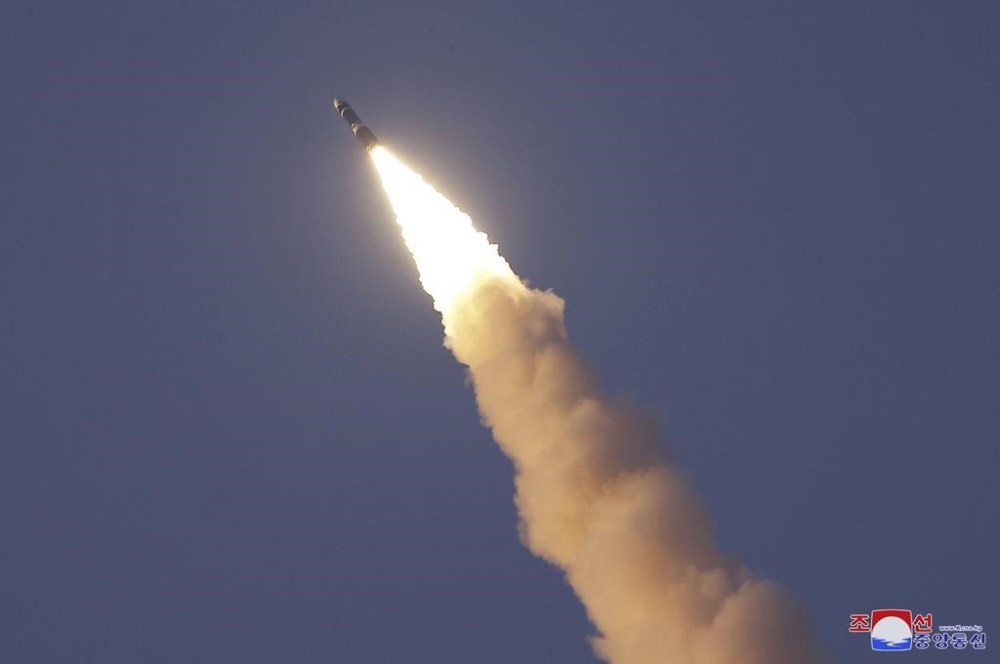
The foreign ministers of the Group of Seven wealthy democracies also decried last week’s launch in a statement Tuesday, saying North Korea “continues to advance its unlawful nuclear and ballistic missile capabilities and to escalate its destabilizing activities.” The G7 is Canada, France, Germany, Italy, Japan, the United Kingdom and the U.S.
At the United Nations, U.S. deputy ambassador Robert Wood read the statement to reporters surrounded by diplomats from the nine other nations that signed on — Ecuador, France, Japan, Malta, South Korea, Sierra Leone, Slovenia, Switzerland and the United Kingdom. They were joined by representatives from three countries that will join the council in January — Denmark, Greece and Panama.
Five Security Council nations didn’t support the statement — Russia, China, Algeria, Mozambique and Guyana.
In the statement, the 10 council members said the United States sought the required approval of all 15 council members for a press statement condemning the ICBM test and calling for North Korea to adhere to the Securitiy Council’s legally binding sanctions.
But the statement said two countries — identified by council members as North Korea’s allies Russia and China — refused to join the denunciation of Pyongyang’s actions.
The 10 members stressed that all council nations are obligated to implement sanctions on North Korea, urging all the nations on the Security Council to abide by that responsibility, maintain international peace and security, and uphold the treaty banning the proliferation of nuclear weapons.
While Russia and China were not named, the statement appeared aimed especially at Russia, which has reportedly received munitions and troops from North Korea for its war against Ukraine.
At a Security Council meeting Monday, the U.S. and its allies sparred with Russia, China and North Korea over Pyongyang’s ICBM tests and troop deployment to Russia.
Ukrainian officials said Tuesday that their troops engaged North Korean units for the first time in Russia’s Kursk border region, which Ukrainian forces occupy.
The Security Council imposed sanctions after North Korea’s first nuclear test explosion in 2006 and tightened them over the years, seeking — so far unsuccessfully — to cut funds and curb its nuclear and ballistic missile programs.
The last sanctions resolution was adopted by the council in December 2017. China and Russia vetoed a U.S.-sponsored resolution in May 2022 that would have imposed new sanctions over a spate of ICBM launches and have blocked any council action since then.